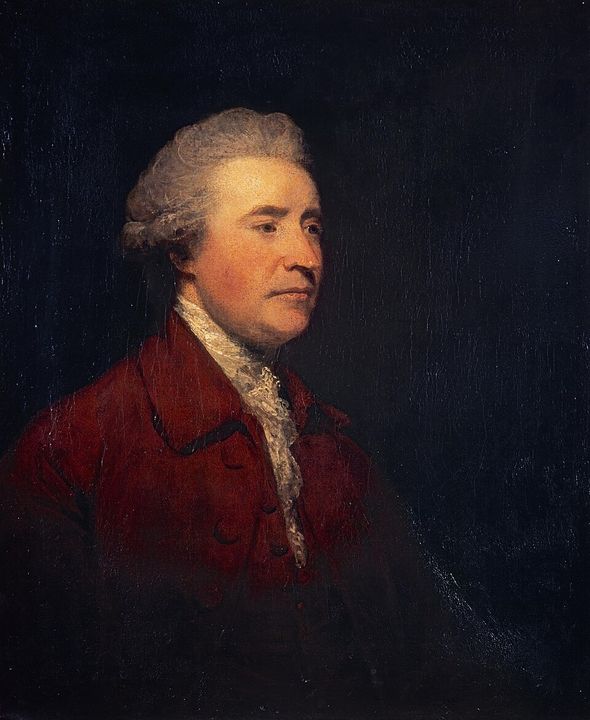
Edmund Burke (1729-1797) was born in Dublin, educated at Trinity College, and settled in London as a writer before entering Parliament in 1765, where he served for nearly thirty years as a leading Whig; he defended conciliation with the American colonies, pressed the impeachment of Warren Hastings, and in 1790 broke with Charles James Fox over the Revolution in France. Thomas Paine (1737-1809) was born in Thetford, Norfolk, worked as a staymaker and excise officer, and emigrated to Philadelphia in 1774, where Common Sense (1776) and The American Crisis made him the best-known pamphleteer of the American Revolution. He returned to Europe in 1787, was elected to the French National Convention in 1792, was imprisoned during the Terror, and spent his last years in the United States.
“Every age and generation must be as free to act for itself in all cases as the age and generations which preceded it. The vanity and presumption of governing beyond the grave is the most ridiculous and insolent of all tyrannies.”
The Burke-Paine debate is the exchange between Edmund Burke's Reflections on the Revolution in France (November 1790) and Thomas Paine's Rights of Man (Part I, March 1791; Part II, February 1792), the most famous controversy among the many British pamphlets provoked by the French Revolution. This entry is a guide to the debate as a whole; it has no text of its own, and the two books are in the library separately with their full texts.