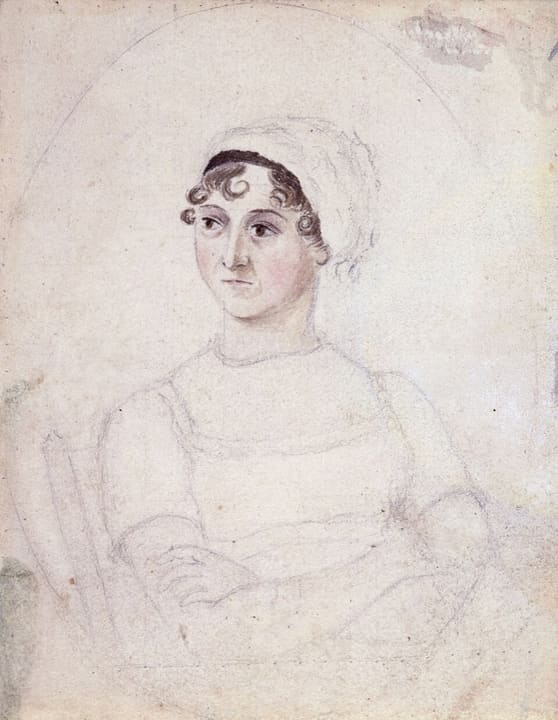
Jane Austen (1775–1817) was born at Steventon, Hampshire, the seventh child of the Reverend George Austen. She wrote comic pieces for her family from about the age of eleven and copied them into three notebooks, Volume the First, Second and Third. Her six novels, from Sense and Sensibility (1811) to the posthumous Northanger Abbey and Persuasion (1817), were published anonymously. She lived at Bath, Southampton and Chawton and died at Winchester.
“Emma Woodhouse, handsome, clever, and rich, with a comfortable home and happy disposition, seemed to unite some of the best blessings of existence; and had lived nearly twenty-one years in the world with very little to distress or vex her.”
“She is poor; she has sunk from the comforts she was born to; and, if she live to old age, must probably sink more. Her situation should secure your compassion. It was badly done, indeed!”
“A sensibility too tremblingly alive to every affliction of my Freinds, my Acquaintance and particularly to every affliction of my own, was my only fault, if a fault it could be called.”
1790 (published 1922) · 19th Century · Short Stories
This volume gathers comic pieces that Jane Austen wrote as a teenager at Steventon rectory, between about 1790 and 1793, and copied into the notebook she called Volume the Second. The title work, 'Love and Freindship', dated 13 June 1790 when she was fourteen, is a novel in fifteen letters parodying the sentimental fiction of the day.
Sense and Sensibility follows two sisters whose temperaments represent the opposed values of its title. When Henry Dashwood dies, Norland Park in Sussex passes to John, his son by a first marriage, who promises to provide for his stepmother and half-sisters but is talked out of any real generosity by his grasping wife Fanny.
Pride and Prejudice turns courtship into a discipline of moral interpretation. Elizabeth Bennet first judges Fitzwilliam Darcy by his proud refusal to dance and by Wickham's persuasive account of injury, while Darcy judges Elizabeth through the embarrassment of her family, the inferiority of her connections, and his own rank.
Mansfield Park follows Fanny Price, the timid daughter of a poor, overburdened family in Portsmouth, who at ten is taken in by her wealthy aunt and uncle, Sir Thomas and Lady Bertram, at Mansfield Park in Northamptonshire. Her other aunt, the officious and mean Mrs Norris, never lets her forget her dependent status, and her cousins Tom, Maria and Julia treat her with indifference.
Emma Woodhouse, not quite twenty-one, is the clever, handsome and wealthy mistress of Hartfield, a house in the Surrey village of Highbury, where she keeps company with her fond, fretful and health-obsessed widowed father. When her governess and friend Miss Taylor marries the genial widower Mr. Weston, Emma credits herself with the match and resolves to arrange more.
1817 (written c. 1798–1799) · 19th Century · Novel
Northanger Abbey follows Catherine Morland, the unremarkable seventeen-year-old daughter of a country clergyman, whom the narrator teasingly insists no one would have supposed born to be a heroine. Catherine is a devoted reader of Gothic novels, especially Ann Radcliffe's The Mysteries of Udolpho.
Persuasion is Austen's last completed novel, a story of second chances. Anne Elliot is the overlooked middle daughter of Sir Walter Elliot, a vain and extravagant baronet of Kellynch Hall in Somerset.