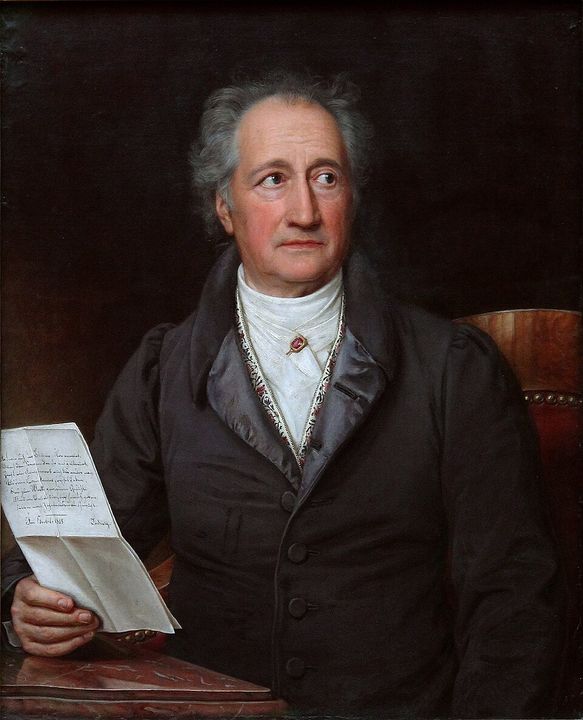
Johann Wolfgang von Goethe, painted by Joseph Karl Stieler (1828). Source · Public domain
About Johann Wolfgang von Goethe
Johann Wolfgang von Goethe (1749-1832) was a German poet, dramatist, novelist and natural scientist, born in Frankfurt and trained in law at Leipzig and Strasbourg. The Sorrows of Young Werther (1774) made him famous across Europe, and from 1775 he lived at Weimar as a minister of the duchy, director of its theatre and friend of Schiller. He also wrote on the metamorphosis of plants and on colour. Faust occupied him for some sixty years, from the early 1770s until Part Two was finished shortly before his death.
Frequently Cited
“While Man’s desires and aspirations stir, He cannot choose but err.”
“I’ve studied now Philosophy And Jurisprudence, Medicine,— And even, alas! Theology,— From end to end, with labor keen; And here, poor fool! with all my lore I stand, no wiser than before”
Faust, Part One opens with three frames: a verse Dedication, a Prelude at the Theatre in which a Manager, a Poet and a comic actor argue about what a play should be, and a Prologue in Heaven modelled on the Book of Job. There Mephistopheles mocks mankind, and the Lord permits him to tempt Doctor Faust, saying that man errs as long as he strives but that a good man keeps an instinct of the right way.