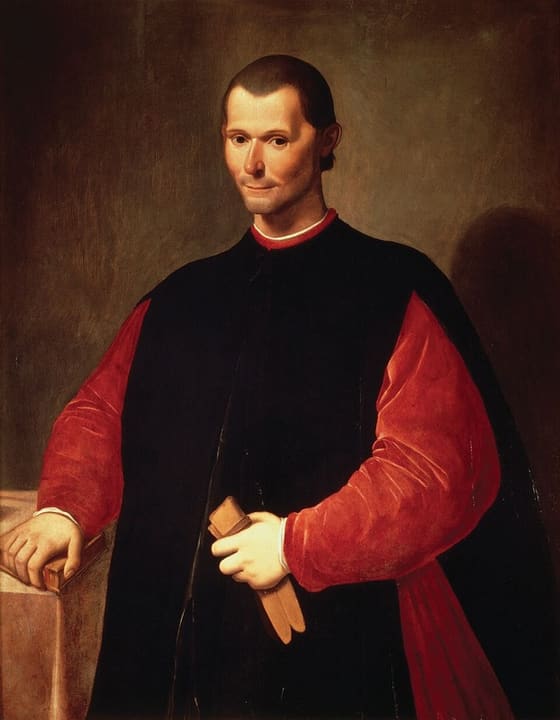
1469-1527 · Florentine diplomat, political theorist, and historian, author of The Prince
Posthumous or imagined likeness of Niccolo Machiavelli. Source · Public domain
About Niccolo Machiavelli
Niccolò Machiavelli (1469–1527) served the Florentine republic from 1498 to 1512 as Second Chancellor and secretary to the Ten of War, travelling on missions to Cesare Borgia, Louis XII, the Emperor Maximilian and Pope Julius II. When the Medici returned in 1512 he was dismissed, and in early 1513 he was imprisoned and tortured with the strappado on suspicion of conspiracy. Released in a general amnesty, he retired to his farm at Sant'Andrea in Percussina, where he wrote The Prince, the Discourses on Livy, The Art of War, the comedy Mandragola and the Florentine Histories.
1513 (published 1532) · Renaissance Early Modern · Political Theory
The Prince is a short treatise in twenty-six chapters that Machiavelli wrote in 1513, shortly after losing his post in the Florentine chancery, and dedicated, in its final form, to Lorenzo de' Medici, Duke of Urbino. In the dedication he offers the Medici what he calls his knowledge of the actions of great men, gained from long experience of modern affairs and continual reading of ancient ones.
1521 · Renaissance Early Modern · Political Theory
Dell'arte della guerra, printed in Florence in 1521, is the only one of Machiavelli's political works published in his lifetime. It is a dialogue in seven books, set in 1516 in the Orti Oricellari, the shaded garden of Cosimo Rucellai, where the humanist circle that Machiavelli frequented met to discuss Livy and republican government.