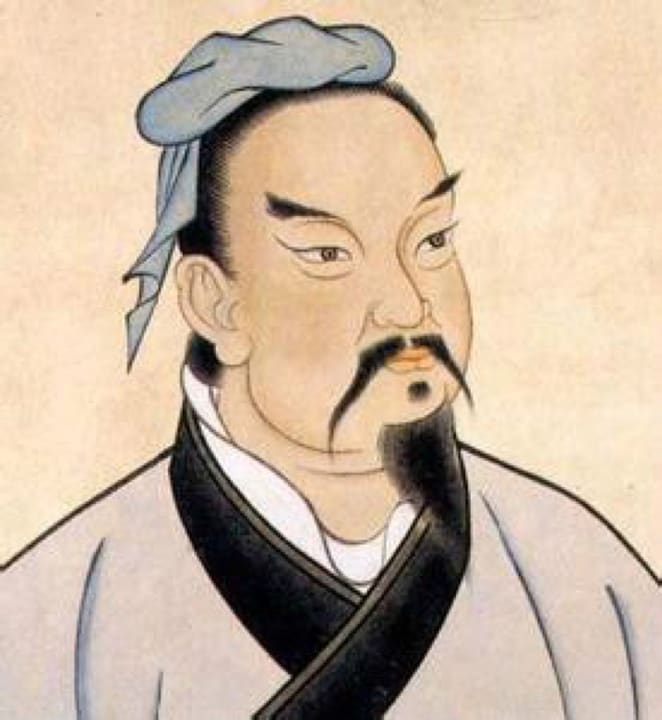
Sun Tzu (Sunzi, 'Master Sun') is traditionally identified with Sun Wu, a general said by the historian Sima Qian (c. 100 BCE) to have served King Helü of Wu around 500 BCE and to have proved his method by drilling the king's palace women. Modern scholars generally regard the text as a compilation of the Warring States period (5th–3rd century BCE), possibly built on the teachings of a historical strategist. A bamboo-slip copy found at Yinqueshan in 1972 confirms that a version circulated by the second century BCE.
“Hence to fight and conquer in all your battles is not supreme excellence; supreme excellence consists in breaking the enemy’s resistance without fighting”
“If you know the enemy and know yourself, you need not fear the result of a hundred battles. If you know yourself but not the enemy, for every victory gained you will also suffer a defeat”
The Art of War is a short treatise of thirteen chapters, around six thousand Chinese characters, written as a sequence of terse sayings introduced by the formula 'Sun Tzu said'. It begins by declaring war a matter of life and death for the state, to be studied through five constant factors: the moral law that binds people to their ruler, heaven (weather and seasons), earth (terrain and distance), the commander's qualities, and method and discipline.