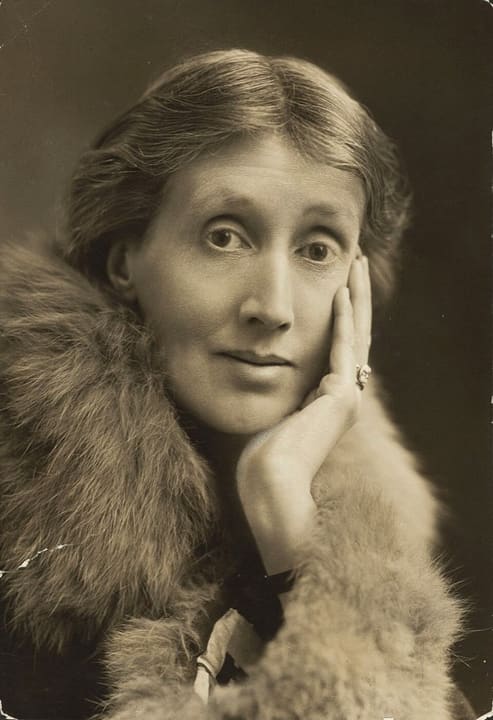
Virginia Woolf (1882-1941), born Adeline Virginia Stephen in London, the daughter of the critic Leslie Stephen, was a novelist, essayist and, with her husband Leonard Woolf, founder of the Hogarth Press (1917). A central figure of the Bloomsbury circle and of English modernism, she wrote The Voyage Out (1915), Jacob's Room (1922), Mrs. Dalloway (1925), To the Lighthouse (1927), Orlando (1928), The Waves (1931) and the essays A Room of One's Own (1929) and The Common Reader. She suffered recurrent episodes of mental illness throughout her life and died by drowning in the River Ouse in Sussex in March 1941.
“She had a perpetual sense, as she watched the taxi cabs, of being out, out, far out to sea and alone; she always had the feeling that it was very, very dangerous to live even one day.”
Mrs. Dalloway, Morning, at the Park gates in Piccadilly
“The leaden circles dissolved in the air.”
Mrs. Dalloway, Late morning, Peter Walsh leaving Clarissa's house
“He--for there could be no doubt of his sex, though the fashion of the time did something to disguise it--was in the act of slicing at the head of a Moor which swung from the rafters.”
“Vain trifles as they seem, clothes have, they say, more important offices than merely to keep us warm. They change our view of the world and the world's view of us.”
Mrs. Dalloway follows a single day in the middle of June 1923 in London, from a bright morning to the small hours of a party. Clarissa Dalloway, fifty-one, wife of the Conservative Member of Parliament Richard Dalloway, walks from Westminster up to Bond Street to buy flowers for the party she is giving that evening.
To the Lighthouse, published by the Hogarth Press in May 1927, follows the Ramsay family and their guests at a holiday house on the Isle of Skye in the Hebrides, across one evening before the First World War and one morning ten years later. Virginia Woolf tells it almost entirely through the passing thoughts of her characters, so that small events, a remark about the weather, a dinner, a brushstroke, carry the weight of a lifetime.
Orlando is a comic, fantastical biography of an English nobleman and poet who lives from the last years of Elizabeth I to the eleventh of October 1928, ageing only about twenty years and becoming a woman along the way. The book opens with the sixteen-year-old Orlando slashing at a Moor's head in the attic of his family's enormous house in the country.
The Waves follows six speaking consciousnesses from childhood to old age: Bernard, Susan, Rhoda, Neville, Jinny and Louis. A seventh figure, Percival, never speaks directly but becomes the focus of admiration, desire and grief.