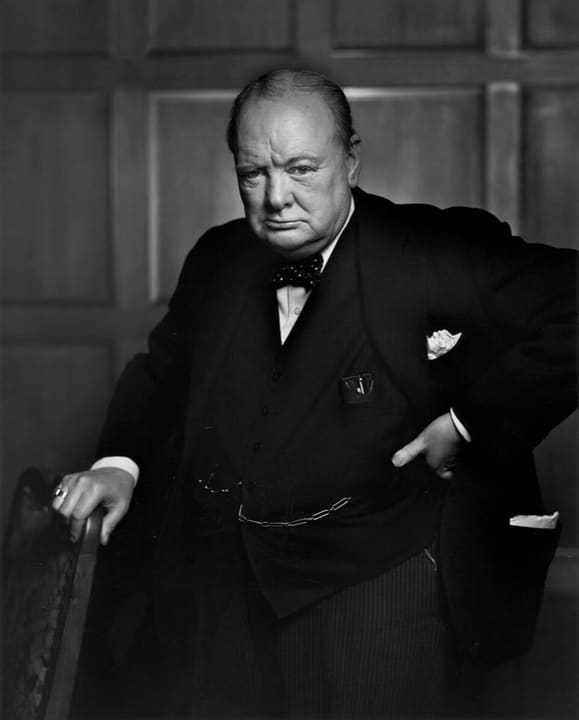
Winston Spencer Churchill (1874–1965) was commissioned into the 4th Hussars in 1895 and combined soldiering with war correspondence in Cuba, on the North-West Frontier, in the Sudan and in South Africa, where his escape from a Boer prison made him famous. Attached to the 21st Lancers, he rode in their charge at Omdurman in September 1898 while writing for the Morning Post. Elected to Parliament in 1900, he held most of the great offices of state, led Britain as Prime Minister from 1940 to 1945 and from 1951 to 1955, and received the Nobel Prize in Literature in 1953.
The River War: An Historical Account of the Reconquest of the Soudan is the young Winston Churchill's history of the Anglo-Egyptian campaigns of 1896–1899 that destroyed the Mahdist state in the Sudan. Churchill begins with geography and the Nile, which he presents as the thread on which the whole story hangs, and then with the rebellion of Muhammad Ahmad, a Dongolawi boat-builder's son and Sufi ascetic who proclaimed himself the Mahdi in 1881.
Churchill gave this speech to the House of Commons on the afternoon of 18 June 1940 and read it again over BBC radio that evening. He had been prime minister for just over five weeks.
On 4 June 1940, less than four weeks after becoming prime minister, Winston Churchill reported to the House of Commons on the evacuation of the British Expeditionary Force from Dunkirk. German armored columns had broken through the Ardennes in mid-May, driven to the Channel, and cut off British, French, and Belgian armies in a shrinking pocket on the coast.