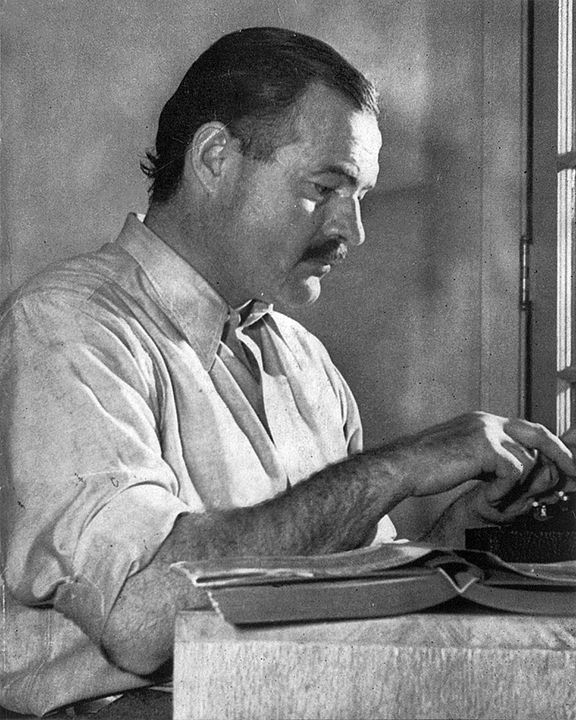
Ernest Hemingway (1899-1961) was born in Oak Park, Illinois, and worked as a reporter for the Kansas City Star before volunteering as an American Red Cross ambulance driver in Italy in 1918. In July of that year he was badly wounded by an Austrian trench-mortar shell near Fossalta di Piave and spent months recovering in the Red Cross hospital in Milan. After the war he lived in Paris as a foreign correspondent and writer, publishing In Our Time (1925) and The Sun Also Rises (1926). Later books include a novel of the Spanish Civil War (1940) and The Old Man and the Sea (1952), which won the Pulitzer Prize; he received the Nobel Prize in Literature in 1954.
“Abstract words such as glory, honor, courage, or hallow were obscene beside the concrete names of villages, the numbers of roads, the names of rivers, the numbers of regiments and the dates.”
Frederic Henry, an American serving as a lieutenant in the ambulance service of the Italian army, tells the story of his war and his love in plain, retrospective first-person prose. In 1915-16 his unit is quartered in Gorizia, near the Isonzo front.
The Old Man and the Sea follows Santiago, an aging Cuban fisherman who has gone eighty-four days without taking a fish, as he sails far into the Gulf Stream and hooks a marlin larger than his skiff. Hemingway narrows the plot until skill, endurance, hunger, memory, prayer, and pain are concentrated in one body at sea.