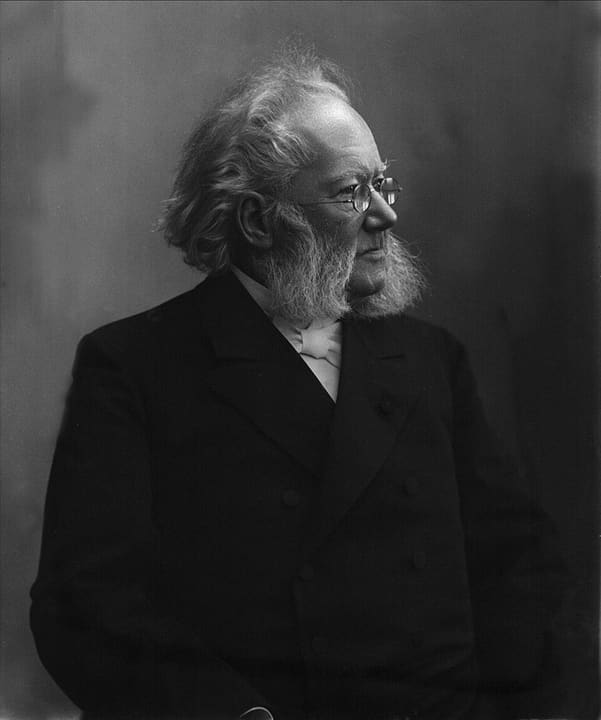
Henrik Ibsen (1828–1906) was a Norwegian playwright often called the father of modern realist drama. After early verse plays such as Brand and Peer Gynt, written during a long self-imposed exile in Italy and Germany, he turned in the 1870s and 1880s to prose 'problem plays' that tested the public masks of marriage, morality and civic life. His later works, including The Wild Duck, Hedda Gabler and The Master Builder, became increasingly symbolic and psychological.
The title play, A Doll's House (1879), takes place over three days of Christmas in the comfortable Norwegian home of Torvald Helmer, a newly appointed bank manager, and his wife Nora, whom he treats as a charming pet, calling her his songbird and squirrel. Years earlier, when Torvald was gravely ill and doctors advised a year in Italy, Nora secretly borrowed the money from the lawyer Krogstad, forging her dying father's signature as guarantor.