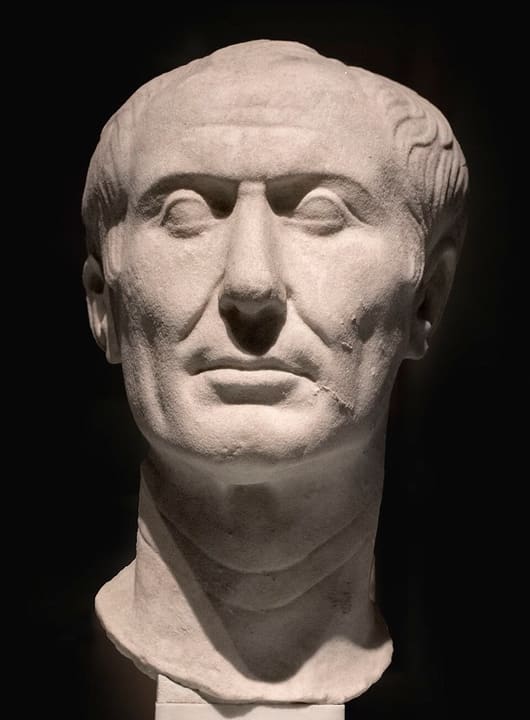
Gaius Julius Caesar (100–44 BCE) rose through Roman politics as a populist aristocrat, formed the alliance with Pompey and Crassus known as the First Triumvirate, and was consul in 59 BCE. As proconsul of Cisalpine and Transalpine Gaul from 58 to 50 BCE he conquered the lands between the Pyrenees and the Rhine, invaded Britain twice and bridged the Rhine. He won the civil war that followed, was named dictator, and was assassinated on the Ides of March, 44 BCE.
The Conquest of Gaul is a common English title for Caesar's Commentarii de Bello Gallico, seven books narrating his campaigns of 58 to 52 BCE, completed by an eighth book written after his death by his officer Aulus Hirtius. Each book covers one campaigning year, and Caesar speaks of himself throughout in the third person, a device that makes political self-advertisement read like a dispatch.
Caesar's Commentarii de Bello Civili, in three books, narrate the first two years of the war he fought against Pompey and the senatorial party, from January 49 BCE to the beginning of the Alexandrian war in late 48. The work is unfinished, breaking off in Alexandria, and it is the most openly political of his writings: its constant task is to show that Caesar was forced into war by a faction of personal enemies, that he repeatedly sought peace, and that he treated defeated fellow citizens with a mercy his opponents never showed.