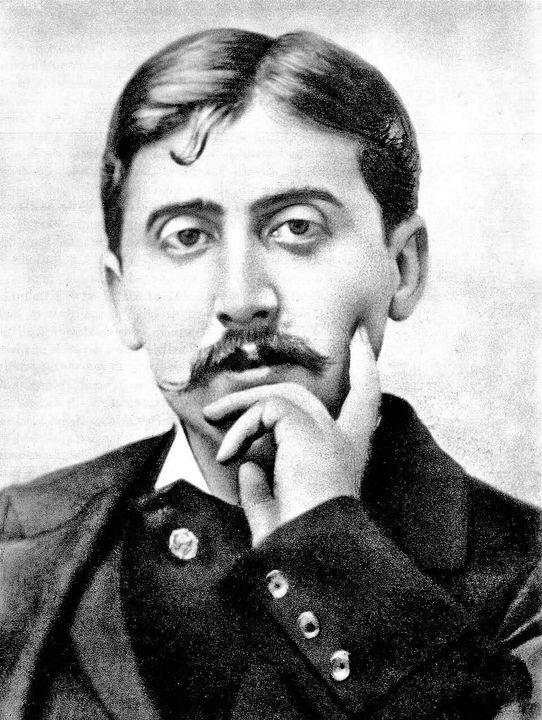
Marcel Proust (1871–1922) was born in Auteuil, then on the edge of Paris, the son of Adrien Proust, a distinguished physician and professor of hygiene, and Jeanne Weil. Asthmatic from the age of nine, he moved in Parisian salons as a young man, translated John Ruskin, and published essays and sketches before devoting his last years, largely confined to a cork-lined bedroom, to the seven-volume novel In Search of Lost Time. The second volume won the Prix Goncourt in 1919; the last three appeared after his death in 1922.
“The past is hidden somewhere outside the realm, beyond the reach of intellect, in some material object (in the sensation which that material object will give us) which we do not suspect.”
“the smell and taste of things remain poised a long time, like souls, ready to remind us, waiting and hoping for their moment, amid the ruins of all the rest; and bear unfaltering, in the tiny and almost impalpable drop of their essence, the vast structure of recollection.”
“To think that I have wasted years of my life, that I have longed for death, that the greatest love that I have ever known has been for a woman who did not please me, who was not in my style!”
Swann's Way (Du côté de chez Swann) is the first volume of Marcel Proust's seven-part novel In Search of Lost Time, which C. K. Scott Moncrieff translated under the title Remembrance of Things Past. Grasset issued it at Proust's expense in November 1913.