Work record
Dirks v. SEC
1983 · Postwar Contemporary · Court Decision · English
Abstract
Question Presented. Does a Wall Street analyst break the antifraud laws when he passes along a former executive's account of a hidden corporate fraud to clients who then dump their shares before the news becomes public?
Arguments. The Commission held that anyone who knowingly obtains confidential facts from a company source takes on that source's obligation to reveal them or stay out of the market. Dirks countered that he was an outsider owing shareholders nothing, and that digging out facts by questioning executives is exactly what analysts are supposed to do.
Holding. By six votes to three the justices set aside the censure. Powell explained that a recipient of a tip shares the source's liability only if the source broke faith with shareholders by seeking some advantage for himself, and Secrist sought none. Three dissenters protested that a breach harms investors whatever its motive.
Significance. The opinion supplies the framework courts still use for tipping cases.
Why it matters for advisers. Dirks holds that a person who receives a tip inherits the insider's duty to disclose or abstain only when the insider disclosed for personal benefit, including a gift to a trading relative or friend, and the recipient knows or should know of the breach; advisers and Series 65 candidates meet it as the rule for tippee liability.
Text. The majority is complete; Blackmun's dissent appears in its principal parts.
Key figures
- Raymond Dirks: Insurance analyst who uncovered a fraud and warned his clients
- Ronald Secrist: Former officer who blew the whistle to Dirks
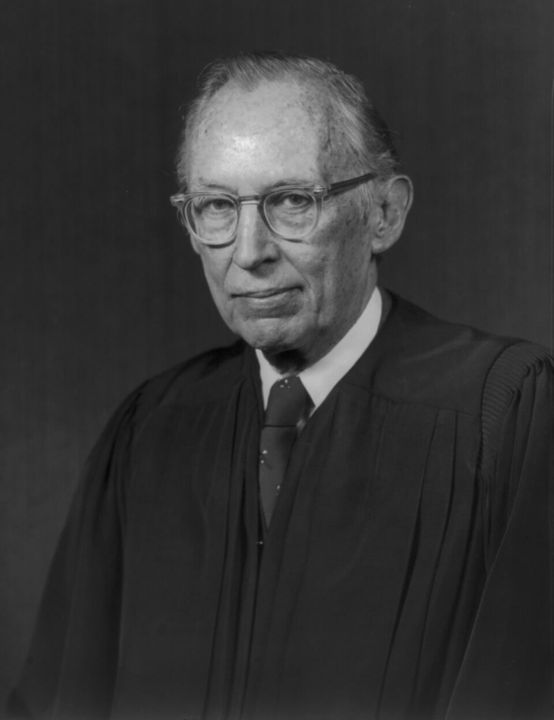
- Lewis F. Powell Jr.: Tied tippee liability to the insider's personal benefit
- Harry A. Blackmun: Dissented that good motives do not cure a breach of duty

Summary
In March 1973 Raymond Dirks, an officer of a New York broker-dealer who analyzed insurance company securities for institutional investors, received a call from Ronald Secrist, a former officer of Equity Funding Corporation of America. Secrist said that the company's assets were vastly overstated through fraud, that regulators had ignored similar warnings, and that Dirks should verify the charges and make them public. Dirks went to Los Angeles, where senior managers denied everything but several employees confirmed the story. He urged William Blundell of the Wall Street Journal to write about it, but Blundell doubted the story and feared libel. Throughout, Dirks discussed what he learned with clients and investors; neither he nor his firm traded the stock, but some of his contacts sold, including five investment advisers who liquidated more than sixteen million dollars in holdings. The price fell from twenty-six dollars to under fifteen, the New York Stock Exchange halted trading, California regulators seized the company's records, and Equity Funding went into receivership. The Commission found that Dirks had aided and abetted violations of the antifraud provisions by passing the information to investors who sold, reasoning that anyone who knowingly receives confidential information from an insider must disclose it publicly or refrain from trading. Because he had helped expose the fraud, it only censured him, and the District of Columbia Circuit affirmed. Dirks argued that he owed no duty to Equity Funding's shareholders and that analysts must be free to investigate. The Commission answered that a tippee inherits the insider's duty to disclose or abstain. On 1 July 1983 the Court reversed, 6–3. Justice Powell, building on Chiarella, held that a tippee's duty is derivative: it arises only when the insider breached a fiduciary duty to shareholders by disclosing the information and the tippee knows or should know of the breach. Whether the disclosure was a breach depends on its purpose, and the test is whether the insider will personally benefit, directly or indirectly, as through money, reputation that will translate into future earnings, or a gift of information to a trading relative or friend. A rule making every recipient of inside information a fiduciary would inhibit the work of analysts, which the Commission itself considered necessary to a healthy market. Secrist and the other employees received no benefit and sought to expose a fraud, so they breached no duty, and Dirks inherited none. Justice Blackmun, joined by Justices Brennan and Marshall, dissented. The insider's duty runs to shareholders, he argued, and breaching it harms them whatever the insider's motive; the personal-benefit requirement had no basis in law and rewarded trading at the expense of uninformed shareholders. Secrist's motive was laudable but his means were not, and Dirks should have taken the information to the authorities. The library text gives Powell's opinion and the main body of Blackmun's dissent, with some of the majority's notes appended. Salman v. United States (2016) later reaffirmed Dirks's rule that a gift of information to a trading relative supplies the required benefit.
Virtues in this work
- Fortitude: Secrist and Dirks pressed allegations of a massive fraud that management denied and a major newspaper at first declined to print.
- Justice: Blackmun insists that shareholders who traded without the information should not bear the cost of exposing a fraud.
- Prudence: Powell seeks a guiding principle that those whose daily work is governed by insider-trading rules can understand and follow.
Plot or Argument
- An analyst and a massive fraud
Powell narrates Secrist's tip, Dirks's investigation in Los Angeles, the Wall Street Journal's reluctance, the selling by Dirks's contacts, the fall in the stock price and Equity Funding's collapse.
- The Commission's censure
The Commission held that tippees who knowingly receive insider information must disclose or abstain regardless of motive, but in recognition of Dirks's role in exposing the fraud imposed only a censure.
- Duty grounded in a relationship
Parts II and III restate Cady, Roberts and Chiarella: the duty to disclose arises from a fiduciary relationship, and the Commission's view that tippees inherit it simply by receiving information amounts to the equal-information rule Chiarella rejected.
- Protecting the work of analysts
Powell warns that a broad tippee rule would inhibit analysts who ferret out information by questioning corporate officers, work the Commission itself regarded as necessary to a healthy market.
- The personal-benefit test
A tippee assumes the insider's duty only when the insider breached it by disclosing for personal benefit and the tippee knows or should know it. Courts may infer benefit from objective facts, including a gift of information to a trading relative or friend.
- Applying the test to Dirks
Part IV finds that Secrist and the other employees received no benefit and acted to expose a fraud, so they breached no duty, and Dirks, a stranger to Equity Funding, committed no derivative breach.
- Blackmun's dissent
Blackmun argues that the insider's duty is breached by any action that disadvantages shareholders, citing Mosser v. Darrow on a well-meaning trustee, and that the Court's motive requirement lets the end justify the means at shareholders' expense.
Characters
- Raymond Dirks, petitioner
New York securities analyst specializing in insurance companies who investigated and spread word of the Equity Funding fraud.
- Ronald Secrist, insider and informant
Former Equity Funding officer who told Dirks of the fraud and urged him to expose it.
- Equity Funding Corporation of America, company at the center of the fraud
Los Angeles life insurance and mutual fund company whose assets were vastly overstated; it went into receivership in 1973.
- William Blundell, journalist
Los Angeles bureau chief of the Wall Street Journal, who at first declined to write the story.
- Justice Lewis F. Powell Jr., author of the opinion of the Court
Held that a tippee inherits a duty only when the insider breached his own duty for personal benefit.
- Justice Harry A. Blackmun, dissenter
Joined by Brennan and Marshall, argued that an insider's motive does not excuse harm to shareholders.
Lessons
Derivative duty
Powell's central idea is that a tippee's duty is borrowed from the insider. If the insider did nothing wrong in sharing the information, the person who receives it inherits no obligation. The rule ties tippee liability back to the relationship of trust at its source.
- What two conditions must be met before a tippee assumes the insider's duty?
- Why does Powell call tipping a means of indirectly violating the disclose-or-abstain rule?
- Should someone be liable for using information that its source shared lawfully?
Motive as the test of breach
The Court made the insider's purpose decisive: disclosure for personal gain breaches the duty, while disclosure to expose wrongdoing does not. To avoid reading minds, courts look to objective signs such as payment, reputational benefit or a gift to a trading friend or relative.
- What examples of personal benefit does Powell give?
- Why does a gift of information to a relative count as a benefit to the insider?
- Is motive a sound basis for deciding whether a duty has been broken?
Good ends and doubtful means
Blackmun granted that Secrist's aim of exposing a fraud was laudable but insisted that the means were not, since shareholders who bought from Dirks's clients bore the loss. His dissent raises an old moral question about whether a good purpose can justify harm to people one is bound to protect.
- Who, according to Blackmun, paid the price for exposing the fraud?
- What does Blackmun think Dirks should have done with the information?
- Can a good end make an otherwise wrongful act permissible?
The analyst's role in markets
The majority emphasized that analysts routinely question corporate officers and that their findings cannot reach every shareholder at once. A rule treating every such contact as a source of liability would discourage the investigation that helps markets price securities accurately, including, here, the uncovering of a fraud regulators had missed.
- Why does Powell think a broad tippee rule would harm market analysts?
- How did Dirks's investigation succeed where regulators had not?
Context
Equity Funding Corporation of America, based in Los Angeles, sold packages of life insurance and mutual funds and was a favorite of investors in the late 1960s and early 1970s. Its officers had created tens of thousands of fictitious insurance policies and resold them to reinsurers, inflating the company's assets. The collapse in 1973 was among the largest corporate frauds of its time and led to the criminal conviction of many officers. After Chiarella (1980), the Commission continued to press broad theories of insider trading liability, including liability for tippees.
Composition
The Commission's administrative proceeding against Dirks ended in a censure in 1981, and the District of Columbia Circuit affirmed in 1982. The Court granted review in late 1982, heard argument in March 1983 and announced its decision on the final day of the term. The Commission's own opinion had acknowledged Dirks's role in bringing the fraud to light.
Reception
Dirks established the framework for tippee liability that governs insider trading cases, and courts have since debated how much proof the personal-benefit test requires. The Second Circuit's decision in United States v. Newman (2014) read the test narrowly, and the Court in Salman v. United States (2016) reaffirmed that a gift of information to a trading relative suffices. Commentators continue to discuss whether the test protects legitimate analysis or leaves room for unfair trading.
Comparisons
- chiarella-v-united-states
Powell built Dirks directly on his Chiarella opinion, extending the rule that a duty to disclose arises from a relationship of trust to those who receive tips from insiders.
- united-states-v-ohagan
O'Hagan added the misappropriation theory to the classical theory of Chiarella and Dirks, reaching outsiders who take information in breach of a duty to its source.
- sec-v-capital-gains-research-bureau
Capital Gains held that an adviser's undisclosed conflict operates as a fraud regardless of motive, a contrast with Dirks's emphasis on the insider's purpose in disclosing.
- the-prince
Blackmun charged that the majority let the end justify the means, a phrase long associated with readings of Machiavelli's counsel to rulers.
- the-nicomachean-ethics
Aristotle's treatment of voluntary action and choice bears on the Court's decision to make the insider's purpose the test of whether a disclosure was wrongful.
Quotes
Frequently cited
“Thus, the test is whether the insider personally will benefit, directly or indirectly, from his disclosure. Absent some personal gain, there has been no breach of duty to stockholders. And absent a breach by the insider, there is no derivative breach.”
Frequently cited
“The elements of fiduciary duty and exploitation of nonpublic information also exist when an insider makes a gift of confidential information to a trading relative or friend.”
“Imposing a duty to disclose or abstain solely because a person knowingly receives material nonpublic information from an insider and trades on it could have an inhibiting influence on the role of market analysts, which the SEC itself recognizes is necessary to the preservation of a healthy market.”
“As the facts of this case clearly indicate, the tippers were motivated by a desire to expose the fraud.”
“This innovation excuses a knowing and intentional violation of an insider's duty to shareholders if the insider does not act from a motive of personal gain.”
“Although Secrist's general motive to expose the Equity Funding fraud was laudable, the means he chose were not.”
For Students
A reading companion for classical Christian high school students. See the student guide.
Reading Guide
Watch for
- What Secrist told Dirks and what he asked him to do.
- Why the Wall Street Journal's bureau chief hesitated to publish.
- The Commission's rule that tippees inherit the insider's duty regardless of motive.
- The examples Powell gives of personal benefit to an insider.
- Blackmun's use of Mosser v. Darrow about a well-meaning trustee.
Key terms and names
- Tipper and tippee
- An insider who passes on material nonpublic information, and the person who receives it.
- Personal benefit
- Under Dirks, a direct or indirect gain to the insider from disclosure, such as money, reputation that will bring future earnings, or a gift to a trading relative or friend.
- Derivative breach
- A tippee's violation that arises from, and depends on, the insider's breach of duty.
- Aiding and abetting
- Knowingly helping another person commit a violation of law.
- Censure
- A formal reprimand, the mildest sanction the Commission imposed on Dirks.
- Receivership
- A legal process in which a court-appointed receiver takes control of a failing company's assets.
Seminar Questions
- Comprehension How did Dirks learn of the Equity Funding fraud, and what did he do with the information?
- Comprehension What rule did the Commission apply to Dirks, and what sanction did it impose?
- Interpretation Why does Powell conclude that Secrist breached no duty to shareholders?
- Interpretation How does Blackmun use the case of the reorganization trustee in Mosser v. Darrow?
- Interpretation Why does Powell think the Commission's rule would have no limiting principle?
- Big Question When someone uncovers wrongdoing, what does he owe to those who might be hurt by how he reveals it?
Faith Connections
- Ephesians 5:11 (Scripture)
Take no part in the unfruitful works of darkness, but instead expose them, a call to bring hidden wrongs to light.
- Romans 3:8 (Scripture)
Paul rejects the slander that he teaches doing evil that good may come, the principle at the center of Blackmun's objection that the end does not justify the means.
Logic and Rhetoric
Central argument: Powell reasons that a tippee's duty derives from the insider's; that an insider breaches his duty by disclosing only when he does so for personal benefit; that Secrist sought only to expose a fraud; and so neither he nor Dirks breached any duty. Blackmun replies that the insider's duty is breached by any action that harms shareholders, whatever the motive.
Rhetorical device: chain of conditions. Powell links his rule in a short sequence of conditional statements, absent gain no breach and absent breach no derivative breach (quote 0).
Debate: Resolved: that an insider who reveals confidential information to expose a fraud should be free of insider trading liability, along with those he tells.
Memory Work
Thus, the test is whether the insider personally will benefit, directly or indirectly, from his disclosure. Absent some personal gain, there has been no breach of duty to stockholders. And absent a breach by the insider, there is no derivative breach.
Although Secrist's general motive to expose the Equity Funding fraud was laudable, the means he chose were not.
Writing Prompts
Essay: Explain the personal-benefit test and evaluate Blackmun's argument that it excuses harm to shareholders whenever an insider's motives are good.
Comparison with Chiarella v. United States: Compare how Powell's opinions in Chiarella (1980) and Dirks (1983) use the idea of a relationship of trust to limit insider trading liability, and explain how Blackmun's dissents in both cases answer him.
Medical Lens
An insider-trading case arising from an insurance company fraud; there is no medical or psychiatric content.
Creative Prompts
- Classroom
Reenact March 1973 as a series of short scenes (Secrist's call, the Los Angeles interviews, the conversation with Blundell, the calls to clients), then stop after each scene and have the class decide whether Dirks has yet done anything wrong under the majority's rule and under Blackmun's.
- Essay
Write the letter Blackmun believed Dirks should have sent to the Commission in March 1973, and explain what might have happened differently.
- Dialogue
Write an exchange between an Equity Funding shareholder who bought stock from one of Dirks's clients and an analyst who credits Dirks with exposing the fraud.
- Essay
Apply the personal-benefit test to three invented tips: a chief financial officer telling a golfing friend, a director telling a reporter, and an engineer telling her brother. Explain which create tippee liability.
Further Reading
- The Great Wall Street Scandal, Raymond L. Dirks and Leonard Gross
Dirks's own account, written soon after the collapse, of how he uncovered the Equity Funding fraud.
- Fundamentals of Securities Regulation, Louis Loss and Joel Seligman
Treatise discussion of tippee liability and the personal-benefit test.
Verification notes
All six quotations, four from Powell and two from Blackmun, were found by Grep as exact substrings of content/texts/dirks-v-sec.txt. The stored file gives Blackmun's dissent through its conclusion and then appends several of the majority's notes before an excerpt marker; although the meta file says footnotes are omitted, the summary describes the file as it stands. Part designations for the majority follow the headings in the stored text. Details of the Equity Funding fraud beyond the opinion (fictitious policies, reinsurance) come from standard accounts. The meta file gives no text path, so fullText.path points to the stored text file.
- Confirm the argument date of 21 March 1983.
- Confirm the publication details of The Great Wall Street Scandal (Dirks and Gross, 1974).
- Confirm that the District of Columbia Circuit's affirmance came in 1982.