Work record
On the Magnet (De Magnete)
1600 · Renaissance Early Modern · Essays · Latin
Abstract
Background. Ocean navigation by compass had transformed European voyaging, yet the needle's departures from north and its downward tilt lacked a convincing explanation. An Elizabethan physician spent years testing loadstones in London and published his findings in Latin. The library follows the 1900 tercentenary rendering, couched in deliberately antique English, together with its editor's commentary.
Content. After clearing away legends inherited from ancient and medieval authors and weighing the supposed cures made from lodestone and iron, the treatise separates the pull of rubbed amber from that of the magnet. A small pivoted pointer detects the weaker force, and a lodestone ground into a ball serves as a miniature globe. Successive books treat orientation, deviation from true north, the tilt of a needle, and finally the planet's daily turning.
Key Concepts. Our planet as one vast magnet; electrics distinct from magnetics; polarity acquired by touch; deviation tied to uneven continents; latitude read from the tilt; a living, soul-like magnetic power.
Significance. Often called the first great English work of experimental science, it influenced Galileo and Kepler, provoked Bacon's mixed verdict, and supplied the Latin root of the modern vocabulary of electricity. Its picture of the earth as a magnet has proved lasting, though several of its explanations were later replaced.
Key figures
- William Gilbert: Colchester-born physician and tireless experimenter with loadstones
- Edward Wright: Navigational mathematician who wrote the commendatory preface
- Robert Norman: Instrument-maker who first described the needle's downward dip
- Peter Peregrinus: Medieval author of an early letter on magnetism
- Silvanus P. Thompson: Physicist who edited the 1900 English version and annotated it

Summary
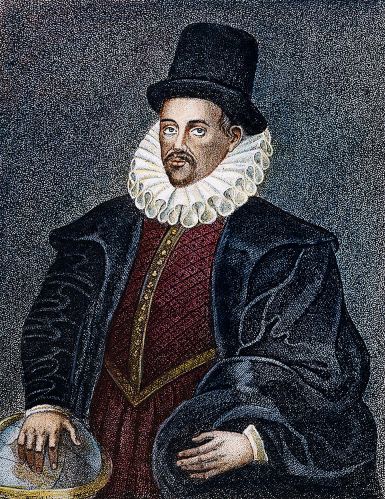
De Magnete, magneticisque corporibus, et de magno magnete tellure (On the Magnet, Magnetick Bodies Also, and on the Great Magnet the Earth) was published in London in 1600 by William Gilbert, a Colchester-born physician who became president of the College of Physicians that year. It is the first large book devoted to experimental study of magnetism and one of the earliest works of natural philosophy built on systematic, repeated experiment. Gilbert's central claim is that the earth itself is a great magnet, and that the behaviour of the compass needle follows from this. The library text is the English translation made by members of the Gilbert Club and edited by Silvanus P. Thompson, printed at the Chiswick Press in 1900 to mark the book's tercentenary, with Thompson's extensive notes of 1901; the translation imitates the English of Gilbert's time. In the preface Gilbert addresses readers who seek knowledge not from books only but from things themselves, marks his own experiments with asterisks, and invites others to repeat them carefully. A commendatory preface by the mathematician Edward Wright praises the book's value to navigators. Book I reviews ancient and modern writers on the loadstone, dismissing fables such as the belief that garlic destroys its power, and describes loadstone and iron, their poles, and their medicinal uses. Its last chapter states the new doctrine that the globe of the earth is magnetic. Book II distinguishes magnetic attraction, which Gilbert calls coition, from the attraction of rubbed amber, jet and gems. Using a light pivoted needle, the versorium, he shows that many substances attract small bodies when rubbed, names them electrics, and argues that they act by an effluvium, while magnetism is a power of the whole substance. He then works with a terrella, a loadstone ground into a sphere, as a model of the earth, mapping its poles, meridians and equator. Book III treats direction and how iron acquires verticity when touched by a loadstone. Book IV explains the variation of the compass from true north as caused by the irregular distribution of the earth's land masses, and discusses whether longitude can be found from it. Book V treats the dip of the needle below the horizon, describes an instrument to find latitude from it, and ends with a chapter arguing that magnetic force is animate or imitates life. Book VI argues that the earth's magnetic nature explains its daily rotation on its axis, answers objections to the earth's motion, and discusses the precession of the equinoxes. Galileo admired the book, Kepler drew on it for his celestial physics, and Francis Bacon, while borrowing from it, criticized Gilbert for building a whole philosophy on the loadstone.
Virtues in this work
- Industry: Gilbert reports only experiments 'many times performed and repeated', the fruit of years of labour, vigils and expense.
- Prudence: In Book I, Chapter XV he warns physicians not to give iron for every disorder of the liver and spleen, distinguishing cases where it helps from those where it hastens death.
- Justice: He asks that due honour be paid to Aristotle, Ptolemy, Hippocrates and Galen even while correcting them.
- Magnanimity: He sets out his 'New & unheard of doctrine' that the earth is a magnet despite expecting scorn from those sworn to received opinions.
Plot or Argument
- Preface and Edward Wright's encomium
Gilbert explains that trustworthy experiments give clearer proofs than the probable guesses of the schools. He addresses true philosophizers who learn from things themselves, marks his own discoveries with asterisks, uses new words where needed, and honours Aristotle, Ptolemy, Hippocrates and Galen while claiming his age has found facts they would have accepted. Wright praises the compass as the guide that made the great voyages possible, the hope of finding latitude by the dip, and defends the earth's rotation against scriptural objections.
- Book I: loadstone, iron and the earth
Gilbert surveys writers from Plato and Lucretius to Peregrinus, Cardan, Porta and Robert Norman, and rejects fables about the magnet. He shows that the loadstone has poles, that like poles repel and unlike attract, and that iron ore and wrought iron share magnetic properties. Chapters 14 and 15 assess the medicinal uses of loadstone and iron. Chapter 17 announces that the earth is a magnet.
- Book II: magnetic motion, electrics and the terrella
Gilbert separates true magnetic coition from the attraction of rubbed amber. With the versorium he shows that diamonds, sapphires, glass, sulphur and many other substances attract when rubbed, calls them electrics, and argues that they act by an effluvium, while magnetism is a property of the whole form. He then experiments with a spherical loadstone, the terrella, mapping its poles, equator and meridians, and studies armed loadstones, the orb of magnetic virtue and the effect of shape and mass.
- Book III: direction and verticity
A needle or iron rod turns north and south because of its verticity, its acquired polarity. Gilbert shows how touching iron with a loadstone gives it verticity, how verticity is lost or reversed by heating or rubbing, and corrects earlier writers on which pole of the needle points north.
- Book IV: variation
The compass does not point exactly to true north, but its deviation is constant in any one place. Gilbert attributes variation to the inequality of the earth's surface, the needle turning toward the greater masses of land, surveys reported variation in different seas, describes the mariner's compass and doubts that longitude can be reliably found from variation.
- Book V: declination (dip)
A magnetized needle free to move vertically dips below the horizon, more steeply toward the poles. Gilbert maps the dip on the terrella, describes an instrument for finding latitude from it, and ends with the chapter arguing that magnetic force is animate or imitates life.
- Book VI: the earth as a great magnet in motion
The earth's magnetic axis is constant. Gilbert argues that the earth turns daily on its axis by its magnetic nature, rather than the whole heaven turning around it, replies to arguments against the earth's motion, and explains the precession of the equinoxes by the earth's magnetic motion.
- Thompson's notes
The library text ends with Silvanus P. Thompson's notes (privately printed, 1901), which compare the three early Latin editions, identify authorities Gilbert cites, and explain technical terms and experiments.
Characters
- William Gilbert, author
London physician and experimenter, presenting the results of many years of work on magnets.
- Edward Wright, author of the commendatory preface
Mathematician and authority on navigation who calls Gilbert his teacher in magnetic philosophy.
- Robert Norman, predecessor
Skilful seaman and instrument-maker whose Newe Attractive (1581) described the dip of the needle.
- Peter Peregrinus, predecessor
Thirteenth-century author of a letter on the magnet that Gilbert credits as an early serious study.
- Girolamo Cardano and Giambattista della Porta, earlier writers criticized
Italian natural philosophers whose accounts of the magnet Gilbert frequently corrects.
- Silvanus P. Thompson, editor of the translation
Physicist and historian of science who led the Gilbert Club's translation and wrote its notes.
Lessons
Learn from things, not only from books
Gilbert addresses readers who seek knowledge from things themselves. He reviews earlier writers but tests their claims, rejecting the story that garlic robs a magnet of its power, and asks readers to repeat his experiments carefully rather than dismiss them when they fail.
- How does Gilbert treat the authorities he reviews in Book I?
- Why does he mark his own experiments with asterisks?
- What does he ask of readers who try his experiments and do not succeed?
Distinguish what looks alike
Amber and the loadstone both seem to attract, and earlier writers often treated them together. Gilbert shows with the versorium that many rubbed substances attract all light bodies, while the magnet acts only on magnetic bodies and without rubbing, and so he separates electric from magnetic attraction.
- What differences does Gilbert find between the attraction of amber and the attraction of a loadstone?
- How does the versorium make a weak force visible?
- Why is careful classification an important step in science?
A model of the world in the hand
Gilbert's terrella, a loadstone shaped into a sphere, lets him study on a table the behaviour he believes the compass shows across the whole earth. Reasoning from a model to the world is one of his most important methods, and his conclusion that the earth is a magnet rests on the agreement between the two.
- What does Gilbert learn from moving a small needle over the terrella?
- How strong is an argument from a model to the real earth?
- Where does Gilbert extend his conclusions beyond what his experiments show?
Honest medicine
As a physician, Gilbert examines the medical uses claimed for loadstone and iron. He rejects remedies built on fables, such as loadstone for headaches, warns against prescribing iron indiscriminately for every obstruction of the liver and spleen, and accepts only those uses he judges confirmed by experience.
- Which medicinal claims about loadstone does Gilbert reject, and on what grounds?
- Why does he warn young physicians about the use of iron?
- How does his medical judgement reflect the same method as his magnetic experiments?
Context
By 1600 the magnetic compass had guided European ships around Africa and across the Atlantic and Pacific, and English navigators such as Drake and Cavendish had circumnavigated the globe. Seamen knew that the needle varied from true north and that it dipped below the horizon, as Robert Norman had shown in 1581, but explanations were often speculative, placing the cause in the heavens or in magnetic mountains. Natural philosophy was still largely taught from Aristotle, and Copernicus's account of the earth's motion was debated. Gilbert, a physician of the College in London, approached these questions by long experimental work.
Composition
Gilbert worked on magnetism for many years before publishing De Magnete in Latin, printed in London by Peter Short in 1600. Later Latin editions appeared at Stettin in 1628 and 1633. P. Fleury Mottelay published an English translation in 1893. The Gilbert Club, formed for the tercentenary, produced a more literal translation edited by Silvanus P. Thompson and printed at the Chiswick Press in 1900, in English modelled on that of Gilbert's day, followed by Thompson's notes in 1901.
Reception
The book was quickly read across Europe. Galileo praised Gilbert in his Dialogue Concerning the Two Chief World Systems, and Kepler built magnetic forces into his account of planetary motion. Francis Bacon used Gilbert's experiments but objected that he had made a whole philosophy out of the loadstone. Historians of science regard De Magnete as an early model of experimental method, and Gilbert's Latin coinage electricus lies behind the later English word electricity. Some of his conclusions, such as the cause of variation in land masses and the magnetic cause of the earth's rotation, were later revised, while the doctrine that the earth is a magnet endured.
Comparisons
- galileo-selected-writings
Galileo admired Gilbert's experiments and his support for the earth's motion, while wishing he had been more mathematical; both join experiment to the Copernican debate.
- novum-organum
Bacon cites Gilbert's experiments repeatedly but criticizes him for building a general philosophy on one subject; reading the two together shows two early visions of experimental science.
- copernicus-on-the-revolutions
Book VI defends the earth's daily rotation, and Gilbert offers a physical, magnetic cause for a motion Copernicus had argued for on astronomical grounds.
- kepler-new-astronomy-and-harmony-of-the-world
Kepler took Gilbert's magnetic earth as a model for a force by which the sun moves the planets, carrying Gilbert's ideas into celestial physics.
- harvey-on-the-motion-of-the-heart-and-blood
Harvey, a younger fellow of the same College of Physicians, also built a new doctrine on repeated observation and experiment; the two books show London physicians reshaping natural knowledge.
Quotes
“But to you alone, true philosophizers, honest men, who seek knowledge not from books only but from things themselves, have I addressed these magnetical principles in this new sort of Philosophizing.”
“for nothing hath been set down in these books which hath not been explored and many times performed and repeated amongst us.”
“To those early forefathers of philosophy, Aristotle, Theophrastus, Ptolemy, Hippocrates, and Galen, let due honour be ever paid: for by them wisdom hath been diffused to posterity; but our age hath detected and brought to light very many facts which they, were they now alive, would gladly have accepted.”
“The application of a loadstone for all sorts of headaches no more cures them (as some make out) than would an iron helmet or a steel cap.”
“we have to establish & present to the view of the learned our New & unheard of doctrine about the earth”
“make yourself a versorium of any metal you like, three or four digits in length, resting rather lightly on its point of support after the manner of a magnetick needle”
“A loadstone is a wonderful thing in very many experiments, and like a living creature.”
For Students
A reading companion for classical Christian high school students. See the student guide.
Reading Guide
Watch for
- How Gilbert describes his intended reader and his method in the preface.
- The fables about the magnet that Gilbert rejects in Book I, and how he rejects them.
- The versorium and the list of electrics in Book II, Chapter II.
- Every use of the terrella as a model of the earth.
- Where Gilbert moves from experiment to broad claims about the earth's soul and motion in Books V and VI.
Key terms and names
- Loadstone
- A naturally magnetic iron ore, magnetite, that attracts iron.
- Terrella
- Gilbert's 'little earth', a loadstone ground into a sphere and used as a model of the globe.
- Versorium
- A light needle balanced on a point, used to detect magnetic or electric attraction.
- Electrics
- Gilbert's name for amber, jet, gems, glass and other substances that attract light bodies when rubbed.
- Variation
- The deviation of the compass needle east or west of true north, constant in any given place.
- Declination (dip)
- The angle at which a magnetized needle free to move vertically points below the horizon.
Seminar Questions
- Comprehension What is the terrella, and what does Gilbert show with it?
- Comprehension How does Gilbert distinguish the attraction of amber from the attraction of a loadstone?
- Comprehension What explanation does Gilbert give for the variation of the compass?
- Interpretation Gilbert honours Aristotle and Galen but claims his age has found facts they would have accepted. How does he balance respect for authority with correction of it?
- Interpretation Why does Edward Wright think the book matters so much to navigators?
- Interpretation In Book V Gilbert says magnetic force is animate or imitates life. Is this a conclusion from his experiments or a philosophical interpretation of them?
- Big Question What makes an experiment trustworthy, and why does Gilbert care so much that his are repeated?
Faith Connections
- Psalm 111:2 (Scripture)
'The works of the Lord are great, sought out of all them that have pleasure therein' fits Gilbert's long labour of seeking out the hidden powers of the earth.
- Job 38:4-6 (Scripture)
God asks Job where he was when the foundations of the earth were laid; Gilbert's attempt to know the 'innermost parts of the earth' can be read alongside this reminder of the limits of human knowledge.
- Augustine, City of God XXI.4 (Church Fathers)
Augustine cites the loadstone's power to draw iron as one of the marvels of nature that should make readers slow to deny what they cannot explain; Gilbert sets out to explain that marvel by experiment.
- Edward Wright's preface to De Magnete (Great Conversation)
Wright argues that Moses and the prophets spoke according to common appearances rather than to teach physics, a position on Scripture and natural philosophy also taken by Galileo in his Letter to the Grand Duchess Christina.
Logic and Rhetoric
Central argument: A spherical loadstone, the terrella, shows poles, an equator, direction, variation and dip in the same pattern that compass needles show across the earth. Things that agree in all their magnetic properties share the same nature. Therefore the earth itself is a great magnet, and the behaviour of the compass is explained by the earth's own magnetic power, not by attractions in the heavens or by magnetic mountains. This magnetic nature, Gilbert further argues, also accounts for the earth's daily rotation.
Rhetorical device: invective against opponents. In the preface Gilbert contrasts true philosophizers who learn from things themselves with 'learned idiots, grammatists, sophists, wranglers, and perverse little folk', sharpening his appeal to experiment by scorn for bookish disputation (see quote 1).
Debate: Resolved: That experiment, not authority, should decide questions of natural philosophy.
Memory Work
But to you alone, true philosophizers, honest men, who seek knowledge not from books only but from things themselves, have I addressed these magnetical principles in this new sort of Philosophizing.
To those early forefathers of philosophy, Aristotle, Theophrastus, Ptolemy, Hippocrates, and Galen, let due honour be ever paid: for by them wisdom hath been diffused to posterity; but our age hath detected and brought to light very many facts which they, were they now alive, would gladly have accepted.
Writing Prompts
Essay: Gilbert claims that the earth is a great magnet. Using Book I, Chapter XVII and his experiments with the terrella, explain his evidence and evaluate how strong it is.
Comparison with Novum Organum: Bacon praised experiment but criticized Gilbert. Compare Gilbert's preface with Bacon's aphorisms on experiment, and argue whether Bacon's criticism is fair.
Medical Lens
Gilbert wrote as a practising London physician, and Book I, Chapters XIV and XV, are a short critical review of magnetic and chalybeate therapy. He reports ancient claims that loadstone expels gross humours or makes people melancholic, rejects loadstone as a cure for headaches or a means of drawing arrowheads from wounds, and condemns sellers who exploit its supposed dangers for gain. On iron he works within humoral medicine, recommending prepared steel for a relaxed, humid liver and an enlarged spleen and for pale, sickly girls, while warning that physicians who give it for every obstruction, dropsy, jaundice or hypochondriacal melancholia harm their patients. His insistence that medical claims be tested by experience parallels his method in physics. Read these chapters as a record of Elizabethan pharmacology, not as clinical guidance.
- Book I, Ch. XIV
Survey and criticism of medicinal claims for the loadstone: purging humours, causing melancholy, curing headaches, extracting arrowheads, and its use in wound plasters.
- Book I, Ch. XV
Preparation and use of iron and steel as remedies for disorders of the liver and spleen, with warnings against their misuse and a discussion of whether iron is warm or cold.
- Book II, Ch. II
Galen's three kinds of attraction and the analogy of the cupping-glass, which Gilbert rejects as explanations of amber's attraction.
- Edward Wright's preface
Wright's praise of Gilbert as a distinguished doctor of medicine who gave his intellect to magnetism as well as medicine.
Creative Prompts
- Classroom
Build Gilbert's versorium from a light strip of foil or a paper clip balanced on a pin. Test which rubbed materials turn it and which do not, record the results with Gilbert-style asterisks for surprises, and compare them with his list of electrics.
- Fiction
Write a scene aboard an English ship in fog in 1600, in which a captain who has read Edward Wright's preface tries to judge his latitude from the dip of the needle.
- Essay
Gilbert claims that the earth is a great magnet. Explain how the terrella experiments support this claim, and where his argument goes further than his evidence.
- Dialogue
Write a conversation between Gilbert and Francis Bacon in which Bacon praises Gilbert's experiments but objects to his building a whole philosophy on the loadstone, and Gilbert answers.
Further Reading
- Notes on the De Magnete of Dr. William Gilbert, Silvanus P. Thompson
The 1901 companion to the Gilbert Club translation, included at the end of the library text.
- Dialogue Concerning the Two Chief World Systems, Galileo Galilei
The Third Day discusses Gilbert and the magnetic earth.
- The Certaine Errors in Navigation, Edward Wright
Wright's 1599 work on navigation by Gilbert's friend and collaborator.
- The Scientific Revolution, Steven Shapin
Verification notes
Contents, chapter titles and all quotations are taken from the stored Gilbert Club translation. The meta file credits Silvanus P. Thompson as translator; the translation was a collective work of the Gilbert Club under his editorship, and the record says so. The stored text preserves Gilbert's asterisks marking his own experiments and page markers in braces; quotations were chosen to avoid both. Biographical facts follow standard accounts; Gilbert's exact place and date of death in 1603 are reported variously. Facts about the 1893 Mottelay translation, the Stettin editions and later reception follow standard histories and Thompson's notes.
- Gilbert's place and exact date of death in 1603.
- Whether Peter Short was the sole printer of the 1600 folio.