Work record
Near v. Minnesota
1931 · Early 20th Century · Court Decision · English
Abstract
Question Presented. Can a state, under a public-nuisance statute, have a judge shut down a weekly paper found to be habitually malicious, scandalous and defamatory and bar its owners from issuing future numbers, consistent with the liberty of the press that the Fourteenth Amendment secures?
Arguments. Near's lawyers said that suppressing a publication ahead of time is precisely the licensing system the constitutional guarantee abolished, whatever damages a libeled official might later recover. Minnesota answered that its courts acted only after trial and proof, that libel suits were too weak against a business built on defamation, and that safeguarding public peace and morals was ordinary state authority.
Holding. By five votes to four the justices reversed. Hughes judged the statute by its practical effect: it silenced criticism of officeholders and let publication resume only with judicial approval. Apart from narrow exceptions, he said, remedies must come after publication. Butler's dissent warned that the majority imposed an unprecedented federal limit on states.
Significance. The ruling became the foundation of the modern doctrine against prior restraint. In 1971 the justices invoked it when they declined to stop newspapers from printing the Pentagon Papers.
Text. Included are the full majority opinion and the first part of Butler's dissent, without notes; nothing from the newspaper itself is reproduced.
Key figures
- Jay M. Near: Minneapolis editor silenced by court order under the gag law
- Floyd B. Olson: County prosecutor who sought the injunction
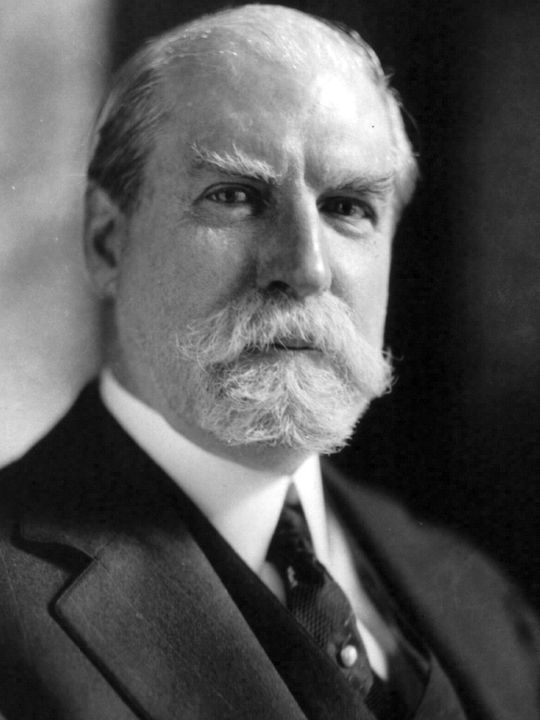
- Charles Evans Hughes: Chief Justice who wrote that the law was censorship
- Pierce Butler: Minnesota-born justice who led the four dissenters
- Robert R. McCormick: Chicago publisher who underwrote the appeal

Summary
In 1925 Minnesota enacted a Public Nuisance Law allowing a court to abate, as a public nuisance, any business of regularly publishing an obscene, lewd and lascivious or a malicious, scandalous and defamatory newspaper or periodical. Truth published with good motives and for justifiable ends was a defense. Once a paper was enjoined, further publication was punishable as contempt of court. Critics soon called it the Minnesota gag law. In the autumn of 1927 Jay M. Near and Howard A. Guilford published nine issues of The Saturday Press in Minneapolis. The paper charged that a gangster controlled gambling, bootlegging and racketeering in the city and that the police chief, the mayor and the county attorney were negligent or worse. Many articles also attacked the city's Jewish residents in abusive language. Guilford was shot and wounded soon after the first issue. Hennepin County Attorney Floyd B. Olson brought suit under the law, the district court permanently enjoined the defendants from publishing any malicious, scandalous or defamatory newspaper, and the Minnesota Supreme Court twice upheld the statute. The question was whether the statute, by authorizing courts to suppress a newspaper and forbid future issues, violated the liberty of the press protected against the states by the Fourteenth Amendment. Near, whose appeal was financed by Chicago Tribune publisher Robert R. McCormick, argued that the law imposed a censorship the Constitution forbids, whatever remedies might exist afterward for libel. Minnesota answered that the law reached only a business already proved to be malicious and defamatory, that it supplemented inadequate libel remedies, and that the state's police power extended to protecting public peace and morals. On 1 June 1931 the Court reversed, five to four. Chief Justice Hughes held that liberty of the press is within the liberty safeguarded by the Fourteenth Amendment. Examining the statute's operation rather than its form, he found that it aimed not at redressing private wrongs but at suppressing charges against public officers, and that a publisher could resume only by satisfying a judge that his matter was true and well motivated. This, he wrote, is of the essence of censorship. The historic chief purpose of the press guarantee was to prevent previous restraints; exceptional cases such as wartime troop movements, obscenity and incitement to violence did not reach criticism of officials. Abuse by miscreant purveyors of scandal was to be met by subsequent punishment through libel law. Justice Butler, joined by Justices Van Devanter, McReynolds and Sutherland, dissented. He argued that the Court gave freedom of the press an unprecedented scope against the states, that the injunction followed a full judicial finding, and that states must be free to prevent abuses. The library text gives the majority opinion and an excerpt from Butler's dissent, without footnotes. In New York Times Co. v. United States (1971), the Pentagon Papers case, the Court relied on Near in holding that the government bears a heavy burden to justify any prior restraint.
Virtues in this work
- Justice: Hughes holds that even a scandal sheet must be answered through libel trials on what it actually printed rather than silenced in advance.
- Magnanimity: Hughes makes no defense of the paper's contents yet extends to it the same shield the Constitution gives every newspaper that exposes official misconduct.
- Prudence: Butler urges that states, which know their own conditions, must be free to adopt just measures against abuses of the press.
Plot or Argument
- The statute and the proceedings
Hughes quotes the 1925 law, describes the complaint against The Saturday Press and its charges of official collusion with gangsters, and recounts the injunction and the two Minnesota Supreme Court decisions.
- Liberty of the press against the states
Citing Gitlow, Stromberg and other decisions, Hughes treats it as no longer open to doubt that liberty of the press is within the liberty protected by the due process clause, subject to the state's police power.
- The statute's four features
Hughes lists them in order: the law is not aimed at private wrongs; it targets continued charges against public officers; its object is suppression, not punishment; and it puts the publisher under an effective censorship, since resumption requires a judge's approval.
- The history of previous restraint
Drawing on Blackstone, Madison's Report on the Virginia Resolutions and Story, Hughes holds that immunity from previous restraint is the chief purpose of the press guarantee, while noting exceptional cases such as troop movements in war, obscenity and incitement to violence.
- Truth, motive and the remedy of libel
The defense of truth with good motives does not save the law, because it makes the legislature or a judge the arbiter of what may be published about officials. Growing corruption makes a vigilant press more necessary, and libel suits remain available. The judgment is reversed.
- Butler's dissent (excerpt)
Butler argues that the decision extends a federal restriction to the states without precedent, that the record showed a business of defamation adjudged a nuisance, that courts must presume conditions in Minnesota justified the law, and that states must remain free to prevent abuses of the press.
Characters
- Jay M. Near, appellant
Minneapolis publisher of The Saturday Press, enjoined under the 1925 nuisance law.
- Howard A. Guilford, co-publisher
Near's partner, shot and wounded after the first issue; originally a defendant.
- Floyd B. Olson, Hennepin County Attorney
Brought the nuisance action; later elected Governor of Minnesota.
- Chief Justice Charles Evans Hughes, author of the majority opinion
Held that the law imposed a censorship forbidden by the guarantee of a free press.
- Justice Pierce Butler, dissenter
Minnesotan who wrote for four justices that the states must be free to restrain malicious and defamatory publications.
- Robert R. McCormick, supporter of the appeal
Publisher of the Chicago Tribune who paid for Near's appeal to the Supreme Court.
- Weymouth Kirkland, counsel for Near
Chicago Tribune lawyer who argued the case in Washington.
Lessons
Prior restraint and subsequent punishment
Hughes builds on an old distinction: the law may punish a publisher afterward for libel, but it may not, except in rare cases, forbid publication in advance. The difference matters because a restraint stops words from reaching the public at all, while punishment comes only after a trial on what was actually said.
- How does Blackstone, as quoted by Hughes, define liberty of the press?
- Why does Hughes think libel suits are the appropriate remedy for false charges?
- Is it better for a society to risk some false or injurious publications than to let officials decide in advance what may be printed?
Looking at what a law does
Minnesota described its law as abating a nuisance, a familiar use of state power. Hughes insisted that the Court look past the label to the statute's operation, which was to suppress a newspaper and require a judge's approval before it could publish again.
- What are the four features Hughes identifies in the statute's operation?
- Why does it matter that the law put the burden on the publisher to prove truth and good motives?
Protecting a press one may not admire
The Saturday Press made reckless charges and printed abusive attacks on Jewish citizens, and Hughes did not defend its contents. The Court's principle was that the guarantee must cover such a paper if it is to protect honest exposure of official misconduct as well.
- Why does Hughes note that the officials named might be impeccable without changing his conclusion?
- How does Butler use the character of the paper to support his dissent?
- Why might a principle of free expression be tested most severely by unattractive speakers?
Federal protection and state responsibility
Butler argued that before the Fourteenth Amendment the states alone protected the press, and did so adequately, and that the Court was imposing a federal rule without precedent. His dissent presents a reasoned defense of state authority to address abuses close to home.
- What cases does Butler cite to show that the Bill of Rights originally did not bind the states?
- What conditions in Minneapolis does Butler say may have moved the legislature?
- Who is better placed to judge abuses of the press, a state legislature or the federal courts?
Context
Prohibition brought organized crime to many American cities in the 1920s, and Minneapolis had a flourishing trade in bootlegging and gambling. Small weekly scandal sheets claimed to expose official corruption, and some were accused of using their columns for blackmail. Minnesota's 1925 nuisance law, passed with little debate, was aimed at such papers.
Composition
The temporary injunction against The Saturday Press issued in November 1927, and the Minnesota Supreme Court upheld the statute in 1928 and again in 1929. The American Civil Liberties Union first offered help, but Robert R. McCormick and the American Newspaper Publishers Association took over the appeal. The case was argued on 30 January 1931 and decided on 1 June 1931.
Reception
Newspaper publishers welcomed the decision, and it is often described as the Court's first major ruling on freedom of the press. Near resumed publication of The Saturday Press for a time. The opinion's catalogue of exceptional cases, especially the reference to troop movements, framed later disputes, and in New York Times Co. v. United States (1971) the Court cited Near in refusing to enjoin publication of the Pentagon Papers. Historians such as Leonard Levy have debated how far the founding generation understood press freedom to extend beyond Blackstone's protection against prior restraint.
Comparisons
- gitlow-v-new-york
Hughes builds on the 1925 assumption that the Fourteenth Amendment protects speech and press, now applying it to strike down a state law; Butler notes that the question was first decided only six years earlier.
- schenck-v-united-states
Hughes cites Holmes's 1919 opinion for the exceptional wartime case in which a government may prevent publication, such as the sailing dates of troop transports.
- commentaries-on-the-laws-of-england
Blackstone's statement that liberty of the press consists in laying no previous restraints upon publications is quoted by Hughes as the starting point of the historical argument.
- virginia-and-kentucky-resolutions
Hughes quotes Madison's Report on the Virginia Resolutions, written in defense of the 1798 resolutions against the Sedition Act, for the broader American view of press freedom.
- new-york-times-v-sullivan
Thirty-three years later the Court limited the subsequent punishment that Near left available, requiring public officials suing for libel to prove actual malice.
- the-federalist-papers
Hamilton argued in No. 84 that liberty of the press could not be secured by a written definition and must rest on public opinion, a different approach to the question Near settles by constitutional rule.
Quotes
Frequently cited
“In determining the extent of the constitutional protection, it has been generally, if not universally, considered that it is the chief purpose of the guaranty to prevent previous restraints upon publication.”
Frequently cited
“This is of the essence of censorship.”
Frequently cited
“The fact that the liberty of the press may be abused by miscreant purveyors of scandal does not make any the less necessary the immunity of the press from previous restraint in dealing with official misconduct. Subsequent punishment for such abuses as may exist is the appropriate remedy consistent with constitutional privilege.”
“No one would question but that a government might prevent actual obstruction to its recruiting service or the publication of the sailing dates of transports or the number and location of troops.”
“It gives to freedom of the press a meaning and a scope not heretofore recognized, and construes "liberty" in the due process clause of the Fourteenth Amendment to put upon the States a federal restriction that is without precedent.”
“It is of the greatest importance that the States shall be untrammeled and free to employ all just and appropriate measures to prevent abuses of the liberty of the press.”
For Students
A reading companion for classical Christian high school students. See the student guide.
Reading Guide
Watch for
- The text of the 1925 statute and its two kinds of nuisance publications.
- Hughes's four numbered points about how the statute operates.
- The phrase of the essence of censorship.
- Hughes's list of exceptional cases in which previous restraint may be allowed.
- Butler's argument that the defendants conceded the articles were defamatory.
Key terms and names
- Prior restraint
- Government action that prevents speech or publication before it occurs, such as licensing or an injunction.
- Subsequent punishment
- Legal penalties imposed after publication, such as damages or fines for libel.
- Public nuisance
- A condition or activity that a court may order stopped because it injures the community; Minnesota applied the idea to newspapers.
- Injunction
- A court order forbidding a party from doing something, enforceable by contempt.
- Libel
- A false published statement that damages a person's reputation.
- Contempt of court
- Disobedience to a court order, punishable by fine or imprisonment.
- Malfeasance
- Wrongful conduct by a public official in the performance of official duties.
Seminar Questions
- Comprehension What did the Minnesota statute allow a court to do, and what defense did it offer?
- Comprehension What are the exceptional cases in which Hughes says a prior restraint might be allowed?
- Comprehension What does Butler say the record showed about the business of The Saturday Press?
- Interpretation Why does Hughes treat the requirement that a publisher prove truth and good motives as a form of censorship?
- Interpretation How does Hughes use the growth of crime and corruption in cities to support his conclusion, and how does Butler use similar facts to support the opposite one?
- Big Question Is the freedom to publish worth protecting even when it is used by people who publish falsehoods and abuse?
Faith Connections
- Exodus 20:16 (Scripture)
Thou shalt not bear false witness against thy neighbour: the commandment speaks to the wrong of defamation that both the majority and the dissent acknowledge.
- Ephesians 5:11-13 (Scripture)
Paul urges believers to have no fellowship with the unfruitful works of darkness but rather reprove them, since all things that are reproved are made manifest by the light, a text often applied to exposing wrongdoing.
- Proverbs 18:17 (Scripture)
He that is first in his own cause seemeth just; but his neighbour cometh and searcheth him: a proverb on testing accusations by hearing the other side.
Logic and Rhetoric
Central argument: Because the press guarantee was historically aimed above all at previous restraints, and because the Minnesota law in operation suppresses a newspaper for criticizing officials and permits it to resume only with a judge's approval, the law is censorship; abuses must be remedied by subsequent punishment such as libel suits, except in narrow cases like wartime troop movements.
Rhetorical device: concession and rebuttal. Hughes grants that the press may be abused by miscreant purveyors of scandal, then turns the concession into his conclusion that subsequent punishment, not restraint, is the remedy (quote 3).
Debate: Resolved: that a court may enjoin a newspaper found after trial to be regularly malicious and defamatory from publishing future issues.
Memory Work
This is of the essence of censorship.
The fact that the liberty of the press may be abused by miscreant purveyors of scandal does not make any the less necessary the immunity of the press from previous restraint in dealing with official misconduct. Subsequent punishment for such abuses as may exist is the appropriate remedy consistent with constitutional privilege.
Writing Prompts
Essay: Explain the difference between prior restraint and subsequent punishment as Hughes uses it, and evaluate whether Butler successfully shows that Minnesota's injunction was closer to punishment than to censorship.
Comparison with Gitlow v. New York: Compare how much deference the Court gives to the state legislature in Gitlow and in Near, and explain why the outcome differs when both cases accept that the Fourteenth Amendment protects speech and press.
Medical Lens
Hughes's opinion and Butler's dissent concern injunctions, libel and the history of press licensing; there is no medical subject matter.
Creative Prompts
- Classroom
Argue the case before a student bench in January 1931: Near's counsel argues that the injunction is censorship, Minnesota argues that it abates an adjudged nuisance, and the bench writes short opinions in the voices of Hughes and Butler.
- Essay
Write a brief for Minnesota using only arguments that appear in Butler's dissent, explaining why a judicial injunction after a full trial differs from an official licenser's censorship.
- Dialogue
Write a conversation in 1931 between a reporter for a large daily newspaper and an editor who dislikes Near's paper, about why the big papers paid for his appeal.
- Classroom
Sort a list of hypothetical publications into those Hughes would allow to be restrained in advance and those he would leave to libel suits, giving a reason from the opinion for each.
Further Reading
- Minnesota Rag: The Dramatic Story of the Landmark Supreme Court Case That Gave New Meaning to Freedom of the Press, Fred W. Friendly
Journalist's narrative of the Saturday Press, the Minneapolis setting and the appeal.
- Emergence of a Free Press, Leonard W. Levy
Scholarly study of what freedom of the press meant in the founding era, bearing on Hughes's historical argument.
- Freedom for the Thought That We Hate: A Biography of the First Amendment, Anthony Lewis
Places Near within the development of press freedom from 1791 to the Pentagon Papers and beyond.
Verification notes
Grep located each of the six quotations verbatim in content/texts/near-v-minnesota.txt, four from Hughes and two from Butler's own words in the dissent excerpt. In keeping with the reading-level note, nothing from the newspaper's articles is quoted, and passages of Butler's dissent describing them were avoided. The 5-4 lineup, McCormick's role and Kirkland's argument follow Friendly's Minnesota Rag and standard references. COURT_TASK.md lists schoolBand 9-10; the schema allows only 9-12.
- Confirm that Near briefly resumed publishing The Saturday Press after the decision.
- Confirm the dates of the two Minnesota Supreme Court decisions (1928 and 1929).