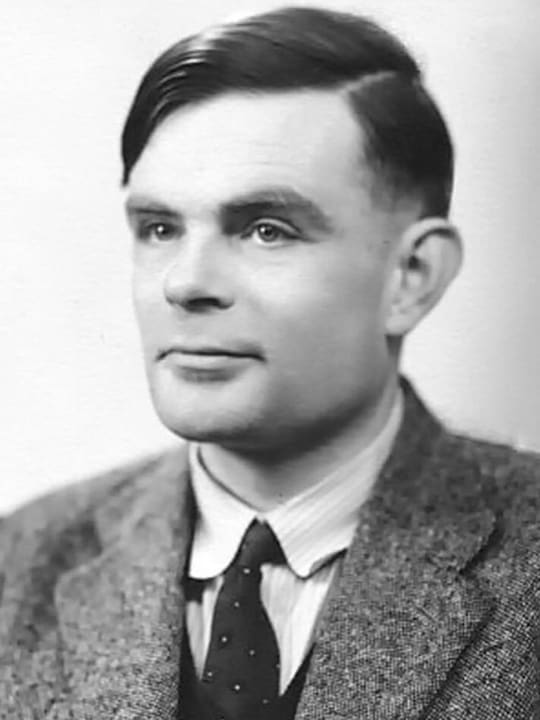
Alan Turing (1912-1954) was a British mathematician, logician, cryptanalyst, and early computer scientist. His 1936 work clarified computation through the abstract machine now bearing his name, and his wartime codebreaking at Bletchley Park helped Allied cryptanalysis. After the war he worked on electronic computing, morphogenesis, and the philosophical question of machine intelligence.
This paired entry brings together Alan Turing's 1936 paper On Computable Numbers, with an Application to the Entscheidungsproblem and his 1950 essay Computing Machinery and Intelligence. The first paper attacks a precise mathematical problem: what does it mean for a number or function to be computable?