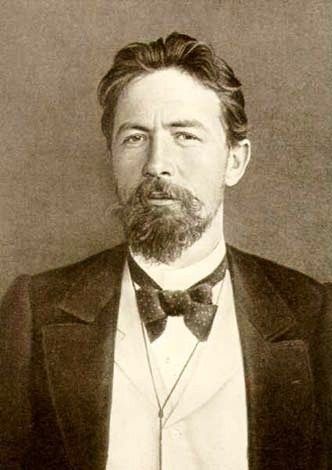
Anton Pavlovich Chekhov (1860-1904) was born in Taganrog on the Sea of Azov, the grandson of a serf, and trained as a physician at Moscow University, qualifying in 1884. He supported his family by writing comic sketches and became one of the great masters of the short story. He practised medicine intermittently, travelled to the penal colony on Sakhalin in 1890 to survey its convicts, and worked against cholera near his estate at Melikhovo in 1892. His last plays, The Seagull, Uncle Vanya, Three Sisters and The Cherry Orchard, were staged by the Moscow Art Theatre; he died of tuberculosis at Badenweiler in Germany in 1904.
Frequently Cited
“Man is endowed with reason and the power to create, so that he may increase that which has been given him, but until now he has not created, but demolished.”
Uncle Vanya, subtitled Scenes from Country Life, takes place over a few months on a provincial Russian estate. For twenty-five years Ivan Petrovich Voitski, Uncle Vanya, has managed the property with his niece Sonia, sending its income to her father, Professor Alexander Serebrakoff, the widower of Vanya's sister, whom Vanya once revered as a great scholar.