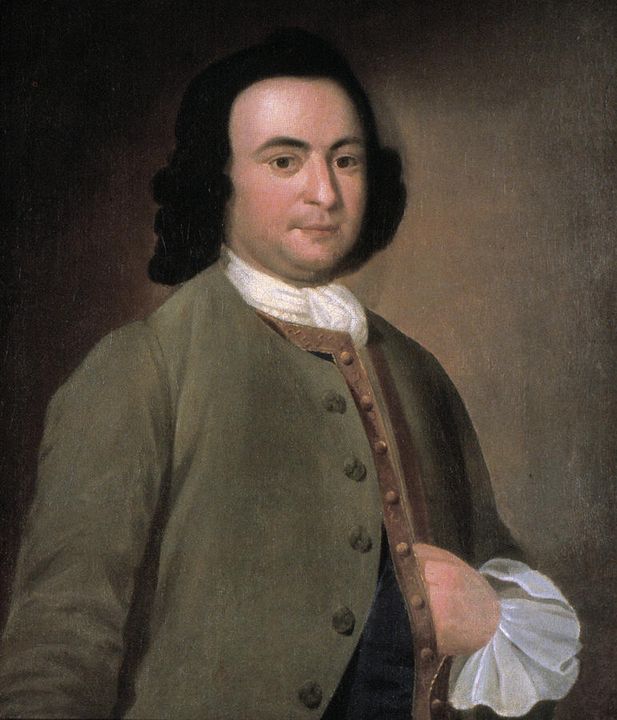
George Mason (1725-1792) was a Virginia planter of Gunston Hall in Fairfax County, a vestryman, justice of the county court and member of the House of Burgesses, largely self-taught in law and political history. In 1774 he drafted the Fairfax Resolves with George Washington, and in 1776 he wrote the first drafts of Virginia's Declaration of Rights and much of its first constitution. He was a delegate to the Constitutional Convention of 1787 but refused to sign the finished Constitution, setting out his reasons in Objections to this Constitution of Government, which begins by noting that it has no declaration of rights. He opposed ratification at the Virginia convention of 1788 and lived to see the Bill of Rights adopted in 1791.
“That all men are by nature equally free and independent, and have certain inherent rights, of which, when they enter into a state of society, they cannot, by any compact, deprive or divest their posterity; namely, the enjoyment of life and liberty, with the means of acquiring and possessing property, and pursuing and obtaining happiness and safety.”
“That no free government, or the blessings of liberty, can be preserved to any people but by a firm adherence to justice, moderation, temperance, frugality, and virtue and by frequent recurrence to fundamental principles.”
“all men are equally entitled to the free exercise of religion, according to the dictates of conscience; and that it is the mutual duty of all to practice Christian forbearance, love, and charity towards each other.”
The Virginia Declaration of Rights was adopted unanimously by the Virginia Convention at Williamsburg on 12 June 1776, three weeks before the Continental Congress approved the Declaration of Independence. On 15 May 1776 the same convention had instructed Virginia's delegates in Congress to propose independence and appointed a committee to prepare a declaration of rights and a plan of government.