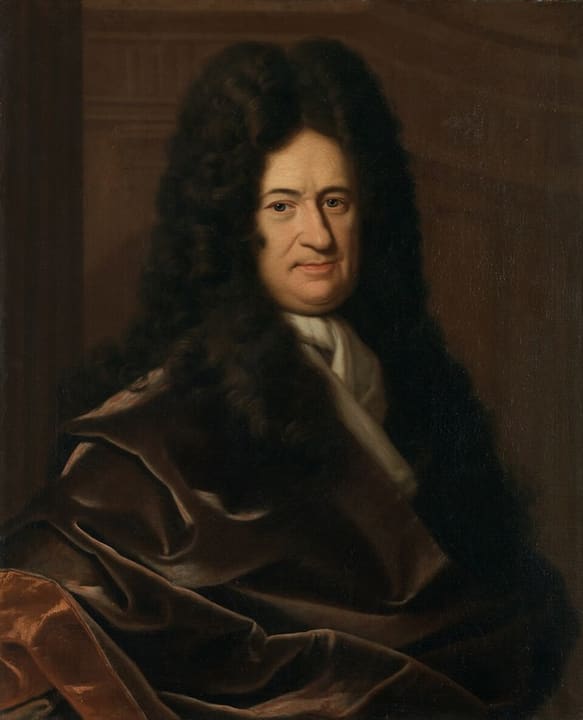
Gottfried Wilhelm Leibniz (1646-1716) was a German philosopher, mathematician, jurist, diplomat, and polymath. He independently developed calculus, argued for a metaphysics of monads and pre-established harmony, and imagined symbolic languages that could clarify reasoning. His work on binary arithmetic and universal character became a distant ancestor of formal logic and computing.
Leibniz's logical writings on binary arithmetic and universal character are scattered across essays, letters, drafts, and memoranda rather than gathered in a single finished book. Their unity lies in a dream: reasoning might be made clearer, more reliable, and more inventive by a symbolic language whose elements combine according to rules.