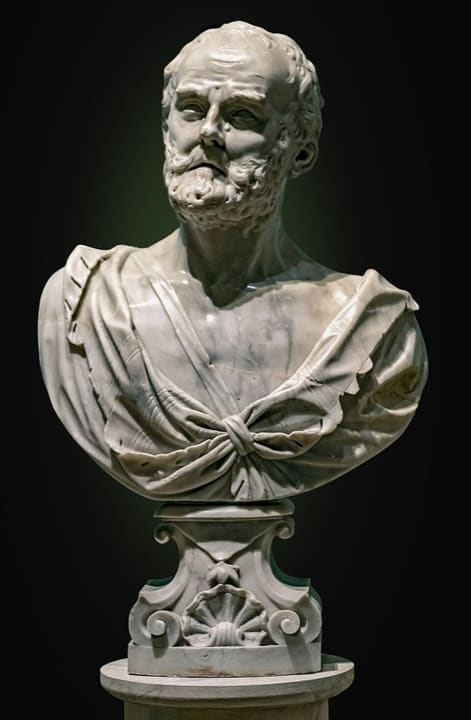
Heraclitus of Ephesus (fl. c. 500 BCE) was a Presocratic Greek philosopher from an aristocratic family of the Ionian city of Ephesus. He reportedly deposited a single book in the temple of Artemis; only about 130 fragments survive, quoted by later writers. Known in antiquity as 'the Obscure' for his riddling style, he taught the unity of opposites, constant change, and a rational principle, the logos, ordering the world as an 'ever-living fire'.
Heraclitus's book does not survive; what remains are roughly 130 short sayings preserved as quotations by later authors such as Plato, Aristotle, Plutarch, Sextus Empiricus, Clement of Alexandria, Hippolytus and Diogenes Laertius. Modern editions number them according to Hermann Diels and Walther Kranz (DK), and the reference edition presents them in a fresh translation with commentary.