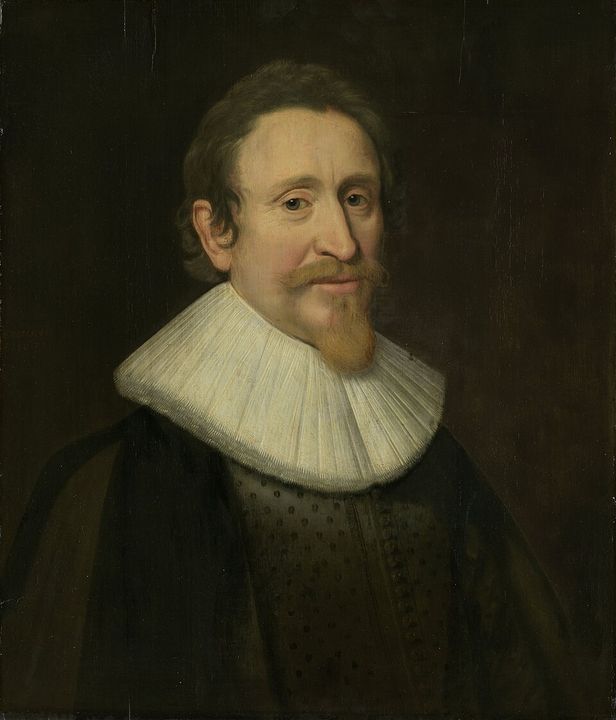
Hugo Grotius (Huig de Groot, 1583–1645) was born at Delft, entered the University of Leiden at eleven, and became a lawyer, historian, poet and theologian of the Dutch Republic. He wrote Mare Liberum (1609) on the freedom of the seas and served as pensionary of Rotterdam. Caught up in the Remonstrant controversy, he was condemned in 1619 to life imprisonment at Loevestein Castle, from which he escaped in 1621 hidden in a chest of books. In exile in Paris he published De jure belli ac pacis (1625) and later served Sweden as ambassador to France.
Frequently Cited
“But because war is undertaken for the sake of peace, and there is no dispute, which may not give rise to war, it will be proper to treat all such quarrels, as commonly happen, between nations, as an article in the rights of war: and then war itself will lead us to peace, as to its proper end.”
1625 · Renaissance Early Modern · Political Theory
The Rights of War and Peace (De jure belli ac pacis libri tres) is Hugo Grotius's treatise on the law that binds nations and rulers in war, published in Paris in 1625, seven years into the Thirty Years' War and while its author lived in exile from the Dutch Republic. The complete work has three books: Book I asks what war is, whether war can ever be lawful, and who holds the sovereign power to wage it; Book II examines the just causes of war, chiefly defence, the recovery of property and the punishment of wrongs, and with them property, contracts, treaties, embassies and the right of burial; Book III treats what may be done in war and the moderations (temperamenta) that humanity and good faith impose even on lawful force.