Work record
The Rights of War and Peace (Book I)
1625 · Renaissance Early Modern · Political Theory · Latin
Abstract
Background. An exiled Dutch lawyer, Grotius published his Latin treatise in Paris with a dedication to Louis XIII, hoping to restrain the cruelty he saw in Christian warfare. Campbell's condensed English version of 1814 supplies the library's selection.
Thesis. Peoples without a shared judge still live under law. Reason discloses a natural law that even God cannot alter, the agreement of many peoples adds a law of nations, and these permit force only for defence and justice and always with peace as the goal.
Structure. Chapter I separates three senses of right and the kinds of law. Chapter II argues, from nature, history and the Hebrew Scriptures and then from the New Testament and the early Church, that some wars are lawful. Chapter III sorts public from private conflict and analyses sovereignty.
Key Concepts. Right reason; right as a personal faculty; consent of nations; divine positive law given to Adam, Noah and through Christ; Christian military service; sovereignty as power no other human will can annul.
Significance. Often called the founding book of international law, it shaped Pufendorf, Locke and Vattel and the university teaching of jurisprudence for two centuries. Its method, joining Scripture, Roman jurists and classical moralists in one argument, became a model for later writers on natural law.
Key figures
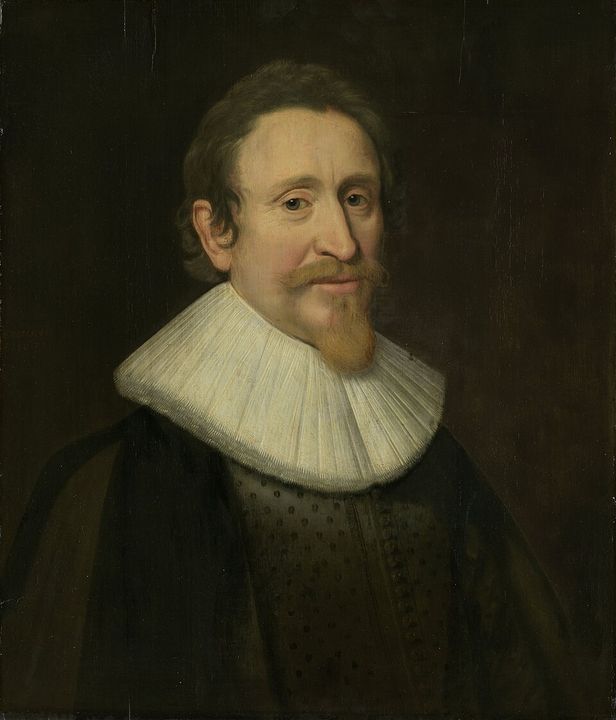
- Hugo Grotius: Dutch jurist and theologian, escaped prisoner of Loevestein
- Cicero: Roman source for the definitions of war and of nature's first principles
- John the Baptist: Whose counsel to soldiers anchors the scriptural defence of military service
- Tertullian and Origen: Early Christian critics of bearing arms whose views are weighed
- The Roman dictator: Office used as the closing test of what counts as sovereign

Summary
The Rights of War and Peace (De jure belli ac pacis libri tres) is Hugo Grotius's treatise on the law that binds nations and rulers in war, published in Paris in 1625, seven years into the Thirty Years' War and while its author lived in exile from the Dutch Republic. The complete work has three books: Book I asks what war is, whether war can ever be lawful, and who holds the sovereign power to wage it; Book II examines the just causes of war, chiefly defence, the recovery of property and the punishment of wrongs, and with them property, contracts, treaties, embassies and the right of burial; Book III treats what may be done in war and the moderations (temperamenta) that humanity and good faith impose even on lawful force. The library's text is Book I in A. C. Campbell's English version of 1814, a condensed translation reprinted in 1901 with an introduction by David J. Hill; it contains chapters I to III. Chapter I opens with the claim that war is undertaken for the sake of peace and defines war as the state of contending parties. Grotius then distinguishes right as what is just, right as a moral quality of persons (power, property, credit), and right as a rule. The rule is natural or voluntary. Natural law is the dictate of right reason, so fixed that God himself cannot make the intrinsically evil good, as he cannot make two and two other than four. Natural law is proved from reason and from the agreement of the most civilized peoples, while the law of nations rests on the consent of many nations. Divine voluntary law was given to Adam, to Noah, and through Christ; the Mosaic law bound only Israel. Chapter II asks whether war is lawful. Grotius argues that self-preservation and the use of force against injury agree with nature and with the consent of peoples, that the law given before the Gospel permitted war, and then, at length, that the Gospel does not forbid it to Christians: he weighs the scriptural case against war, John the Baptist's words to soldiers, the centurion Cornelius, Romans 13, and the writings of Tertullian, Origen and other early Christians, whose objections he takes seriously while concluding that they spoke as individuals rather than for the Church. Chapter III divides war into public, private and mixed, and defines sovereign power as the power whose acts no other human will can annul. He rejects the view that sovereignty always remains in the people, and distinguishes the right to sovereignty from the way it is held, ending with the Roman dictator, whose temporary power was nonetheless sovereign.
Virtues in this work
- Justice: Grotius insists in Chapter I that even war is governed by right and must aim at peace.
- Prudence: Chapter III separates the right to sovereignty from the manner of holding it, a careful distinction meant to settle disputes about who may make war.
- Piety: Chapter II tests the lawfulness of war against the whole of Scripture and the early Church before reaching a conclusion.
Plot or Argument
- Ch. I, §I–IX: war and the meanings of right
The treatise concerns disputes between those who have no common judge. War is defined as a state of contending parties. Right is distinguished as what is just, as a moral faculty of a person (power, property, credit), and as a rule of action.
- Ch. I, §X–XII: natural law
Natural right is the dictate of right reason, showing an act to be morally base or necessary by its agreement with rational nature. It is unchangeable even by God. It is proved a priori from rational and social nature and a posteriori from the consent of the more civilized nations.
- Ch. I, §XIII–XVII: voluntary law, human and divine
Human voluntary law is civil law, lesser law (parents, masters), or the law of nations, which rests on the consent of many peoples. Divine voluntary law was given at the creation, after the flood, and through Christ; the law of Moses bound Israel alone, though it shows what God does not forbid.
- Ch. II, §I–V: war and the law of nature and nations
Following Cicero's account of the first principles of nature, Grotius argues that self-defence and the use of force against injury agree with nature. History, the consent of nations and the Hebrew law before the Gospel confirm that some wars are lawful.
- Ch. II, §VI–IX: war and the Gospel
The longest discussion in Book I. Grotius sets out the scriptural arguments that Christians may never bear arms, answers them from John the Baptist's counsel to soldiers, Cornelius, Romans 13 and other passages, and reviews the early Christian writers, judging Tertullian and Origen to speak as individuals.
- Ch. III, §I–V: public, private and mixed war
Private war is not wholly contrary to nature even after courts exist, as in immediate self-defence. Public war is formal, declared by a sovereign, or informal. Only sovereign power can wage lawful public war.
- Ch. III, §VI–XI: sovereign power
Civil power has deliberative, executive and judicial parts. Sovereignty is power whose acts no other human will can make void; its common subject is the state, a perfect society. Grotius denies that sovereignty always remains in the people and separates the right to rule from the manner of holding it, illustrated by the Roman dictator.
Characters
- Hugo Grotius, author
Dutch jurist and theologian writing in exile in Paris.
- Cicero, authority
Roman orator and philosopher whose definitions of war and nature open both chapters I and II.
- Aristotle, authority
Cited throughout on natural justice and on the evidence of general agreement.
- John the Baptist, scriptural witness
His counsel to soldiers in Luke 3 is one of Grotius's main arguments that the military calling is lawful.
- Cornelius the centurion, scriptural witness
Roman officer baptized in Acts 10, cited as a Christian who was not required to leave the army.
- Tertullian and Origen, early Christian writers
Church writers whose doubts about Christian military service Grotius examines and answers.
- Ulpian and Florentinus, Roman jurists
Cited on self-defence and on the Roman distinction between natural law and the law of nations.
Lessons
Law reaches even into war
Grotius's starting point is that war does not suspend all right: because war is undertaken for peace, it must be governed by rules that make peace possible again. Book I lays the definitions on which that claim rests.
- Why does Grotius begin by saying that war will lead us to peace as to its proper end?
- What does he gain by defining war as a state rather than a single act of fighting?
Natural law and the will of God
Natural law, for Grotius, is known by right reason and expresses what God as author of nature commands or forbids; yet it is so fixed that God cannot make what is intrinsically evil good. The point is that moral truth has a necessity like that of arithmetic.
- Why does Grotius compare moral truth to two and two making four?
- Does saying God cannot change natural law limit God, or describe his unchanging goodness?
- How does Grotius use the agreement of nations as evidence of natural law?
Christian conscience and the sword
Chapter II gives a long and fair hearing to the Christian case against all war before answering it from Scripture and the history of the Church. Grotius treats the question as one of conscience, not only of policy.
- Which arguments for Christian pacifism does Grotius take most seriously?
- How does he use John the Baptist and Cornelius in his reply?
- Why does he distinguish the private opinions of early writers from the public judgment of the Churches?
Who may make war
Grotius ties lawful public war to sovereign authority and defines sovereignty by the finality of its acts. His argument against the view that sovereignty always remains with the people shows the stakes of the question in the religious and civil wars of his century.
- What makes a power sovereign in Chapter III?
- Why is the Roman dictator a test case for his definition?
Context
Grotius wrote amid the wars of religion and empire of the early seventeenth century: the Dutch revolt against Spain, the rivalry of the Dutch and Portuguese in the East Indies, and the Thirty Years' War that began in 1618. He drew on Scripture, the Church Fathers, the scholastic theologians of the just-war tradition, Roman law and classical authors to show that there is a common law among nations which binds in war and peace.
Composition
Grotius had earlier written De jure praedae (c. 1604–06) on the Dutch East India Company's seizure of a Portuguese ship, of which only the chapter Mare Liberum was published in his lifetime. After his escape from Loevestein in 1621 he lived in Paris, where De jure belli ac pacis appeared in 1625 with a dedication to Louis XIII; he revised it in later editions. A. C. Campbell's condensed English translation was published in 1814 and reissued in 1901 by M. Walter Dunne with an introduction by David J. Hill.
Reception
The work quickly became the founding text of modern international law and was taught in universities across Protestant Europe. Pufendorf, Locke, Vattel and many later jurists built on it, and it has been reprinted and translated repeatedly. Scholars still debate how far Grotius departs from the scholastic natural-law tradition of Vitoria and Suárez and how far he continues it.
Comparisons
- cicero-on-duties
Grotius's definitions of war and his rules of good faith with enemies draw directly on Cicero's On Duties, which he quotes at the start of both chapters I and II.
- city-of-god
Augustine's teaching that war seeks peace and that rulers bear the sword as God's ministers is a source for Grotius's chapter II on war and the Gospel.
- summa-theologica
Aquinas's conditions for a just war (sovereign authority, just cause, right intention) underlie Grotius's insistence in chapter III that public war requires sovereign power.
- leviathan
Hobbes, writing a generation later, also grounds law in self-preservation and defines sovereignty by its finality, but treats the state of nature as war rather than as a society governed by natural law.
- kant-perpetual-peace
Kant names Grotius among the 'sorry comforters' whose law of nations had never restrained a state, and proposes instead a federation aimed at ending war.
- on-war
Clausewitz analyses war as an instrument of policy rather than a matter of right, the opposite starting point from Grotius's legal inquiry.
Quotes
Frequently cited
“But because war is undertaken for the sake of peace, and there is no dispute, which may not give rise to war, it will be proper to treat all such quarrels, as commonly happen, between nations, as an article in the rights of war: and then war itself will lead us to peace, as to its proper end.”
Frequently cited
“Natural right is the dictate of right reason, shewing the moral turpitude, or moral necessity”
“so that war is the state of contending parties, considered as such.”
“Thus two and two must make four, nor is it possible to be otherwise; nor, again, can what is really evil not be evil.”
“But the law of nations is a more extensive right, deriving its authority from the consent of all, or at least of many nations.”
“For a law does not bind those, to whom it has not been given.”
“the common subject of sovereign power is the state, which has already been said to be a perfect society of men.”
For Students
A reading companion for classical Christian high school students. See the student guide.
Reading Guide
Watch for
- The very first section of Chapter I, where Grotius explains why a book on war is really a book about peace.
- The three senses of right in Chapter I, §III–IX, and how the second sense (a moral faculty of a person) anticipates later language of rights.
- The comparison of moral truth to arithmetic in Chapter I, §X.
- The long middle of Chapter II, where Grotius sets out the Christian case against war and answers it passage by passage.
- The argument in Chapter III against those who hold that sovereignty always remains in the people.
Key terms and names
- Natural right (law of nature)
- The dictate of right reason showing an act to be morally base or necessary by its agreement or disagreement with rational nature, and so forbidden or commanded by God.
- Voluntary right
- Law that arises from a will, human or divine, rather than from nature itself; it includes civil law, the law of nations and the positive commands of God.
- Law of nations
- In Grotius, a body of human law resting on the consent of all or many nations, distinct from the law of nature though often confused with it.
- Faculty
- Grotius's term for right as a moral quality belonging to a person, such as power over oneself or others, property, or a claim on a debt.
- Sovereign power
- Power whose acts are not subject to another's control and cannot be annulled by any other human will; only it can wage lawful public war.
- Public and private war
- Public war is waged by sovereign authority; private war by individuals without it; mixed war has public authority on one side only.
Seminar Questions
- Comprehension How does Grotius define war in Chapter I, and how does his definition differ from Cicero's?
- Comprehension What are the two ways Grotius says natural law can be proved?
- Comprehension Which passages of the New Testament does Grotius use to argue that a Christian may serve as a soldier?
- Interpretation Why does Grotius insist that the law of Moses bound only Israel, and how does that help his argument about war?
- Interpretation Grotius says the early writers who condemned war spoke as individuals rather than for the Churches. Is this a fair way to handle Tertullian and Origen?
- Interpretation Why does it matter to Grotius that only a sovereign may make public war?
- Big Question Can there be real law between nations when there is no common judge to enforce it?
Faith Connections
- Luke 3:14 (Scripture)
John the Baptist tells soldiers to do violence to no man, to accuse no one falsely and to be content with their wages. Grotius reads the answer as permission to remain in the military calling under moral limits.
- Romans 13:1-4 (Scripture)
Paul calls the ruler God's minister who does not bear the sword in vain. Grotius quotes it in Chapter II to show that coercive power, and with it some wars, belongs to lawful authority.
- Matthew 5:38-44 (Scripture)
The command not to resist evil and to love one's enemies is the text Christian critics of war have pressed most often. Students can test Grotius's replies in Chapter II, which turn on the difference between private revenge and the public justice of Romans 13, against it.
- Augustine, City of God XIX (Church Fathers)
Augustine teaches that even war aims at peace and that the wise man wages just war with sorrow. Grotius's opening claim that war leads to peace as its proper end carries this teaching into law.
Logic and Rhetoric
Central argument: There is a law of nature, known by right reason and confirmed by the consent of nations, that binds all men as rational and social beings. That law permits the defence of life and the repelling of injury by force, and neither the law given before the Gospel nor the Gospel itself forbids this to public authority. Since public force is lawful only when exercised by sovereign power, war can be just, but only under conditions of right; therefore war itself falls under law and must be waged for the sake of peace.
Rhetorical device: argument from authority (consensus gentium). Throughout Chapter I and II Grotius piles up citations of Aristotle, Cicero, Seneca, the Roman jurists and the Fathers to show that the most civilized peoples agree, treating their agreement as evidence for natural law.
Debate: Resolved: that the Gospel's command to love one's enemies forbids Christians to wage war.
Memory Work
Thus two and two must make four, nor is it possible to be otherwise; nor, again, can what is really evil not be evil.
Writing Prompts
Essay: Explain how Grotius in Chapter II answers the scriptural argument that Christians may never bear arms, and evaluate the strength of his reply using at least two of the scriptural passages he discusses.
Comparison with Leviathan: Grotius and Hobbes both build politics on self-preservation and both define sovereignty by its final authority. Compare Grotius's natural law, known by right reason and the consent of nations, with Hobbes's laws of nature in Leviathan, chapters XIII–XV, and argue which offers firmer ground for law between nations.
Medical Lens
Book I is a work of law and moral theology with no medical content beyond passing analogies, such as the man of distempered taste who denies that honey is sweet, used to show that disordered judgment does not overturn natural justice.
Creative Prompts
- Classroom
Divide the class into the two sides of Chapter II: one presents the scriptural arguments that Christians may never bear arms, the other Grotius's replies from John the Baptist, Cornelius and Romans 13. End by listing which arguments each side found hardest to answer.
- Essay
Grotius says natural law could not be changed even by God, as two and two must make four. Explain the claim and discuss whether it honours or limits the sovereignty of God.
- Dialogue
Write a conversation in Paris in 1625 between Grotius and a soldier returning from the war in Germany about whether anything is forbidden in war.
Further Reading
- The Rights of War and Peace (ed. Richard Tuck), Hugo Grotius
Liberty Fund edition of the complete work in the 1738 English translation, with Jean Barbeyrac's notes.
- The Law of War and Peace (trans. Francis W. Kelsey), Hugo Grotius
The complete translation made for the Classics of International Law series (1925).
- The Rights of War and Peace: Political Thought and the International Order from Grotius to Kant, Richard Tuck
Verification notes
Biography and publication facts are standard. The stored text contains Book I, chapters I–III, in Campbell's condensed translation, ending with chapter III, §XI on the Roman dictator; the chapters of Book I on war by subjects against superiors and on who may make war, and Books II and III, are not included. Section numbers follow the Roman numerals printed in the text. The text carries bracketed footnote numbers, which were avoided in quotations. Campbell abridges Grotius's citations, so passages differ from fuller translations.
- Whether Campbell's translation, as printed in the 1901 Dunne edition, has five chapters in Book I (with chapters IV–V omitted from the stored selection), and whether chapter III continues beyond §XI in that edition.
- Exact dates of composition of De jure praedae (given here as c. 1604–06).