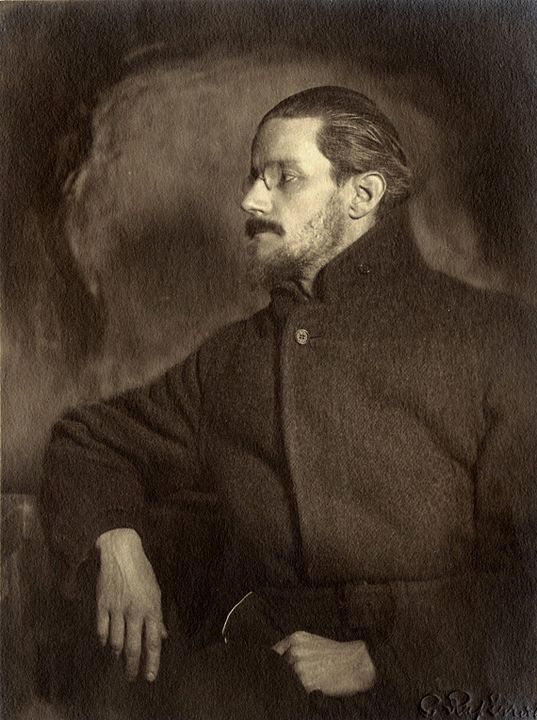
James Augustine Aloysius Joyce (1882–1941) was born in Rathgar, Dublin, the eldest surviving child of a large family whose fortunes declined during his boyhood. He was educated by the Jesuits at Clongowes Wood College and Belvedere College and took his degree at University College Dublin in 1902. In 1904 he left Ireland with Nora Barnacle, whom he later married, and lived chiefly in Trieste, Zurich and Paris, teaching English and writing. His works include the story collection Dubliners (1914), A Portrait of the Artist as a Young Man (1916), Ulysses (1922) and Finnegans Wake (1939). He died in Zurich in January 1941.
Frequently Cited
“Once upon a time and a very good time it was there was a moocow coming down along the road”
“When the soul of a man is born in this country there are nets flung at it to hold it back from flight. You talk to me of nationality, language, religion. I shall try to fly by those nets.”
“The artist, like the God of creation, remains within or behind or beyond or above his handiwork, invisible, refined out of existence, indifferent, paring his fingernails.”
“I will not serve that in which I no longer believe, whether it call itself my home, my fatherland, or my church: and I will try to express myself in some mode of life or art as freely as I can and as wholly as I can, using for my defence the only arms I allow myself to use—silence, exile and cunning.”
“Welcome, O life! I go to encounter for the millionth time the reality of experience and to forge in the smithy of my soul the uncreated conscience of my race.”
A Portrait of the Artist as a Young Man follows Stephen Dedalus, a boy from a Catholic Dublin family, from his earliest memories to the eve of his departure from Ireland at about twenty. Its five chapters are written in a style that grows with him, from the nursery language of the opening, in which his father tells him a story about a moocow and baby tuckoo, to the abstract arguments and private diary of the last chapter.