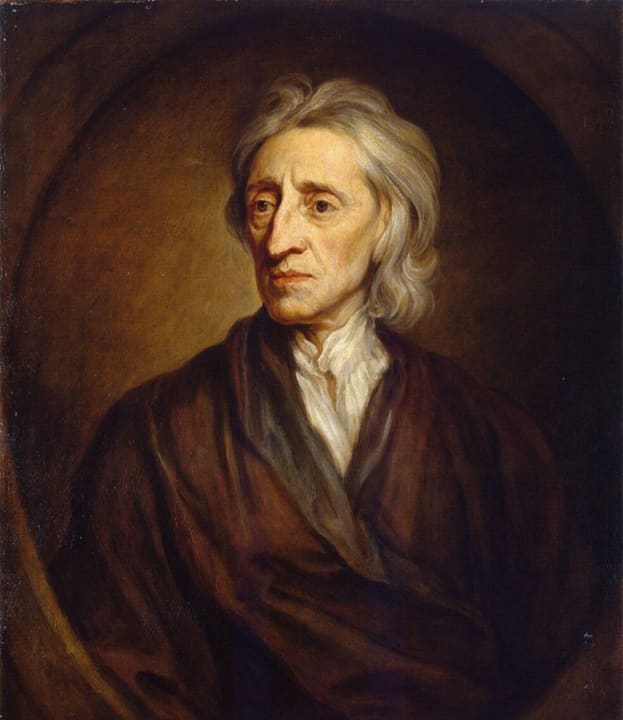
John Locke (1632–1704) was educated at Westminster School and Christ Church, Oxford, where he studied medicine and worked with Robert Boyle and Thomas Sydenham. From 1667 he served Anthony Ashley Cooper, later Earl of Shaftesbury, as physician, secretary and adviser, and in that household wrote an unpublished Essay concerning Toleration (1667). Suspected of involvement in the opposition to the future James II, he lived in the Dutch Republic from 1683 to 1689, where he wrote the Latin Epistola de Tolerantia. After returning to England in 1689 he published the Letter, An Essay Concerning Human Understanding and the Two Treatises of Government, and later The Reasonableness of Christianity (1695).
“it is ambition enough to be employed as an under-labourer in clearing the ground a little, and removing some of the rubbish that lies in the way to knowledge”
“where there is no law, there is no freedom: for liberty is, to be free from restraint and violence from others; which cannot be, where there is no law”
1689 · Renaissance Early Modern · Political Theory
A Letter Concerning Toleration is John Locke's argument that the civil government and the church are two distinct societies with different ends, and that the magistrate has no authority to compel belief or worship. Locke wrote it in Latin, as Epistola de Tolerantia, during the winter of 1685–86 while living in exile in the Dutch Republic, addressing it to his friend the Remonstrant theologian Philipp van Limborch.
Locke says in the Epistle to the Reader that the Essay began when five or six friends meeting in his rooms found themselves at a standstill over questions of morality and revealed religion, and he proposed that they first examine what objects human understanding is fitted to deal with. Nearly twenty years later the result was a long, patient survey of where ideas come from, how they combine, how words signify them and how far knowledge and probable belief can reach.
1689 · Renaissance Early Modern · Political Theory
The Second Treatise, subtitled 'An Essay Concerning the True Original, Extent, and End of Civil Government', is the constructive half of Locke's Two Treatises. The First Treatise demolishes Sir Robert Filmer's Patriarcha, which derived the absolute power of kings from Adam's fatherly dominion.