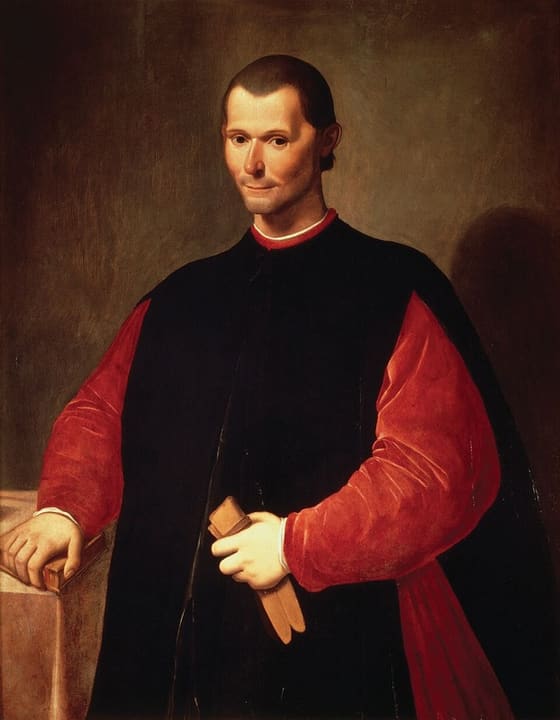
Portrait of Niccolo Machiavelli (from 1550 until 1600). Source · Public domain
About Niccolò Machiavelli
Niccolò Machiavelli (1469–1527) served the Florentine Republic from 1498 to 1512 as secretary of the Second Chancery and of the Ten of War, travelling on missions to Louis XII, Cesare Borgia, Pope Julius II and the Emperor Maximilian. When the Medici returned in 1512 he lost his posts, and early in 1513 he was imprisoned and put to the rope on suspicion of conspiracy. Released, he retired to his farm at Sant'Andrea in Percussina, where he wrote The Prince and the Discourses, and later The Art of War, the comedy Mandragola and the Florentine Histories.
Frequently Cited
“all men are bad, and will always, when they have free field, give loose to their evil inclinations”
“For although the act condemn the doer, the end may justify him; and when, as in the case of Romulus, the end is good, it will always excuse the means;”
c. 1517 (published 1531) · Renaissance Early Modern · Political Theory
The Discourses on the First Decade of Titus Livius are Niccolò Machiavelli's long commentary on the first ten books of Livy's history of Rome, which run from the founding of the city to the Samnite wars of the early third century BC. Machiavelli wrote them in the years after 1513, when he had been dismissed from the service of the Florentine Republic, and discussed them with young friends in the Rucellai gardens in Florence; he dedicated them to two of those friends, Zanobi Buondelmonti and Cosimo Rucellai, explaining that he had chosen men who deserved to be princes rather than men who were.