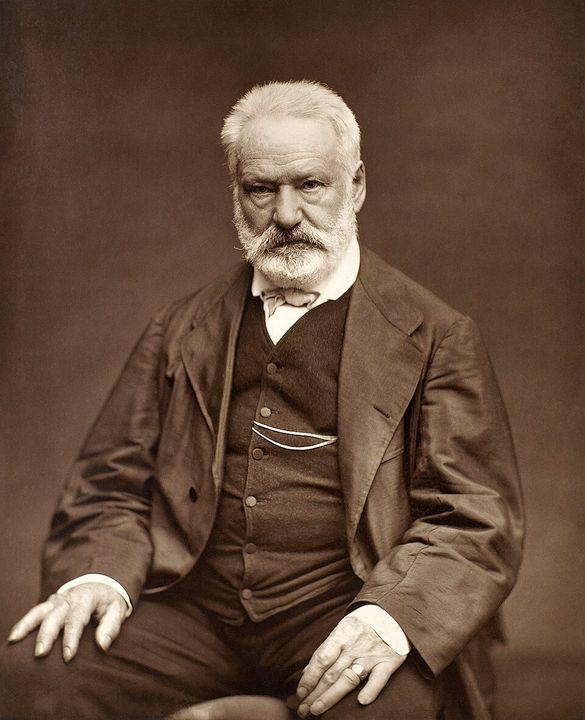
Victor Hugo (1802-1885) was the leading figure of French Romanticism, a poet, dramatist and novelist whose preface to Cromwell (1827) and play Hernani (1830) helped launch the movement, and whose Notre-Dame de Paris (1831) made him famous across Europe. Elected to the Académie française and made a peer of France, he turned against Louis-Napoléon after the coup of December 1851 and spent nearly nineteen years in exile, chiefly on Guernsey, where he completed Les Misérables. He returned to Paris in 1870, served in the National Assembly and Senate, and at his death was given a state funeral and buried in the Panthéon.
Les Misérables follows the convict Jean Valjean from his release in 1815 to his death in 1833, and through him a whole society of the poor, the lawful and the rebellious in Restoration and July Monarchy France. Valjean has served nineteen years in the galleys at Toulon, five for stealing a loaf of bread for his sister's hungry children and the rest for attempts to escape.