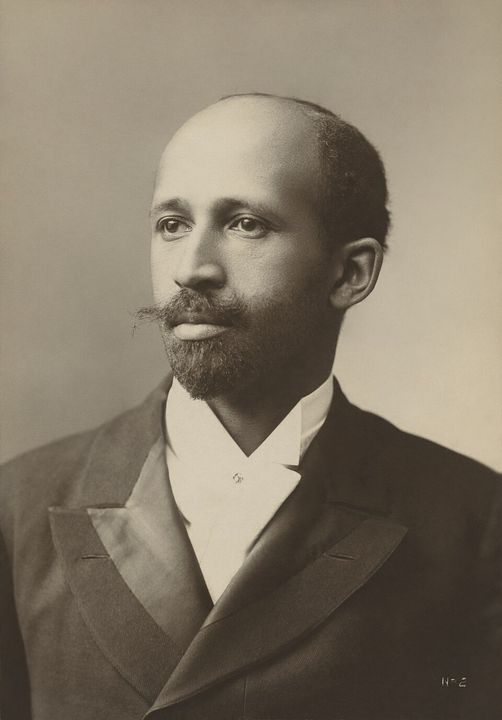
W. E. B. Du Bois (1868–1963) was born in Great Barrington, Massachusetts, studied at Fisk University, Harvard and the University of Berlin, and in 1895 became the first Black American to earn a Harvard doctorate. He taught at Atlanta University, wrote The Philadelphia Negro (1899), helped found the Niagara Movement and the NAACP, and edited its magazine The Crisis for a quarter century.
“One ever feels his twoness,—an American, a Negro; two souls, two thoughts, two unreconciled strivings; two warring ideals in one dark body, whose dogged strength alone keeps it from being torn asunder.”
“I sit with Shakespeare and he winces not. Across the color line I move arm in arm with Balzac and Dumas, where smiling men and welcoming women glide in gilded halls.”
The Souls of Black Folk is a book of fourteen chapters framed by a short Forethought and Afterthought, in which W. E. B. Du Bois sets out to show readers what it meant to be Black in the United States at the opening of the twentieth century. He announces his subject at once: the great problem of the new century is the color line.