Work record
The Souls of Black Folk
1903 · Early 20th Century · Essays · English
Abstract
Background. Written while Du Bois taught at Atlanta University, the volume gathers and revises pieces from the Atlantic Monthly, The Dial and other journals, adding new chapters on Washington, Crummell and his own son. It appeared seven years after Plessy v. Ferguson.
Content. Opening chapters define the Veil and the divided self and recount the Freedmen's Bureau. Du Bois then weighs the Tuskegee leader's Atlanta speech, recalls schoolteaching among Tennessee hill families, defends liberal colleges, and reports on tenant cotton farming around Albany, Georgia. Later chapters turn to Black churches, a son's death, a clergyman's biography, a tragic tale of homecoming and, finally, the spirituals.
Method. Statistics, field observation and archival history sit beside autobiography, lyric lament and fiction, a deliberate mixture meant to show inner life as well as outward conditions.
Key Concepts. The color line as the century's defining question; the Veil; double consciousness and second sight; the Talented Tenth, a trained leadership of teachers and professionals, named in Chapter VI; and music as a people's testimony. Classical myth (Atalanta's race, Jason's voyage) supplies a running counterpoint, measuring Southern commerce against older ideals.
Significance. Its third chapter divided Black leadership and foreshadowed the Niagara Movement and the NAACP, while its images became permanent terms in American letters. Harlem Renaissance writers later named it a formative influence.
Key figures
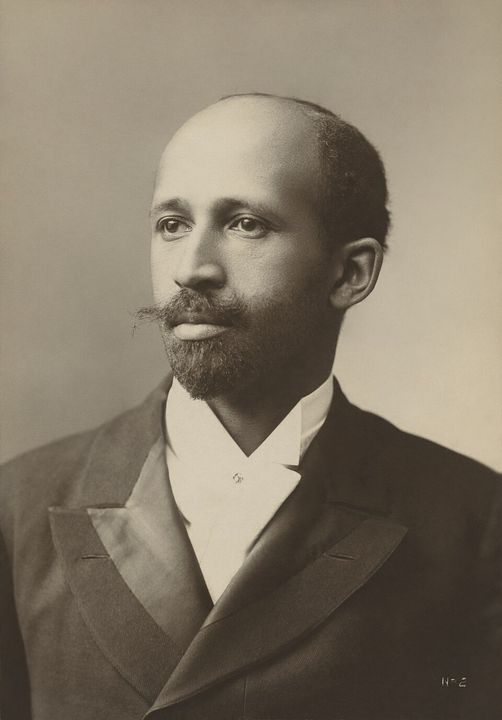
- W. E. B. Du Bois: Atlanta University sociologist writing as historian, teacher and grieving father
- Booker T. Washington: Head of Tuskegee Institute, whose program Chapter III contests
- Oliver Otis Howard: General who directed the Freedmen's Bureau
- Alexander Crummell: Episcopal clergyman and Liberia missionary honored in Chapter XII
- Burghardt Du Bois: The author's baby son, mourned in Chapter XI
- John Jones: Fictional college graduate returning to coastal Georgia

Summary
The Souls of Black Folk is a book of fourteen chapters framed by a short Forethought and Afterthought, in which W. E. B. Du Bois sets out to show readers what it meant to be Black in the United States at the opening of the twentieth century. He announces his subject at once: the great problem of the new century is the color line. Each chapter begins with two epigraphs, a passage of poetry (from Byron, Whittier, Schiller, Swinburne, the Song of Songs and others) and a few bars of music from a spiritual, so that the book is scored, as it were, with the songs it praises at the end. The first chapter, Of Our Spiritual Strivings, introduces the images that have made the book famous: the Veil that separates Black from white America, and double consciousness, the experience of seeing oneself through the eyes of a contemptuous world while holding two ideals, American and Negro, in one person. The second chapter is a history of the Freedmen's Bureau under General Oliver O. Howard, praising its schools and judging its failures. The third, Of Mr. Booker T. Washington and Others, is a respectful but firm critique of the Tuskegee leader's Atlanta Compromise: Du Bois honors Washington's work for industrial training and thrift but argues that his program asks Black Americans to give up political power, insistence on civil rights and the higher education of their young men. The middle chapters move between memoir, sociology and argument. Of the Meaning of Progress recalls two summers Du Bois spent as a Fisk student teaching a country school in the hills of Tennessee, and his return ten years later to find his pupil Josie dead. Of the Wings of Atalanta and Of the Training of Black Men defend the university against a purely commercial ideal of education. Of the Black Belt and Of the Quest of the Golden Fleece take the reader by train through Dougherty County, Georgia, examining cotton tenancy, debt and the crop-lien system. Of the Sons of Master and Man surveys daily contact between the races, and Of the Faith of the Fathers describes the Black church, its preacher, music and frenzy. The last four chapters are the most personal. Of the Passing of the First-Born is a lament for Du Bois's infant son Burghardt, who died in Atlanta. Of Alexander Crummell is a portrait of the Episcopal priest who overcame the temptations of hate, despair and doubt. Of the Coming of John is a short story about a young man who returns educated to his Georgia town, with tragic results. Of the Sorrow Songs closes the book with a study of the spirituals, which Du Bois calls the nation's most beautiful music, and a prayer that the book not fall still-born into the world. Nine of the chapters had appeared as magazine essays, chiefly in the Atlantic Monthly and The Dial, before Du Bois revised them; A. C. McClurg of Chicago published the book in April 1903.
Virtues in this work
- Fortitude: Alexander Crummell, in Chapter XII, perseveres through rejection by a seminary and years of poverty without yielding to hate, despair or doubt.
- Justice: Du Bois argues in Chapter III that the vote, civil rights and higher education are owed to Black Americans and must be asked for openly.
- Hope: The final chapter hears in the Sorrow Songs a faith that men will someday be judged by their souls.
- Magnanimity: Du Bois credits Booker T. Washington's real achievements before contesting his program, modeling generous disagreement.
Plot or Argument
- The Forethought and the color line
Du Bois asks the Gentle Reader to receive the book in charity and names its thesis: the problem of the twentieth century is the color line. He lays out his plan to sketch first the world outside the Veil and then the life within it.
- Chapter I: Of Our Spiritual Strivings
Remembering a schoolgirl in New England who refused his visiting card, Du Bois introduces the Veil and double consciousness, then traces the hopes Black Americans placed in emancipation, the ballot and book-learning, and argues that work, culture and liberty must be sought together.
- Chapter II: Of the Dawn of Freedom
A history of the Freedmen's Bureau from 1865 to 1872: Union generals and contrabands, General O. O. Howard's administration, the Bureau's schools and courts, its corruption and its achievement. Du Bois concludes that the Bureau's legacy was unfinished work.
- Chapter III: Of Mr. Booker T. Washington and Others
Du Bois credits Washington with skill and sincerity but argues that his Atlanta Compromise accepts the surrender of voting rights, civil rights and higher education. He names three paradoxes in the program and calls for both praise of Washington's good work and open opposition where he errs.
- Chapters IV–VI: Progress, Atalanta and the training of men
A memoir of teaching in rural Tennessee and of returning to find the community changed and Josie dead; a warning, through the Greek myth of Atalanta and the golden apples, that Atlanta and the South may chase wealth alone; and a defense of colleges such as Atlanta and Fisk as places that train teachers and leaders, ending in the vision of sitting with Shakespeare above the Veil.
- Chapters VII–IX: The Black Belt and the cotton South
Du Bois rides the Jim Crow car into Dougherty County, Georgia, describing plantations, tenant farms and the burden of debt; uses the myth of Jason's quest as a frame for the cotton economy; and surveys the physical, economic, political, legal and social contacts between Black and white Southerners.
- Chapter X: Of the Faith of the Fathers
Beginning with a revival meeting he witnessed as a young man, Du Bois describes the preacher, the music and the frenzy of the Black church, traces its history from African religion through slavery, and reflects on the moral dilemmas of the present.
- Chapters XI–XII: The first-born and Alexander Crummell
A lament for Du Bois's baby son Burghardt, who died in Atlanta and whom the father imagines spared the Veil, followed by a biography of the Episcopal priest Alexander Crummell, rejected by a seminary, educated at Cambridge, a missionary in Liberia, and faithful through hate, despair and doubt.
- Chapter XIII: Of the Coming of John
A short story: John Jones of Altamaha, Georgia, returns from college to teach the town's Black school, where the white judge closes it; the judge's son, also named John, accosts John's sister Jennie, and the story ends as a mob rides toward John by the sea.
- Chapter XIV and the Afterthought: Of the Sorrow Songs
Du Bois recalls the Fisk Jubilee Singers, analyzes ten master songs and their history, argues that the spirituals are the singular spiritual heritage of the nation, and asks whether their hope is justified. The Afterthought prays that the book may bear fruit.
Characters
- W. E. B. Du Bois, author and narrator
Scholar who speaks in the first person as historian, teacher, father and witness to life within the Veil.
- Booker T. Washington, subject of critique
Principal of Tuskegee Institute, whose Atlanta Compromise program Du Bois examines in Chapter III.
- Oliver Otis Howard, historical figure
Union general and commissioner of the Freedmen's Bureau, described in Chapter II.
- Josie, pupil
Eager young woman of the Tennessee hills who longs for schooling and whose death Du Bois learns of on his return.
- Burghardt Du Bois, the first-born
Du Bois's infant son, whose birth and death are the subject of Chapter XI.
- Alexander Crummell, subject of biography
Episcopal priest and missionary to Liberia whose patient life Du Bois holds up as a model in Chapter XII.
- John Jones, fictional protagonist
Young man of Altamaha, Georgia, whose education estranges him from his town in Chapter XIII.
Lessons
Seeing oneself through two sets of eyes
Du Bois names double consciousness as the strain of being both American and Negro in a country that treated the two as opposed. His aim is not to escape either identity but to merge them into a truer self without losing the older one. The idea gave many later writers a vocabulary for divided belonging.
- What experience in Chapter I first shows Du Bois the Veil?
- Why does Du Bois insist that the Negro does not wish to Africanize America or bleach his soul in white Americanism?
- Can double consciousness be a gift of second sight as well as a burden?
Disagreeing with a leader in good faith
Chapter III praises Booker T. Washington's achievements before contesting his program. Du Bois argues that honest criticism of a respected leader is a duty, not a betrayal, and he frames his objection as a matter of ends: votes, civil rights and higher learning.
- Which parts of Washington's work does Du Bois commend?
- What are the three paradoxes he finds in Washington's program?
- How would Washington, in Up from Slavery, answer Du Bois's charge?
What a university is for
In the Atalanta and Training chapters Du Bois argues that education must form men and women, not only workers, and that a people needs teachers, ministers and scholars trained in the highest learning. His image of conversing with Shakespeare, Balzac and Aristotle makes the case that culture belongs to everyone who can receive it.
- What danger does Du Bois see in the golden apples of the Atalanta myth?
- Why does he defend Latin and Greek for students at Atlanta and Fisk?
- Is his ideal of liberal education still persuasive?
Sorrow that sings of hope
The spirituals frame every chapter and receive the final one. Du Bois hears in them grief, faith and an expectation of justice, and he treats them as the nation's great artistic gift, which makes music a form of testimony.
- Why does Du Bois place a bar of a spiritual at the head of each chapter?
- Which songs does he single out in Chapter XIV, and what does each express?
- What does he mean by asking whether the Sorrow Songs sing true?
Context
Du Bois wrote in the decade after Plessy v. Ferguson (1896), as Southern states passed laws that removed Black voters from the rolls and separated the races in public life. Booker T. Washington's 1895 Atlanta Exposition Address had made him the most influential Black American, and his emphasis on industrial training and economic progress was widely endorsed by white philanthropists. Du Bois, then a young sociologist at Atlanta University, offered a different program centered on the vote, civil rights and the higher education of a talented leadership.
Composition
Nine of the fourteen chapters revise essays first published between 1897 and 1903, chiefly in the Atlantic Monthly and The Dial; Of Mr. Booker T. Washington and Others, Of the Passing of the First-Born, Of Alexander Crummell, Of the Coming of John and parts of other chapters were new or largely new. A. C. McClurg & Co. of Chicago published the book in April 1903; the Forethought is dated Atlanta, February 1, 1903.
Reception
The book was widely reviewed and quickly reprinted, and its chapter on Washington helped mark the division that led to the Niagara Movement (1905) and the founding of the NAACP (1909). Writers of the Harlem Renaissance, including James Weldon Johnson, described its influence, and the phrases color line, the Veil and double consciousness entered American discussion of race, literature and identity.
Comparisons
- up-from-slavery
Washington's autobiography presents the Tuskegee program in his own words; Chapter III of Du Bois's book replies to it directly, so the pair gives both sides of the debate over industrial and higher education.
- atlanta-exposition-address
The 1895 speech is the Atlanta Compromise that Du Bois analyzes and contests in Chapter III; reading the speech first lets students judge whether his summary of it is fair.
- narrative-and-fourth-of-july
Douglass, writing a half-century earlier, also links literacy to freedom and speaks to a white audience about the nation's ideals; Du Bois carries the argument into the era after emancipation.
- uncle-toms-cabin
Stowe's novel used fiction to move white readers before the Civil War; Du Bois's Of the Coming of John uses a short story for a similar purpose inside a book of essays, and both lean on spirituals and Christian hope.
- sermons-and-letter-from-birmingham-jail
King's letter, like Du Bois's chapter on Washington, argues against counsels of patience and appeals to the nation's founding ideals and to Scripture.
Quotes
Frequently cited
“for the problem of the Twentieth Century is the problem of the color line.”
Frequently cited
“One ever feels his twoness,—an American, a Negro; two souls, two thoughts, two unreconciled strivings; two warring ideals in one dark body, whose dogged strength alone keeps it from being torn asunder.”
Frequently cited
“I sit with Shakespeare and he winces not. Across the color line I move arm in arm with Balzac and Dumas, where smiling men and welcoming women glide in gilded halls.”
“To be a poor man is hard, but to be a poor race in a land of dollars is the very bottom of hardships.”
“Mr. Washington represents in Negro thought the old attitude of adjustment and submission; but adjustment at such a peculiar time as to make his programme unique.”
“The function of the university is not simply to teach bread-winning, or to furnish teachers for the public schools or to be a centre of polite society; it is, above all, to be the organ of that fine adjustment between real life and the growing knowledge of life, an adjustment which forms the secret of civilization.”
“Through all the sorrow of the Sorrow Songs there breathes a hope—a faith in the ultimate justice of things.”
“the Negro folk-song—the rhythmic cry of the slave—stands to-day not simply as the sole American music, but as the most beautiful expression of human experience born this side the seas.”
For Students
A reading companion for classical Christian high school students. See the student guide.
Reading Guide
Watch for
- The paired epigraphs, a poem and a bar of a spiritual, at the head of each chapter.
- The Veil, introduced in Chapter I and returning in nearly every chapter, including the death of the first-born.
- How Chapter III balances praise of Booker T. Washington with three specific objections.
- The shift from history and sociology (Chapters II, VII–IX) to memoir, biography and fiction (Chapters IV, XI–XIII).
- The Greek myths of Atalanta and Jason's Golden Fleece used to judge the American South's pursuit of wealth.
Key terms and names
- The Veil
- Du Bois's image for the barrier that separates Black from white America and through which each sees the other only dimly.
- Double consciousness
- The sense of measuring oneself by the eyes of a contemptuous world while holding two ideals, American and Negro, in one person.
- The color line
- The division between the darker and lighter races that Du Bois names as the problem of the twentieth century.
- Freedmen's Bureau
- The federal agency (1865–1872) that ran schools, courts and relief for the freed people, examined in Chapter II.
- Atlanta Compromise
- Du Bois's name for Booker T. Washington's 1895 Atlanta address, which accepted social separation in exchange for economic opportunity.
- Black Belt
- The cotton region of the Deep South, named for its soil and its Black majority, which Du Bois tours in Dougherty County, Georgia.
- Sorrow Songs
- Du Bois's name for the spirituals, the songs of the enslaved, which he calls the nation's greatest gift.
Seminar Questions
- Comprehension What happens in the New England schoolhouse that first shows the young Du Bois he is shut out by the Veil?
- Comprehension According to Chapter III, what three things does Du Bois say Washington's program asks Black Americans to give up?
- Comprehension What does Du Bois find when he returns to the Tennessee community where he taught Josie and her brothers?
- Interpretation Why does Du Bois end a book of essays with a chapter on music and include a short story, Of the Coming of John, just before it?
- Interpretation How does the myth of Atalanta and the golden apples shape Du Bois's argument about Atlanta and the New South?
- Interpretation In Of the Passing of the First-Born, why does Du Bois find a kind of consolation in his son's death, and how should a reader respond to that feeling?
- Big Question Should a people seeking justice pursue economic progress first, as Washington urged, or political rights and higher learning together, as Du Bois urged?
- Big Question Can great books and great music truly lift a person above the divisions of society, as Du Bois claims in the Shakespeare passage?
Faith Connections
- Song of Solomon 1:5 (Scripture)
Du Bois uses the verse I am black but comely as the epigraph to Of the Black Belt, claiming the Bible's own praise of dark beauty as he enters the cotton country.
- Exodus 3:7-10 (Scripture)
The spirituals Du Bois studies often sing of Moses and the deliverance from Egypt, and his final hope that men will be judged by their souls echoes God's hearing of the cry of His people.
- 1 Samuel 16:7 (Scripture)
The Lord looks on the heart rather than the outward appearance, the principle behind Du Bois's hope that sometime men will judge men by their souls and not their skins.
- Augustine, Confessions IX (Church Fathers)
Augustine's account of his grief at his mother Monica's death sets beside Of the Passing of the First-Born a Christian father's struggle to grieve with hope; Du Bois's lament is more uncertain, which makes the comparison fruitful.
Logic and Rhetoric
Central argument: Black Americans possess real gifts of spirit, art and intellect; the color line denies them the vote, civil rights and higher education needed to develop those gifts; therefore the nation must open all three, and Black leaders must ask for them openly rather than accept a program of economic progress alone.
Rhetorical device: extended metaphor. The Veil, introduced in Chapter I as the barrier through which the seventh son sees the world, returns in the chapters on education, the Black Belt and the first-born, binding the essays into one argument.
Debate: Resolved: that Du Bois's call for higher education and political rights was a wiser program for 1903 than Booker T. Washington's emphasis on industrial training.
Memory Work
for the problem of the Twentieth Century is the problem of the color line.
Through all the sorrow of the Sorrow Songs there breathes a hope—a faith in the ultimate justice of things.
Writing Prompts
Essay: Using Chapters V and VI, explain Du Bois's idea of what education is for, and evaluate whether the Shakespeare passage proves or only illustrates his case.
Comparison with Up from Slavery: Compare Washington's account of his work at Tuskegee with Du Bois's criticism of it in Chapter III. Where do the two men agree, and where is their disagreement deepest?
Medical Lens
The book is not medical, but Of the Passing of the First-Born is one of the notable paternal laments in American prose: a father's account of an infant's illness and death, and of a grief shaped by the son's imagined future under the Veil. Chapter II also mentions the Freedmen's Bureau's physicians, surgeons and hospitals, a brief pointer for historians of Reconstruction-era public health.
- Chapter XI, Of the Passing of the First-Born
The birth of Burghardt, his illness in Atlanta, the watch beside him as the physician comes and goes, his death and burial, and the father's mixed grief and consolation.
- Chapter II, Of the Dawn of Freedom
A summary of the Freedmen's Bureau's work, including its physicians, surgeons, hospitals and asylums for the newly freed.
Creative Prompts
- Essay
Explain double consciousness as Du Bois defines it in Chapter I, then show how the idea recurs in the story of John Jones in Chapter XIII.
- Dialogue
Write a dialogue between Booker T. Washington and Du Bois in 1903 on whether a young person in the Black Belt should attend Tuskegee or Atlanta University, giving each man his strongest arguments.
- Classroom
Listen to recordings of three spirituals Du Bois names in Chapter XIV, such as Steal Away or Nobody Knows the Trouble I've Seen, and discuss how each fits his account of hope within sorrow.
- Poetry
Write a short poem to serve as an epigraph for a chapter of your own life, in imitation of the paired verse and music that open each of Du Bois's chapters.
Further Reading
- Up from Slavery, Booker T. Washington
The autobiography whose program Du Bois answers.
- The Philadelphia Negro, W. E. B. Du Bois
Du Bois's 1899 sociological study of a Philadelphia ward.
- Darkwater: Voices from Within the Veil, W. E. B. Du Bois
A 1920 companion volume of essays, poems and stories.
- W. E. B. Du Bois: Biography of a Race, 1868–1919, David Levering Lewis
Pulitzer Prize-winning first volume of the standard biography.
- The Autobiography of an Ex-Colored Man, James Weldon Johnson
A 1912 novel that takes up the theme of double consciousness.
Verification notes
All eight quotes were found as exact substrings of the stored Project Gutenberg #408 text (curly apostrophes and dashes copied as in the file). Du Bois uses the period term Negro throughout; the record follows his usage only where quoting or naming his concepts. The count of nine previously published chapters and the April 1903 publication by A. C. McClurg follow standard bibliographies.
- Confirm the exact list of chapters previously published in magazines and the journals in which each appeared.
- Confirm that Burghardt Du Bois died of diphtheria in 1899, which the chapter itself does not name.