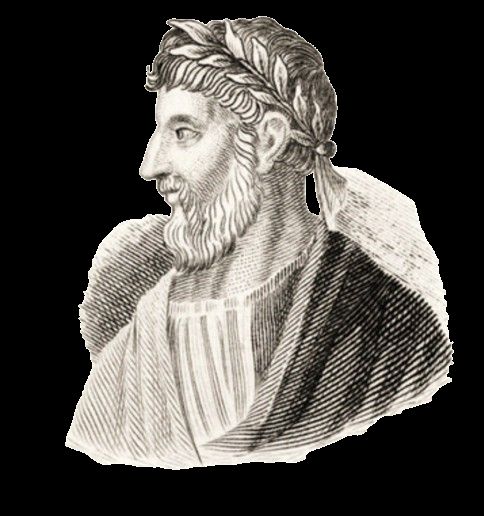
Apollonius of Rhodes (3rd century BC) was a Greek poet and scholar of Ptolemaic Alexandria. The ancient Lives, preserved with the scholia, call him a native of Alexandria and a pupil of Callimachus, say that he withdrew to Rhodes after an early recitation of the Argonautica failed, and report that he later headed the royal Library; his exact dates, and parts of this story, remain uncertain.
“Beginning with thee, O Phoebus, I will recount the famous deeds of men of old, who, at the behest of King Pelias, down through the mouth of Pontus and between the Cyanean rocks, sped well-benched Argo in quest of the golden fleece.”
“And fast did her heart throb within her breast, as a sunbeam quivers upon the walls of a house when flung up from water, which is just poured forth in a caldron or a pail may be; and hither and thither on the swift eddy does it dart and dance along; even so the maiden’s heart quivered in her breast.”
“Ruthless Love, great bane, great curse to mankind, from thee come deadly strifes and lamentations and groans, and countless pains as well have their stormy birth from thee.”
The Argonautica is the one full Greek epic of the voyage of the Argo that survives from antiquity, composed in four books of dactylic hexameter by the Alexandrian scholar-poet Apollonius of Rhodes in the third century BC. King Pelias of Iolcus, warned by an oracle to beware a man wearing one sandal, sees Jason arrive having lost a sandal in the river Anaurus, and sends him to fetch the golden fleece from Colchis at the far end of the Black Sea.