Work record
The Argonautica
3rd century BC · Ancient · Epic · Greek
Abstract
Background. Written in the learned court culture of the Ptolemies, this is the only complete ancient Greek epic between Homer and the Roman period. Apollonius took an old saga already told by Pindar and remade it with Alexandrian scholarship.
Narrative. Sent by Pelias to fetch a fleece from the edge of the known world, Jason gathers a ship of heroes. Books I and II follow the outbound voyage: Lemnos, the night battle with the Doliones, the loss of Heracles, Amycus, Phineus and the Clashing Rocks. In Book III Eros wounds Medea; with her drug Jason yokes the bulls and defeats the sown warriors. Book IV carries the couple away through the killing of Apsyrtus, purification by Circe, a wedding on Drepane, the Libyan desert and the defeat of Talos, until the ship comes home.
Themes. Collective rather than solitary heroism, the power and danger of erotic love, guilt and cleansing, and the origins of cults and landmarks.
Translation. Seaton's Loeb rendering of 1912 is plain, faithful prose, with an introduction on the poet's disputed life.
Significance. Virgil built Dido partly from this Medea, and Valerius Flaccus answered it in Latin. Book III's study of a mind in conflict is often counted among the finest achievements of Greek narrative poetry.
Main characters
- Jason: Aeson's son, captain sent by Pelias to win the fleece
- Medea: Colchian princess and priestess of Hecate who saves Jason with drugs
- Aeetes: Son of Helios, the Colchian king who guards the fleece
- Heracles: Mightiest Argonaut, lost to the crew in Mysia
- Orpheus: Bard aboard the Argo
- Phineus: Blind seer freed from the Harpies
- Apsyrtus: Medea's brother, killed in an ambush on the return
- Hera: Goddess who protects Jason throughout
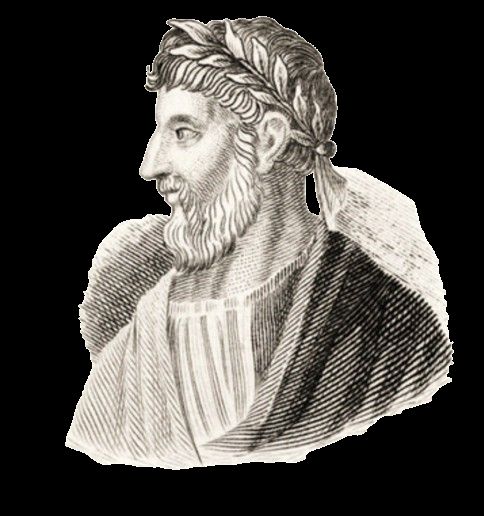

Summary
The Argonautica is the one full Greek epic of the voyage of the Argo that survives from antiquity, composed in four books of dactylic hexameter by the Alexandrian scholar-poet Apollonius of Rhodes in the third century BC. King Pelias of Iolcus, warned by an oracle to beware a man wearing one sandal, sees Jason arrive having lost a sandal in the river Anaurus, and sends him to fetch the golden fleece from Colchis at the far end of the Black Sea. Book I gathers the crew, among them Heracles, Orpheus, the steersman Tiphys, the twins Castor and Polydeuces, the winged sons of Boreas, Peleus, Telamon and the seers Idmon and Mopsus, and launches the ship from Pagasae. The heroes stay among the women of Lemnos, where Queen Hypsipyle receives Jason; they kill King Cyzicus by accident in a confused night battle and mourn him; and they lose Heracles when a water nymph pulls the boy Hylas into her spring and Heracles will not leave off searching. Book II brings the boxing match in which Polydeuces kills the Bebrycian king Amycus, the rescue of the blind prophet Phineus from the Harpies, the passage of the Clashing Rocks with Athena's help, the deaths of Idmon and Tiphys among the Mariandyni, and the arrival at the river Phasis. Book III, the most admired part of the poem, turns inward. Hera and Athena persuade Aphrodite to send Eros, whose arrow makes Aeetes' daughter Medea, a priestess of Hecate, fall in love with Jason. King Aeetes demands that Jason yoke fire-breathing bulls, plough the field of Ares, sow a dragon's teeth and fight the armed men who spring up. After a sleepless night divided between shame and longing, Medea gives Jason a drug at the temple of Hecate, and he wins the contest. In Book IV Medea flees with the Argonauts, charms the guardian serpent asleep so that Jason can take the fleece, and helps him ambush and kill her brother Apsyrtus. The return wanders by the rivers of Europe to Circe, who purifies them, past the Sirens and the Wandering Rocks to the Phaeacians, where Jason and Medea are married, then into the Libyan desert, where the crew carries the ship for twelve days and Mopsus dies of a snakebite, and finally to Crete, where Medea brings down the bronze giant Talos. The poem ends as the heroes step ashore at Pagasae. The library text is R. C. Seaton's complete prose translation for the Loeb Classical Library (1912), with his introduction and endnotes.
Virtues in this work
- Fortitude: Jason yokes the fire-breathing bulls and faces the earthborn men in the field of Ares despite his fear.
- Friendship: Heracles refuses to abandon the search for Hylas, and Telamon rages at the crew for sailing on without Heracles.
- Piety: The Argonauts found altars and rites along their route, and Jason sacrifices to Hecate exactly as Medea instructs before his ordeal.
- Prudence: The heroes follow Phineus' counsel and release a dove to test the Clashing Rocks before risking the ship.
Plot or Argument
- Book I: the crew and the first landfalls
Invocation of Phoebus and the oracle of the single sandal; the catalogue of heroes; Jason chosen leader after Heracles declines; departure from Pagasae; the Lemnian women and Hypsipyle; Samothrace; the Doliones and the accidental killing of Cyzicus; Hylas carried off by a nymph, and Heracles and Polyphemus left behind at Cius.
- Book II: the road to Colchis
Polydeuces defeats Amycus in the boxing match; the Boreads drive the Harpies from blind Phineus, who foretells the route; the dove and the Clashing Rocks; Lycus and the Mariandyni; the deaths of Idmon and Tiphys and Ancaeus at the helm; the birds of Ares; the sons of Phrixus taken aboard; arrival at the Phasis.
- Book III: Medea
The goddesses enlist Aphrodite and Eros; Medea struck by love in Aeetes' hall; the king's ordeal of the bulls and the dragon's teeth; Chalciope's plea and Medea's night of indecision; the meeting at Hecate's shrine and the gift of the Promethean drug; Jason's offering to Hecate and his victory over the earthborn men.
- Book IV: flight, wandering and return
Medea's flight and the drugging of the serpent; the fleece taken; Colchian pursuit and the murder of Apsyrtus; Zeus's anger and Circe's purification; the Sirens, Butes and the Wandering Rocks; marriage among the Phaeacians; the Libyan desert and Lake Tritonis; the deaths of Canthus and Mopsus; Talos on Crete; the island of Anaphe; the landing at Pagasae.
Characters
- Jason, protagonist
Son of Aeson, leader of the Argonauts, whose strength lies more in winning help than in single prowess.
- Medea, heroine and sorceress
Daughter of Aeetes and priestess of Hecate, torn between family loyalty and love for Jason.
- Aeetes, antagonist
King of Colchis and son of Helios, who sets Jason the ordeal of the bulls.
- Pelias, king of Iolcus
Jason's usurping uncle, who sends him on the voyage to be rid of him.
- Heracles, Argonaut
Strongest of the crew, left behind in Mysia while searching for Hylas.
- Hylas, Heracles' companion
Youth drawn into a spring by an enamoured nymph.
- Orpheus, Argonaut and singer
Thracian bard whose song sets the rowers' pace and drowns out the Sirens.
- Phineus, prophet
Blind seer tormented by the Harpies, who foretells the Argonauts' route.
- Hypsipyle, queen of Lemnos
Ruler of the Lemnian women, who welcomes Jason.
- Apsyrtus, Medea's brother
Leader of the Colchian pursuit, killed in an ambush that Medea arranges.
- Talos, bronze guardian of Crete
Giant of bronze brought down by Medea's spells.
- Hera, patron goddess
Protector of Jason and enemy of Pelias, who guides the voyage.
Lessons
A leader who needs others
Jason is chosen captain only after Heracles refuses the post, and he often despairs. He succeeds by persuasion, by counsel from Phineus and Argus, and above all by Medea's help, which makes the poem a study of a different kind of heroism from Achilles' self-sufficient strength.
- Why does Heracles decline the leadership in Book I, and what does his departure in Mysia change?
- Is Jason's reliance on Medea a weakness or a kind of wisdom?
- Which Argonaut shows the most courage, and in which episode?
Love as an arrow and a fire
Apollonius shows love arriving from outside, through Eros' arrow, and then working within Medea as heat, sleeplessness and divided thought. The night scene of Book III follows her reasoning back and forth between shame before her parents and longing for the stranger.
- How does the sunbeam simile in Book III describe Medea's state of mind?
- Does Medea choose, or is she compelled by Eros?
- Why does the narrator curse Love at the start of the Apsyrtus episode in Book IV?
The price of the fleece
The prize is won through a betrayal of Medea's father and the killing of her brother, and Zeus sends storms until Circe purifies the pair. The epic does not hide the cost of success, and readers who know Euripides' Medea feel the shadow of what will happen in Corinth.
- Who is responsible for the death of Apsyrtus, Jason or Medea?
- Why must the heroes be purified by Circe before they can go home?
- What hints of Medea's later story do you notice in Books III and IV?
The world mapped by myth
The poem explains the origin of rites, place-names and tombs along its route, from the barrow of Sthenelus to the shrine on Anaphe. For an Alexandrian scholar the voyage was a way of joining geography, cult and story into one map of the Greek world.
- Name two places where the narrator says a custom or monument still survives in his own day.
- Why might a poet working in a great library care so much about origins?
Context
Apollonius wrote in Alexandria under the Ptolemies, the Macedonian dynasty that ruled Egypt after Alexander and founded the Museum and Library. Poets there, Callimachus and Theocritus among them, combined scholarship with a taste for learned allusion, aetiology and refined narrative. The Argo story was already old: Homer's Odyssey calls the ship known to all, and Pindar's Fourth Pythian ode tells the voyage.
Composition
The poem runs to about 5,800 hexameter lines in four books. Ancient Lives report an early, unsuccessful recitation, a retreat to Rhodes and a revision; scholia preserve readings said to come from an earlier edition. Apollonius' dates are uncertain, and his relationship with Callimachus, once described as a bitter quarrel, is now often doubted. R. C. Seaton's prose version appeared in the Loeb Classical Library in 1912.
Reception
Virgil drew on the Medea of Book III for Dido in Aeneid IV, and Valerius Flaccus wrote a Latin Argonautica under the Flavian emperors. Varro of Atax had already adapted the poem into Latin. Modern readers value Apollonius above all for his psychological portrait of Medea and for his ironic, self-conscious narrator.
Comparisons
- medea-and-other-plays
Euripides' Medea, staged in 431 BC, shows Jason abandoning Medea in Corinth; Apollonius tells the earlier story of how she came to love and save him.
- the-odyssey
Apollonius reworks Homeric episodes: the Sirens, the Wandering Rocks, Circe and the Phaeacians all reappear on the Argonauts' homeward route.
- the-aeneid
Virgil models Dido's love and sleepless nights in Book IV on Medea in Argonautica III, including the divine plotting that sets the love in motion.
- colum-the-golden-fleece
Padraic Colum's 1921 retelling for young readers follows the same voyage and frames it with tales told by Orpheus and the other heroes.
- kingsley-the-heroes
Charles Kingsley's Victorian retelling of the Argonauts gives children a gentler Jason and compresses the Colchian episodes Apollonius dwells on.
- apollodorus-library
The Library's summary of the Argonaut myth in Book I preserves variants, such as Medea scattering Apsyrtus' limbs, that Apollonius replaces with his ambush.
Quotes
Frequently cited
“Beginning with thee, O Phoebus, I will recount the famous deeds of men of old, who, at the behest of King Pelias, down through the mouth of Pontus and between the Cyanean rocks, sped well-benched Argo in quest of the golden fleece.”
Frequently cited
“And fast did her heart throb within her breast, as a sunbeam quivers upon the walls of a house when flung up from water, which is just poured forth in a caldron or a pail may be; and hither and thither on the swift eddy does it dart and dance along; even so the maiden’s heart quivered in her breast.”
Frequently cited
“Ruthless Love, great bane, great curse to mankind, from thee come deadly strifes and lamentations and groans, and countless pains as well have their stormy birth from thee.”
“and the bolt burnt deep down in the maiden’s heart like a flame”
“and her soul creeping like a dream flitted in his track as he went.”
“So Talos, for all his frame of bronze, yielded the victory to the might of Medea the sorceress.”
“Be gracious, race of blessed chieftains! And may these songs year after year be sweeter to sing among men.”
For Students
A reading companion for classical Christian high school students. See the student guide.
Reading Guide
Watch for
- The single sandal Jason loses in the Anaurus, and how it sets Pelias' plan in motion at the start of Book I.
- The moment Heracles is left behind in Mysia, and how the crew argues about it.
- The divine scene at the opening of Book III, where Hera and Athena visit Aphrodite and Eros plays at knucklebones.
- Medea's long night of indecision in Book III, and the sunbeam simile that describes her heart.
- The narrator's own voice breaking in, as in the curse on Love before the death of Apsyrtus and the farewell to the heroes at the end.
Key terms and names
- Argo
- The ship built by Argus under Athena's guidance, with a speaking beam of Dodonian oak set in its prow.
- Golden fleece
- The fleece of the ram that carried Phrixus to Colchis, hung on an oak in the grove of Ares and guarded by a serpent.
- Colchis
- Aeetes' kingdom at the eastern end of the Black Sea, on the river Phasis.
- Hecate
- The goddess of night and witchcraft whom Medea serves as priestess; Jason must sacrifice to her before his ordeal.
- Cyanean rocks
- The Clashing Rocks at the entrance to the Black Sea, which the Argo passes after a dove flies through first.
- Aetion (aetiology)
- An explanation of how a rite, monument or place-name began; Apollonius scatters many along the route.
- Pharmakon
- Greek word for a drug that may heal or harm, like the charm Medea gives Jason.
Seminar Questions
- Comprehension What three tasks does Aeetes set Jason in Book III, and how does Medea's gift help him meet them?
- Comprehension How do the Argonauts lose Heracles, and who among the crew wants to turn back for him?
- Comprehension What happens to the Argonauts in the Libyan desert in Book IV?
- Interpretation Why does Apollonius give so much space to Medea's thoughts in Book III, and so little to Jason's?
- Interpretation The narrator calls Love a great bane before telling of Apsyrtus' death. Does the poem blame Medea, Jason, Eros or the gods?
- Interpretation How do the Homeric episodes on the return voyage, such as the Sirens and the Phaeacians, change when Apollonius retells them?
- Big Question Can a success won by deception and a brother's death still be called heroic?
Faith Connections
- Song of Songs 8:6-7 (Scripture)
Scripture also speaks of love as a flame many waters cannot quench; set beside Medea's burning heart, the passage invites students to ask what separates covenant love from the compulsion Eros' arrow brings.
- Genesis 4:8-12 (Scripture)
Like Cain, Medea and Jason shed a brother's blood and are pursued by its consequences; Zeus' storms and Circe's purification give a pagan picture of guilt that cannot simply be left behind.
- Augustine, Confessions IV (Church Fathers)
Augustine describes how strong affection can bind and blind the soul; his account of disordered love gives a vocabulary for discussing Medea's divided will in Book III.
Logic and Rhetoric
Central argument: Heroic glory in the Argonautica depends on cooperation and on the help of others, especially Medea; because that help is bought with betrayal and blood, the epic presents victory and guilt as bound together.
Rhetorical device: extended simile. In Book III Medea's throbbing heart is compared to a sunbeam reflected from water poured into a pail, darting about the walls of a house.
Debate: Resolved: that Jason, not Medea, bears the greater guilt for the death of Apsyrtus.
Memory Work
Beginning with thee, O Phoebus, I will recount the famous deeds of men of old, who, at the behest of King Pelias, down through the mouth of Pontus and between the Cyanean rocks, sped well-benched Argo in quest of the golden fleece.
Ruthless Love, great bane, great curse to mankind, from thee come deadly strifes and lamentations and groans, and countless pains as well have their stormy birth from thee.
Writing Prompts
Essay: Argue whether Jason is a true hero, drawing on his choice as leader in Book I, his ordeal in Book III and his part in the death of Apsyrtus in Book IV.
Comparison with Medea and Other Plays: Compare the young Medea of Argonautica III with the betrayed wife of Euripides' Medea. Which traits of the later Medea does Apollonius already show?
Medical Lens
Medea is the epic's physician-sorceress, and her drugs are described with herbal specificity: the charm of Prometheus, said to grow from the ichor of the tortured Titan, protects Jason's body from fire and bronze, and a sprig of juniper dipped in a brew puts the guardian serpent to sleep. Ancient Greek pharmakon covered both remedy and poison, and the poem keeps both senses in play. The account of Medea's love reads almost like a clinical sketch in the older tradition of lovesickness: sleeplessness, flushing and pallor, and a pain felt under the nape of the neck; Seaton even renders a phrase about her fine nerves. These are poetic conventions, later systematized by physicians as erotic melancholy, and should not be read as a diagnosis. Phineus, blind and wasted because the Harpies snatch or foul his food, is a vivid figure of starvation and old age. The death of Mopsus from a Libyan snake is told as a progression of local pain, numbness, dimming sight, cold and rapid decay, while Talos dies when the single vein of ichor at his ankle is opened.
- Book II, Phineus and the Harpies
The blind old prophet, starved by the Harpies, totters out to meet the heroes and is fed once the sons of Boreas drive the birds away.
- Book III, Medea's night and the charm of Prometheus
Medea's sleepless night of divided thought, followed by the narrator's account of the flower sprung from Prometheus' ichor and how she gathered it.
- Book IV, the serpent and the fleece
Medea sings to the serpent and sprinkles its eyes with a brew from a juniper spray until it sleeps.
- Book IV, Libya, death of Mopsus
A serpent sprung from the Gorgon's blood bites Mopsus; numbness, failing sight and rapid corruption of the body follow.
Creative Prompts
- Essay
Compare Jason's ordeal with the bulls in Book III with Achilles' fighting in the Iliad. What kind of hero does Apollonius offer?
- Fiction
Write Chalciope's diary entry for the night she asks her sister Medea to help the strangers.
- Classroom
Trace the Argo's outward and return routes on a map of the Mediterranean and Black Sea, labelling each episode and the aetiological monument the narrator mentions there.
Further Reading
- Pythian Odes (Pythian 4), Pindar
The earliest extended surviving telling of the Argonaut voyage, written for Arcesilas of Cyrene in 462 BC.
- Argonautica, Valerius Flaccus
Unfinished Latin epic of the 1st century AD on the same voyage.
- The Life and Death of Jason, William Morris
Victorian narrative poem (1867) retelling the whole story through to Corinth.
- The Argonautika, Apollonios Rhodios, trans. Peter Green
Modern verse translation with an extensive introduction and commentary (University of California Press, 1997).
- The Argonautica of Apollonius: Literary Studies, Richard Hunter
Studies of Apollonius' narrator, heroism and use of Homer.
Verification notes
Plot, structure and characters are secure. All seven quotations were found verbatim in the stored Project Gutenberg text of Seaton's 1912 translation (curly apostrophes as in the file). Quote locators are given by book and episode because the prose translation carries no line numbers; the opening is lines 1-4 of the Greek. The ancient biographical tradition about Apollonius (failed recitation, Rhodes, headship of the Library) comes from the Lives in the scholia and the Suda and is uncertain.
- Exact Greek line numbers for the Book III and Book IV quotations (approximately 3.286, 3.446-447, 3.755-760, 4.445-447, 4.1676-1677, 4.1773-1775).
- Publication details for the Peter Green translation (University of California Press, 1997; expanded edition 2007).