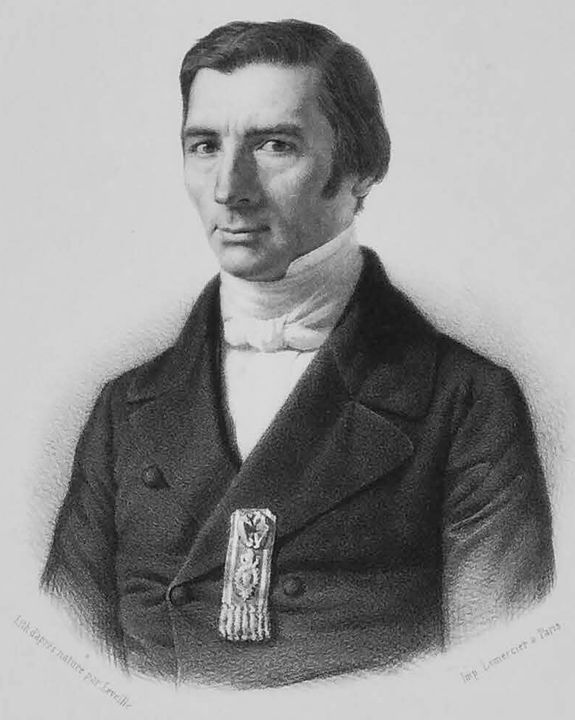
Claude-Frédéric Bastiat (1801–1850) was born in Bayonne and spent most of his life at Mugron in the Landes, managing family property and serving as a local justice of the peace. Inspired by Richard Cobden's Anti-Corn Law League in England, he became from 1844 a leading French advocate of free trade, known for the wit of his Economic Sophisms. He was elected to the Constituent Assembly in 1848 and the Legislative Assembly in 1849. Already gravely ill, he wrote The Law, What Is Seen and What Is Not Seen and Economic Harmonies in his last years, and died in Rome in December 1850.
Frequently Cited
“It is not because men have made laws, that personality, liberty, and property exist. On the contrary, it is because personality, liberty, and property exist beforehand, that men make laws.”
The Law, Opening section, on life and its faculties
“it is the collective organization of the individual right to lawful defence.”
The Law (La Loi) is a pamphlet of about sixteen thousand words that Frédéric Bastiat published in Paris in 1850, during the Second Republic, when he sat in the Legislative Assembly and was dying of a disease of the throat and lungs. It is his most direct statement of the purpose and limits of law.