Work record
The Law
1850 · 19th Century · Essays · French
Abstract
Background. Two years after the February Revolution, with the right to work, the National Workshops and tariff protection still in dispute, a free-trade deputy from the south-west set down his idea of what legislation is for. He died in Rome before the year was out.
Thesis. Rights precede statutes. Because each person may defend life, freedom and goods, a community may pool that defence, but it may never use force for ends no single person could pursue justly; any other use turns law into organized robbery.
Structure. An alarm about perverted law leads to first principles, then to the history of plunder by ruling classes, a definition and test of legal plunder, a rebuttal of philanthropic legislation, a survey of writers from Fénelon to Louis Blanc, and an appeal to freedom.
Key Concepts. Lawful defence; legal versus extra-legal spoliation; law as a prize contested through the suffrage; voluntary fraternity; the harmony of interests; the lawgiver who treats citizens as raw material.
Significance. Revived in America after 1950, the essay became a standard text of classical liberalism, admired for its clarity and debated for its narrow view of the state's tasks. Its moral vocabulary, drawn from Christian natural right as much as from economics, sets it apart from later technical liberalism.
Key figures
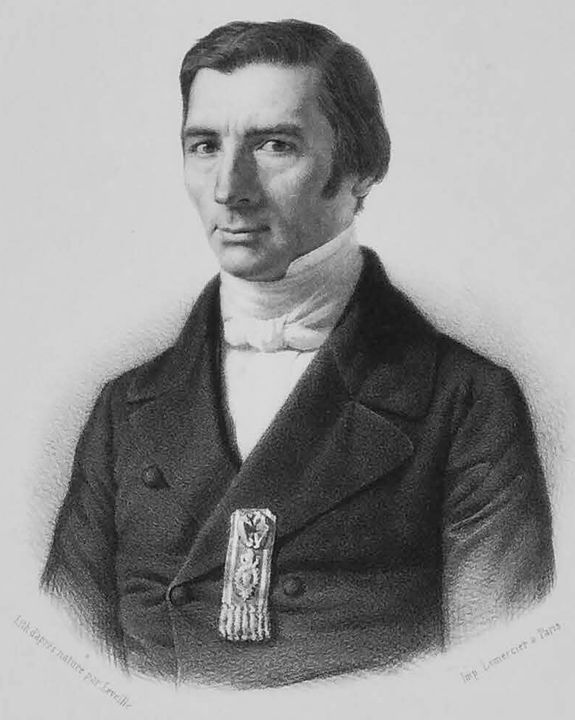
- Frédéric Bastiat: Free-trade economist and deputy for the Landes
- Alphonse de Lamartine: Poet-statesman who wished to go on from liberty to fraternity
- Jean-Jacques Rousseau: Quoted on the legislator who must transform human nature
- Fénelon: Author of Telemachus, cited for Mentor's lessons in governing
- Louis Blanc: Socialist of 1848 and author of The Organisation of Labour

Summary
The Law (La Loi) is a pamphlet of about sixteen thousand words that Frédéric Bastiat published in Paris in 1850, during the Second Republic, when he sat in the Legislative Assembly and was dying of a disease of the throat and lungs. It is his most direct statement of the purpose and limits of law. Bastiat opens with an alarm: the law, which should check greed and injustice, has been turned into their instrument. He then builds from first principles. God has given each person life, together with faculties to sustain and perfect it; existence, faculties and assimilation, or personality, liberty and property, make up the human being, and they come before all legislation. Men make laws because these things already exist, not the reverse. Every individual has a natural right to defend his person, liberty and property, and law is the collective organization of that right to lawful defence. Since a group cannot rightly use force for any purpose that an individual could not, law may only secure justice. Bastiat next explains how law is perverted. Human beings may live either by labour or by plunder, and when lawmaking falls to one man or one class it is used to take from some to benefit others. He distinguishes extra-legal plunder, the theft the penal code punishes, from legal plunder, and offers a test: see whether the law takes from some what belongs to them to give to others what does not belong to them. He names as forms of legal plunder protective tariffs, subsidies, guaranteed profits, and the proposed rights to work and to public assistance, and he argues that once the law becomes a prize, every class fights to control it, which explains the bitterness of politics and the dispute over suffrage. He points to the United States as the country where law keeps most nearly to its domain, adding that slavery and tariffs, the two exceptions, are the two questions that have endangered its order. The longest section answers a common objection, that law must be philanthropic as well as just. Bastiat traces the opposing idea, that the legislator forms a passive people as a potter shapes clay, through quotations from Bossuet, Fénelon's Telemachus, Montesquieu, Rousseau, Raynal, Mably, Condillac and the Jacobins Saint-Just and Robespierre, to the socialists of 1848 such as Louis Blanc. He replies that fraternity must be voluntary, that justice is a fixed and limited quantity, and that the remedy for failed systems is to try liberty, which he calls an act of faith in God and in his work. The library text is the anonymous English version printed in Essays on Political Economy.
Virtues in this work
- Justice: Bastiat insists that the law exists to give each person the secure possession of what is his and to take from no one.
- Fortitude: He published the pamphlet against the prevailing currents of the 1848 Assembly while seriously ill in the last months of his life.
- Charity: His reply to Lamartine defends fraternity as a free act of love that law would corrupt by compelling it.
Plot or Argument
- The law perverted
Opening alarm: the law and the collective force of the nation have been turned from checking iniquity to committing it.
- Life, faculties, property
God gives life and the faculties to sustain it; personality, liberty and property are prior to legislation. Each person may defend them, and law is the collective organization of that individual right of lawful defence. A just law gives a simple, stable government against which no one has reason to rebel.
- Labour or plunder
Men may live by producing or by taking. When law is made by one class, it tends to organize plunder for that class; when the plundered gain power, they seek not to end plunder but to share it. Hence universal suffrage becomes a struggle for the prize.
- Legal plunder and its test
Distinction between extra-legal and legal plunder, with the test: does the law take from some what belongs to them and give to others what does not? Tariffs, bounties and the proposed rights to labour, profit and assistance are named as instances.
- Law must be just, not philanthropic
Against the demand that law also spread well-being, education and morality, Bastiat argues that law cannot act on persons and property without either securing or violating them. His reply to Lamartine: fraternity cannot be separated from the word voluntary.
- The legislator as potter
A gallery of quotations from Bossuet, Fénelon, Montesquieu, Rousseau, Raynal, Mably, Condillac, Saint-Just, Robespierre and Louis Blanc, all imagining mankind as material shaped by the lawgiver. Bastiat traces the habit to a classical education that admired Lycurgus and Solon.
- Try liberty
Law is organized justice. The harmony of human interests means that freedom, not organization by force, best serves all; the closing appeal is to reject systems and make trial of liberty as an act of faith in God.
Characters
- Frédéric Bastiat, author
Deputy for the Landes in the Legislative Assembly, writing as an economist and moralist.
- Alphonse de Lamartine, correspondent
Poet and statesman of 1848 whose phrase about going on from liberty to fraternity Bastiat answers.
- Charles de Montalembert, opponent cited
Catholic deputy who called for war against socialism, prompting Bastiat's definition of legal plunder.
- Jean-Jacques Rousseau, author criticized
Quoted for the idea of the legislator who must change human nature itself.
- Fénelon, author criticized
Archbishop of Cambrai, whose Telemachus shows Mentor teaching a prince to shape a people's laws and manners.
- Louis Blanc, author criticized
Socialist author of The Organisation of Labour, whose project gives society its impulse from power.
- Saint-Just and Robespierre, revolutionaries quoted
Jacobin leaders cited for the claim that the legislator commands the future.
Lessons
Rights come before law
Bastiat argues that personality, liberty and property are not created by legislation but are its cause: people make laws to protect what they already have from God. Law therefore has a fixed purpose, the common defence of individual rights.
- Why does Bastiat begin with God's gift of life before saying anything about law?
- What follows from his claim that collective force may do only what individual force may rightly do?
A test for legal plunder
Bastiat gives a simple question for judging any law: does it take from some what is theirs to give to others what is not, so that the law does for one citizen what the citizen could not do himself without crime? He applies it to tariffs, subsidies and the proposed rights of 1848.
- How does Bastiat distinguish legal from extra-legal plunder?
- Why does he think legal plunder is harder to recognize than theft?
- What examples does he choose, and why do they come from his own political moment?
When law becomes a prize
Bastiat explains the passion of politics by the scope of law: if law can give benefits to whoever controls it, every class will fight for control. He uses this to explain the quarrel over the suffrage in France and the two dangerous questions in the United States.
- Why does Bastiat think the extent of law affects how bitter elections become?
- What does he say about slavery and tariffs in the United States?
Justice and voluntary fraternity
Bastiat does not reject charity or brotherhood; he insists they must be voluntary to be what they are. His reply to Lamartine is the centre of his case that law should be just and leave generosity to free persons.
- What does Bastiat mean when he says the second part of Lamartine's programme will destroy the first?
- Is there any form of fraternity that law can rightly require, on Bastiat's principles?
Context
The Law belongs to the Second French Republic, born in the revolution of February 1848. The provisional government had promised a right to work and opened the National Workshops, whose closure led to the June Days uprising; socialist theorists such as Louis Blanc, Proudhon and the followers of Fourier were widely read, and the Assembly debated suffrage, tariffs and public assistance. Bastiat, a free-trader and liberal economist, sat in the Assembly through these debates.
Composition
Bastiat wrote the pamphlet and published it in Paris in 1850, a few months before his death in Rome on 24 December 1850. It draws on arguments he had made in Economic Sophisms and in his speeches, and refers to sessions of the Assembly and the General Council of Manufactures in 1849 and 1850. English translations appeared in the 1850s; the library uses the anonymous version printed in the Putnam Essays on Political Economy.
Reception
Less noticed in France than his free-trade writings during the later nineteenth century, The Law found a large new readership in the United States after a 1950 translation by Dean Russell for the Foundation for Economic Education. It is now among the most reprinted short works of classical liberal thought, read both as political philosophy and as economic argument; critics have regarded its account of legislation as too narrow for the tasks of modern government.
Comparisons
- second-treatise-of-government
Locke also holds that life, liberty and property precede civil government and that its end is their preservation; Bastiat compresses the argument and turns it against the redistributive proposals of 1848.
- the-social-contract
Rousseau's chapter on the Legislator, who must be capable of changing human nature, is one of the passages Bastiat quotes as the model of the lawgiver who treats the people as clay.
- the-spirit-of-the-laws
Bastiat quotes Montesquieu's admiration for legislators such as Lycurgus and Penn who formed their peoples' manners, a passage from Book IV on education in republics.
- the-communist-manifesto
Published in 1848 in the same revolutionary moment, Marx and Engels argue that law and the state are instruments of the ruling class, a claim that meets Bastiat's account of legal plunder from the opposite direction.
- freedom-and-the-law
Bruno Leoni's 1961 lectures share Bastiat's suspicion of legislation as a tool of sectional interests, and propose discovered, judge-made law in its place.
- the-wealth-of-nations
Smith's attack on the mercantile system and its bounties and protections is the source of many of Bastiat's examples of legal plunder in trade.
Quotes
Frequently cited
“It is not because men have made laws, that personality, liberty, and property exist. On the contrary, it is because personality, liberty, and property exist beforehand, that men make laws.”
Frequently cited
“it is the collective organization of the individual right to lawful defence.”
Frequently cited
“See whether the law takes from some persons that which belongs to them, to give to others what does not belong to them.”
“The law perverted!”
“Existence, faculties, assimilation--in other words, personality, liberty, property--this is man.”
“the relations between mankind and the legislator appear to be the same as those which exist between the clay and the potter.”
“make trial of liberty--of liberty, which is an act of faith in God and in His work.”
For Students
A reading companion for classical Christian high school students. See the student guide.
Reading Guide
Watch for
- The opening sequence from God's gift of life to the definition of law as the collective organization of lawful defence: each step depends on the one before.
- The moment Bastiat distinguishes extra-legal from legal plunder in answer to Montalembert's call to make war on socialism.
- His explanation of why the extent of law makes the quarrel over universal suffrage so fierce.
- The reply to Lamartine about liberty and fraternity.
- The long gallery of quotations from Fénelon, Rousseau, Mably and the Jacobins, and what Bastiat says they have in common.
Key terms and names
- Legal plunder
- Bastiat's term (French spoliation) for taking property by means of law, so that the law does for some what would be a crime if a private person did it.
- Lawful defence
- The natural right of each person to defend his person, liberty and property; law is its collective organization.
- Personality, liberty, property
- The three elements of the human being that, in Bastiat's account, exist before legislation and give law its reason for being.
- Philanthropic law
- The demand, which Bastiat rejects, that law should spread well-being, education and morality as well as secure justice.
- Fraternity
- One of the watchwords of 1848; Bastiat accepts it only when voluntary, and denies it can be imposed by law without destroying liberty.
- The legislator
- In the writers Bastiat criticizes, the wise lawgiver who forms a passive people as a potter shapes clay; Bastiat calls these men organizers.
Seminar Questions
- Comprehension According to Bastiat, what three things make up the human being, and where do they come from?
- Comprehension What test does Bastiat offer for recognizing legal plunder, and what examples does he give?
- Comprehension Which two questions does Bastiat say have endangered order in the United States, and why does he single them out?
- Interpretation Why does Bastiat insist that law cannot be philanthropic without ceasing to be just?
- Interpretation Bastiat blames a classical education for teaching Frenchmen to see the people as clay. Is his reading of Fénelon and Rousseau fair to what they intended?
- Interpretation How does Bastiat's faith in God shape his confidence that liberty will lead to harmony rather than disorder?
- Big Question Is the purpose of law only to protect what people already have, or may it rightly aim to make them better?
Faith Connections
- Exodus 20:15 (Scripture)
Thou shalt not steal. Bastiat's argument that the law itself can commit theft applies the commandment to the state: what is forbidden to the individual cannot become lawful when done collectively.
- 2 Corinthians 9:7 (Scripture)
Paul asks each to give as he purposes in his heart, not grudgingly or of necessity. Bastiat's claim that fraternity must be voluntary echoes the scriptural link between giving and a free heart, though he applies it to the reach of the state.
- Augustine, City of God IV.4 (Church Fathers)
In Book IV Augustine compares a kingdom that has abandoned justice to a band of robbers grown large, and tells of the pirate who answered Alexander that he was called a thief only for using one small ship. Bastiat's account of legal plunder is a nineteenth-century development of the same question about when the state becomes a robber.
- Leo XIII, Rerum Novarum (1891) (Great Conversation)
Forty years later Leo XIII also defended private property as prior to the state against socialist proposals, while holding that public authority must protect workers and the poor; the encyclical gives a Christian conversation partner for Bastiat's narrower view of law.
Logic and Rhetoric
Central argument: God gives each person life and the faculties to sustain it, so personality, liberty and property exist before law. Each person may rightly defend them by force, and law is only the union of these individual rights of defence. A collective force may not do what no individual may rightly do. Therefore law may secure persons and property but may not take from some to give to others; when it does, it becomes legal plunder and turns politics into a struggle for the prize.
Rhetorical device: reductio ad absurdum through quotation. In the section on legislators Bastiat lets Fénelon, Rousseau, Mably, Saint-Just and Louis Blanc speak at length, then comments on each in turn until the cumulative picture of mankind as clay in a potter's hands answers itself.
Debate: Resolved: that a law providing public assistance to the poor is legal plunder in Bastiat's sense.
Memory Work
It is not because men have made laws, that personality, liberty, and property exist. On the contrary, it is because personality, liberty, and property exist beforehand, that men make laws.
See whether the law takes from some persons that which belongs to them, to give to others what does not belong to them.
Writing Prompts
Essay: Bastiat defines law as the collective organization of the individual right to lawful defence. Explain how this definition leads to his test for legal plunder and his reply to Lamartine, and assess whether it can account for all the tasks a just government performs.
Comparison with Second Treatise of Government: Locke and Bastiat both argue that property and liberty precede government. Compare Locke's account of the state of nature and the purpose of civil society with Bastiat's account of lawful defence and legal plunder, and argue which gives the stronger limit on what law may do.
Medical Lens
The Law contains no medical subject matter. Bastiat wrote it while seriously ill in the last year of his life, but the pamphlet does not refer to his illness.
Creative Prompts
- Classroom
Give students five laws from different periods (a medieval guild rule, a tariff, a poor law, a road law, a law against theft) and have them apply Bastiat's test for legal plunder, then discuss where the test gives clear answers and where it is hard to apply.
- Dialogue
Write the conversation between Bastiat and Lamartine that might have followed Lamartine's remark that Bastiat had stopped at liberty while he went on to fraternity.
- Essay
Bastiat traces the idea of the legislator as potter to a classical education built on Lycurgus and Solon. Using his quotations from Fénelon and Rousseau, explain the charge and consider how a reader of Plutarch might answer it.
Further Reading
- Economic Sophisms, Frédéric Bastiat
Includes the Petition of the Candlemakers.
- Selected Essays on Political Economy, Frédéric Bastiat
Includes The Law and What Is Seen and What Is Not Seen.
- Economic Harmonies, Frédéric Bastiat
- The Organisation of Labour (Organisation du travail), Louis Blanc
The socialist programme Bastiat quotes and answers.
Verification notes
Biographical and historical facts are standard. The pamphlet has no numbered chapters, so locators name the section of the argument. The stored text gives no translator; the Putnam volume reprints an English version from the 1850s. Translator's footnotes (on francs and the date of writing, among others) appear at the end of the stored file and were not quoted. The authors named in the 'legislator' section (Bossuet, Fénelon, Montesquieu, Rousseau, Raynal, Mably, Condillac, Saint-Just, Robespierre, Louis Blanc) were checked against the stored text.
- Identity and date of the anonymous English translator reprinted in the Putnam volume.