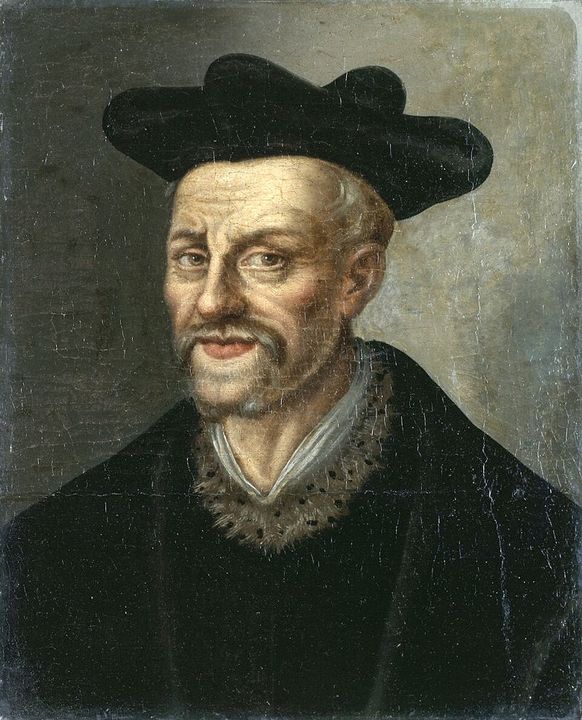
François Rabelais, anonymous sixteenth-century portrait. Source · Public domain
About François Rabelais
François Rabelais (c. 1483 or 1494–1553) was a French humanist, physician and comic writer. He entered the Franciscan order, later moved to the Benedictines, and learned Greek in an age when the study was viewed with suspicion. He studied medicine at Montpellier in 1530, served as physician at the Hôtel-Dieu in Lyon from 1532, and edited Hippocrates and Galen. He travelled to Rome in the household of Jean du Bellay and spent his last years as a parish priest at Meudon in name, dying in Paris in 1553.
“because men that are free, well-born, well-bred, and conversant in honest companies, have naturally an instinct and spur that prompteth them unto virtuous actions, and withdraws them from vice, which is called honour.”
“But because, as the wise man Solomon saith, Wisdom entereth not into a malicious mind, and that knowledge without conscience is but the ruin of the soul”
Gargantua and Pantagruel is the collective title of five comic books about a dynasty of giants, written by François Rabelais and published between 1532 and 1564. Pantagruel appeared first, at Lyon in 1532, under the anagram pen-name Alcofribas Nasier; Gargantua, about the father, followed in 1534 or 1535 and is now printed as Book I. The Third Book (1546) and the Fourth Book (complete 1552) bore Rabelais's own name, and a Fifth Book was published in 1564, eleven years after his death; how much of it he wrote is disputed.