Work record
Gargantua and Pantagruel
1532-1564 · Renaissance Early Modern · Satire · French
Abstract
Background. A monk turned doctor at Lyon reworked a fairground chapbook about giants into learned comedy, issuing the books over three decades amid censure from the Paris theologians. Urquhart's exuberant English, finished by Motteux, became a classic in its own right.
Narrative. The first two books give the births, schooling and wars of two royal giants, father and son. Gargantua passes from rote-learning pedants to a humanist master, crushes a bellicose neighbour who began a war over cakes, and endows a free abbey for a brawling friar. His son studies in Paris and befriends a vagabond polyglot. From the third book on, that friend's dread of an unfaithful wife sends the company from one adviser to another and finally on a sea voyage to an oracle.
Structure. Each book opens with a prologue addressed to drinkers and invalids; episodes are loosely strung, and Book V, printed after the author's death, may be partly another hand.
Themes. Renaissance learning against scholastic pedantry, just and unjust war, freedom and honour, counsel and self-deception, the authority of physicians and judges, and laughter as health for body and soul.
Significance. These volumes gave European languages the word Rabelaisian and influenced Cervantes, Swift and Sterne. Modern critics still divide over whether their author was a devout evangelical reformer, a sceptic, or a voice of popular carnival.
Main characters
- Gargantua: Giant prince and founder of the Abbey of Theleme
- Pantagruel: His son, a learned and good-humoured giant
- Panurge: Pantagruel's clever, cowardly companion, anxious about marriage
- Friar John: Fighting monk who saves the abbey vineyard
- Grangousier: Gargantua's father, a peaceable old king
- Picrochole: Neighbouring king with dreams of world conquest
- Ponocrates: Gargantua's humanist tutor
- Bacbuc: Priestess of the Holy Bottle
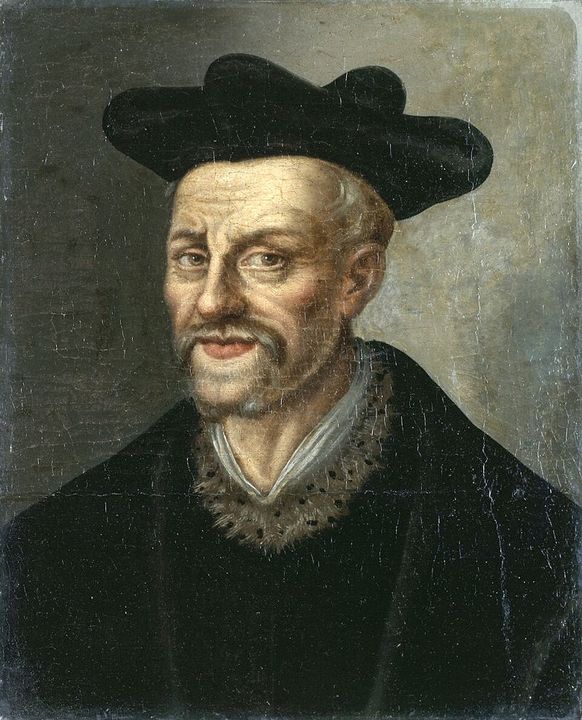

Summary
Gargantua and Pantagruel is the collective title of five comic books about a dynasty of giants, written by François Rabelais and published between 1532 and 1564. Pantagruel appeared first, at Lyon in 1532, under the anagram pen-name Alcofribas Nasier; Gargantua, about the father, followed in 1534 or 1535 and is now printed as Book I. The Third Book (1546) and the Fourth Book (complete 1552) bore Rabelais's own name, and a Fifth Book was published in 1564, eleven years after his death; how much of it he wrote is disputed. The library text is the English version begun by Sir Thomas Urquhart (Books I and II, 1653; Book III, 1693) and completed by Peter Antony Motteux. Book I tells of Gargantua's birth from his mother Gargamelle's left ear after a feast of tripe, his enormous appetites, and his schooling. Under the sophisters Tubal Holofernes and Jobelin Bride he learns by rote and grows duller; under the humanist Ponocrates, after a purge of hellebore, he studies the ancients, the sciences, music and exercise from dawn to night. In Paris he steals the bells of Notre-Dame and receives the ridiculous oration of Master Janotus de Bragmardo. A quarrel over cakes between the cake-bakers of Lerne and the shepherds of Grangousier, Gargantua's father, swells into an invasion by King Picrochole, who dreams of conquering the world. Grangousier seeks peace, Friar John of the Funnels defends the abbey vineyard with a staff of the cross, and Gargantua wins the war and treats the conquered with clemency. As a reward Friar John receives the Abbey of Theleme, an anti-monastery of well-bred men and women whose single rule is Do What Thou Wilt. Book II follows Pantagruel from his birth, which costs his mother Badebec her life, through his studies at Paris. There he receives his father's famous letter on learning and meets Panurge, a quick-witted rogue who begs in a dozen languages and becomes his companion. Pantagruel settles an absurd lawsuit, Panurge defeats the English scholar Thaumast in a debate by signs, and the giant wars against the Dipsodes and their king Anarchus. Book III turns on one question: should Panurge marry, and will he be made a cuckold? After praising debtors, he consults a sibyl, a dying poet, an astrologer, the theologian Hippothadee, the physician Rondibilis, the sceptic Trouillogan, the judge Bridlegoose, who decides lawsuits by dice, and the fool Triboulet. The company resolves to sail to the Oracle of the Holy Bottle. Book IV narrates the voyage: the drowning of the merchant Dingdong's sheep, a storm that terrifies Panurge, the islands of Shrovetide and the Chitterlings, the Papimanes, the frozen words, and Messer Gaster, the belly, first master of arts. Book V brings the travellers through the Ringing Island and the court of Gripe-men-all to the priestess Bacbuc, whose oracle answers with one word, Trinc.
Virtues in this work
- Prudence: Grangousier sends embassies and restores the stolen cakes many times over before he will fight Picrochole.
- Magnanimity: In his speech to the vanquished, Gargantua frees the prisoners and treats Picrochole's people with clemency instead of revenge.
- Fortitude: Friar John alone defends the abbey vineyard against Picrochole's plunderers while the other monks sing in the choir.
- Industry: Under Ponocrates, Gargantua spends every hour from early morning to night in reading, observation, exercise and conversation.
Plot or Argument
- Book I (Gargantua): birth and two educations
Gargantua is born from Gargamelle's ear crying for drink. The sophister Tubal Holofernes spends years teaching him to recite grammars backwards; Ponocrates purges him with hellebore and fills his day with reading, observation, exercise and prayer (chapters XIV-XXIV).
- Book I: the Picrocholine war and Theleme
A fight over cakes leads King Picrochole to invade Grangousier's lands. Grangousier pleads for peace, Friar John routs the plunderers in the abbey close, and Gargantua defeats Picrochole and pardons the conquered. The last chapters describe the Abbey of Theleme and its rule of free will (chapters XXV-LVIII).
- Book II (Pantagruel): birth, letter and Panurge
Gargantua weeps and laughs at once over the death of Badebec and the birth of his son. In Paris Pantagruel mocks the titles of the library of St Victor, receives his father's letter on universal learning (chapter VIII) and meets Panurge (chapter IX).
- Book II: lawsuits, debates and the Dipsodes
Pantagruel judges a lawsuit argued in nonsense, Panurge outdoes Thaumast in a debate by gestures, and the giant conquers the Dipsodes; the narrator explores a world inside Pantagruel's mouth and Epistemon returns from the dead with news of the underworld.
- Book III: should Panurge marry?
Panurge, made laird of Salmigondin, praises debts, then seeks counsel on marriage from dreams, a sibyl, a poet, a theologian, the physician Rondibilis, the philosopher Trouillogan, Judge Bridlegoose and the fool Triboulet. The book closes with a mock-scientific eulogy of the herb Pantagruelion, which is hemp.
- Book IV: the voyage
Sailing toward the oracle, the company meets Dingdong, whose sheep Panurge drowns, the bailiffs of Procuration, a storm in which Panurge quakes while Friar John works, the islands of Shrovetide, the Chitterlings and the Papimanes, frozen words thawing in the air, and Messer Gaster, the belly whom the Gastrolaters worship.
- Book V: the Oracle of the Bottle
The travellers visit the Ringing Island of caged birds, escape the Furred Law-cats of Gripe-men-all, see the court of Queen Quintessence and Lantern-land, and descend to the temple where Bacbuc gives Panurge the oracle's word Trinc and explains it as drink. Authorship of this posthumous book is uncertain.
Characters
- Gargantua, giant prince
Son of Grangousier, educated twice over, victor of the Picrocholine war and founder of Theleme.
- Pantagruel, giant prince and hero
Son of Gargantua, a scholar-king of good humour and patience who leads the later books.
- Panurge, companion and trickster
Witty, cowardly, endlessly resourceful rogue whose question about marriage drives Books III to V.
- Friar John of the Funnels, monk and fighter
Hearty, unlearned monk who defends his abbey's vineyard and receives Theleme as a reward.
- Grangousier, king
Gargantua's peace-loving father, who answers Picrochole's aggression with embassies and restitution.
- Picrochole, invading king
Choleric neighbour whose counsellors persuade him he can conquer the known world.
- Ponocrates, tutor
Humanist teacher who remakes Gargantua's education.
- Epistemon, tutor and companion
Pantagruel's learned friend, beheaded in battle and restored to life.
- Janotus de Bragmardo, sophister
Theologian sent to recover the bells of Notre-Dame with a speech of mangled Latin.
- Rondibilis, physician
Doctor consulted in Book III, who answers Panurge with medical lore on desire and marriage.
- Bridlegoose, judge
Old judge who decides lawsuits by casting dice, with long delays to let cases ripen.
- Bacbuc, priestess
Keeper of the Oracle of the Holy Bottle in Book V.
Lessons
Two schools for one giant
Book I sets the rote learning of Tubal Holofernes beside the full day Ponocrates plans, in which Gargantua reads Scripture at waking, studies the stars, handles plants, practises arms and talks over his lessons at meals. Rabelais makes education a matter of forming the whole person, body, mind and devotion, rather than piling up glosses.
- What does Gargantua learn from the sophisters, and why does it make him worse?
- Which parts of Ponocrates' timetable would you keep in a school today, and which seem impossible?
- Why does Gargantua's letter in Book II end with God, conscience and charity rather than with more subjects?
A war over cakes
The Picrocholine war begins with a scuffle about cakes and grows because Picrochole's flatterers sketch a conquest stretching to Mesopotamia. Grangousier offers restitution, argues that conquest is contrary to the gospel, and fights only when he must; Gargantua's speech to the vanquished prefers clemency to revenge.
- How do Picrochole's counsellors feed his ambition in the council scene?
- What reasons does Grangousier give for refusing to imitate Alexander and Caesar?
- Does Rabelais's comedy make the case against unjust war more or less persuasive?
Theleme and free will
The Abbey of Theleme reverses ordinary monastic rule: no walls, no clocks, men and women together, and the single clause Do What Thou Wilt. Rabelais justifies it by a claim that the well-born and well-taught are moved to virtue by an inner spur called honour. Readers have long debated whether Theleme is an ideal, a joke, or both.
- Who may enter Theleme, and who is turned away by the inscription on the gate?
- What does the text say happens to free people who are constrained?
- Can a rule of pure liberty work without a prior education in virtue?
Seeking counsel without hearing it
In Book III Panurge asks almost every kind of authority whether he should marry, and twists every answer to suit his fears or wishes. Pantagruel reads the same answers plainly. The episode is a long comic study of self-deception and of how hard it is to receive advice.
- How do Pantagruel and Panurge interpret the same prophecy differently?
- What does the theologian Hippothadee advise, and how does Panurge respond?
- Why might the fool Triboulet be consulted last?
Context
Rabelais wrote in the generation of Erasmus and Thomas More, when humanists were recovering Greek and Hebrew texts, printing was spreading, and the Reformation was dividing Christendom. He mocks the Sorbonne theologians, scholastic logic, idle monks, lawyers and both papal and later Protestant extremes, while praising evangelical piety, classical learning and the art of medicine. The comic giants come from popular chapbooks sold at the Lyon fairs, which Rabelais transformed into learned satire.
Composition
Pantagruel (1532) and Gargantua (1534 or 1535) were printed at Lyon under the pseudonym Alcofribas Nasier. The Third Book (1546) appeared under Rabelais's name with a royal licence to print; a partial Fourth Book appeared in 1548 and the complete one in 1552. L'Isle sonante (1562) and the full Fifth Book (1564) were published after his death, and scholars still debate their authorship. Sir Thomas Urquhart of Cromarty, a Scottish royalist, published Books I and II in English in 1653; his Book III appeared in 1693 under Peter Antony Motteux's editorship, and Motteux translated Books IV and V. The library's Project Gutenberg text reprints the 1653 text of the first two books, with some notes from the Maitland Club edition (1838).
Reception
The Sorbonne condemned the books, and Rabelais's name became a byword among some contemporaries for impiety, though he presented himself as an evangelical Christian. Later readers, including Swift and Sterne, imitated him; the adjective Rabelaisian entered English for coarse, exuberant humour. Urquhart's translation, which often expands Rabelais's lists into even longer ones, is itself counted a classic of English prose. Twentieth-century critics such as Lucien Febvre, who argued against reading Rabelais as an unbeliever, and Mikhail Bakhtin, who read him through popular carnival culture, have offered contrasting accounts of his religion and his laughter.
Comparisons
- don-quixote
Cervantes and Rabelais both build comic epics from popular romance; Don Quixote and Sancho, like Pantagruel and Panurge, pair a serious idealist with a fleshly, talkative companion.
- utopia
Rabelais borrows More's word: Pantagruel's mother is a daughter of the king of the Amaurots in Utopia, and in Book III Pantagruel resettles Utopians in Dipsody; Theleme can be read as a comic answer to More's ordered commonwealth.
- essays-montaigne
Montaigne, a generation later, shares Rabelais's humanist reading, scepticism of pedantry and interest in education, but replaces giant comedy with quiet self-examination.
- gullivers-travels
Swift's voyages to lands of giants and absurd academies continue Rabelais's satirical travel narrative of Book IV.
- candide
Voltaire's travelling philosophers and their failed consultations recall Panurge's endless search for an answer in Book III.
Quotes
Frequently cited
“Because to laugh is proper to the man.”
Frequently cited
“you must, by a sedulous lecture, and frequent meditation, break the bone, and suck out the marrow”
Frequently cited
“because men that are free, well-born, well-bred, and conversant in honest companies, have naturally an instinct and spur that prompteth them unto virtuous actions, and withdraws them from vice, which is called honour.”
Frequently cited
“But because, as the wise man Solomon saith, Wisdom entereth not into a malicious mind, and that knowledge without conscience is but the ruin of the soul”
“This imitation of the ancient Herculeses, Alexanders, Hannibals, Scipios, Caesars, and other such heroes, is quite contrary to the profession of the gospel of Christ”
“In brief, let me see thee an abyss and bottomless pit of knowledge”
“for Trinc is a panomphean word, that is, a word understood, used and celebrated by all nations, and signifies drink.”
For Students
A reading companion for classical Christian high school students. See the student guide.
Reading Guide
Watch for
- The prologue to Book I and its image of the dog breaking the bone for marrow: how seriously should the reader take the comedy?
- The contrast between Gargantua's two teachers in Book I, Chapters XIV-XXIV.
- Grangousier's patient diplomacy against Picrochole's council of flatterers in the cake war.
- The inscription on Theleme's gate and the rule of Do What Thou Wilt in Chapters LIV-LVII.
- Gargantua's letter to Pantagruel in Book II, Chapter VIII, and its turn from knowledge to conscience.
Key terms and names
- Theleme
- From the Greek thelema, will: the abbey Gargantua builds for Friar John, without walls or bells, whose only rule is Do What Thou Wilt.
- Sophister
- Rabelais's word for the scholastic teachers of the Sorbonne, like Tubal Holofernes and Janotus de Bragmardo, who teach by rote and quibble.
- Picrocholine war
- The war of Book I, begun over cakes, in which King Picrochole (whose name means bitter bile) invades Grangousier's land.
- Pantagruelism
- The good-humoured cheerfulness, steady in the face of fortune, that Rabelais names after his hero in the later prologues.
- Oracle of the Holy Bottle
- The goal of the voyage in Books IV and V, where the priestess Bacbuc gives Panurge the word Trinc.
- Humanism
- The Renaissance movement to recover Greek, Latin and Hebrew sources and reform education, which shapes Ponocrates' teaching and Gargantua's letter.
- Content note
- The books are full of bawdy jokes, bodily and scatological humour and comic violence; teachers often assign selected chapters, such as the education chapters, the cake war, Theleme and the letter.
Seminar Questions
- Comprehension How does the war between Grangousier and Picrochole begin, and how does Grangousier first respond?
- Comprehension What subjects does Gargantua tell Pantagruel to study in his letter, and what does he say must accompany them?
- Comprehension Whom does Panurge consult in Book III, and what is the question he keeps asking?
- Interpretation Why does Rabelais give Friar John, who cannot read well, the reward of Theleme?
- Interpretation What is the difference between the sophisters' learning and Ponocrates' learning, judging by what each does to Gargantua?
- Interpretation Is the oracle's answer Trinc a joke on Panurge, a serious teaching, or both?
- Big Question Can laughter teach truths that sober argument cannot, and are there truths it should not touch?
- Big Question Does true freedom consist in doing what one wills, or in being formed so that one wills the good?
Faith Connections
- Proverbs 17:22 (Scripture)
A merry heart doeth good like a medicine: Rabelais, a physician, made a similar claim for his laughter in the verses to the reader and later prologues.
- Galatians 5:13 (Scripture)
Paul calls Christians to liberty but warns against using it as an occasion to the flesh; this sets a sharp question beside Theleme's rule of Do What Thou Wilt.
- James 4:1-2 (Scripture)
Wars come from desires that war within; Picrochole's lust for conquest, inflamed by his counsellors, is a comic illustration.
- Augustine, Homilies on 1 John 7.8 (Great Conversation)
Augustine's maxim Love, and do what you will grounds freedom in charity; comparing it with Theleme's motto shows what Rabelais keeps and what he leaves out.
Logic and Rhetoric
Central argument: If people are well born, well taught and kept in honest company, then an inner sense of honour will move them to virtue; constraint only provokes the desire for what is forbidden; therefore the best rule for such people is liberty. Theleme and Ponocrates' school together make this humanist case, while Panurge's antics test it.
Rhetorical device: accumulatio (comic catalogue). Rabelais piles up lists, from the games of Gargantua in Book I, Chapter XXII to the titles of the library of St Victor in Book II, Chapter VII, and Urquhart lengthens them further in English.
Debate: Resolved: that the Abbey of Theleme describes a good way to live.
Memory Work
Because to laugh is proper to the man.
But because, as the wise man Solomon saith, Wisdom entereth not into a malicious mind, and that knowledge without conscience is but the ruin of the soul
Writing Prompts
Essay: Is Theleme a serious ideal or a satire of ideals? Argue from the inscription on the gate, the rule of Do What Thou Wilt and its stated reason, and the life of the Thelemites in Book I, Chapters LII-LVII.
Comparison with Utopia: Compare More's island of Utopia with Rabelais's Abbey of Theleme: what does each society regulate, what does each leave free, and what does each assume about human nature?
Medical Lens
Rabelais was a practising physician, lecturer on Hippocrates and Galen at Montpellier and editor of the Aphorisms, and his books are full of the medicine of his day: humoral explanations of appetite and temperament, purges, regimen and diet, and anatomical lists. Gargantua's letter urges his son to read the Greek, Arabic and Latin physicians and to gain knowledge of man the microcosm through frequent anatomies, a striking recommendation in the decades before Vesalius. Book III gives a physician, Rondibilis, his own consultation scene, a comic portrait of medical advice on desire, marriage and the fee. The constant drinking is comic and festive rather than clinical, and readers should be cautious about reading it as a picture of alcohol dependence. Rabelais's own claim, in later prologues and dedications, that laughter helps the sick is a period idea worth noting for the history of medicine.
- Book I, Chapters IV-VI
Gargamelle's feast of tripe, the labour, the attentions of the midwives and Gargantua's comic birth through her left ear.
- Book I, Chapter XXIII
Ponocrates purges Gargantua with Anticyrian hellebore to make him forget the sophisters' teaching, then sets a regimen of study, meals, exercise and sleep.
- Book II, Chapters II-III
Badebec dies in giving birth to Pantagruel, and Gargantua is torn between grief for his wife and joy at his son.
- Book II, Chapter VIII
Gargantua's letter recommends the ancient physicians and frequent anatomies as part of a complete education.
- Book III, Chapters XXXI-XXXIV
The physician Rondibilis advises Panurge on the cooling of desire, on marriage and on cuckoldry, and accepts his fee with a show of reluctance.
- Book III, Chapters XLIX-LII
The mock-encyclopedic praise of Pantagruelion (hemp), its preparation and its many uses, parodying the herbals of the period.
Creative Prompts
- Essay
Compare the education Tubal Holofernes gives Gargantua with Ponocrates' timetable in Book I, Chapter XXIII, and argue which elements of the humanist plan are still the heart of a good education.
- Dialogue
Write a new consultation for Book III in which Panurge asks a modern expert whether he should marry, keeping his habit of turning every answer to his own purpose.
- Classroom
Stage the council of Picrochole's captains in Book I, Chapter XXXIII, with students adding countries to the imaginary conquest until the plan collapses under its own absurdity.
- Fiction
Describe one day in the Abbey of Theleme from the point of view of a newcomer who has just read the inscription on the gate.
Further Reading
- Rabelais and His World, Mikhail Bakhtin
Influential study of the books through popular festive and carnival culture.
- The Problem of Unbelief in the Sixteenth Century: The Religion of Rabelais, Lucien Febvre
Argues that Rabelais should not be read as a modern unbeliever.
- Rabelais, M. A. Screech
Detailed study of Rabelais's humanism, evangelical faith and learning.
- The Praise of Folly, Desiderius Erasmus
The humanist satire of theologians, monks and pedants that most shaped Rabelais's comedy.
Verification notes
All seven quotations were found verbatim with Grep in the stored Project Gutenberg #1200 text; chapter locators follow the Gutenberg numbering (Book I = Gargantua, Book II = Pantagruel). The Gutenberg edition note says the first two books reprint Urquhart's 1653 text, Book III followed in 1693 under Motteux's editorship, and gives 1708 for Motteux's Books IV and V (first published in the 1690s); some passages are restored from Ozell's 1738 edition. Publication dates of the French books, the Sorbonne's condemnation and the authorship debate over Book V are standard. Rabelais's birth year is uncertain (c. 1483 or c. 1494). The chapter count of about 257 is from the stored text's chapter headings.
- Whether Gargantua's first edition is 1534 or 1535 (both dates appear in scholarship).
- The first-publication year of Motteux's translation of Books IV and V (1694 is often given; the Gutenberg note gives 1708).