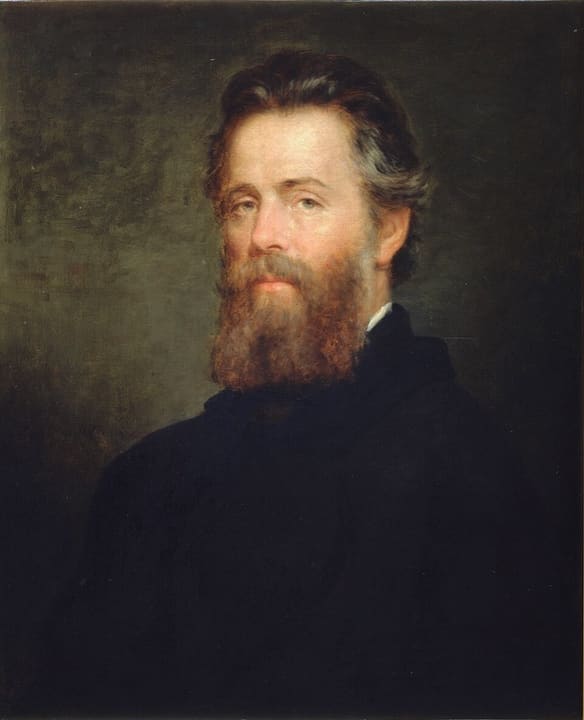
Herman Melville (1819-1891) was an American novelist and poet from New York whose family fortunes collapsed in his boyhood. He shipped as a merchant sailor and in 1841 on the whaler Acushnet, deserting in the Marquesas and drawing on his Pacific adventures for Typee and Omoo. Moby-Dick (1851), written at Arrowhead farm in Pittsfield near his friend Nathaniel Hawthorne, was followed by Pierre, short fiction, Civil War poems, the long poem Clarel and the posthumous Billy Budd; he worked for nineteen years as a New York customs inspector.
“Towards thee I roll, thou all-destroying but unconquering whale; to the last I grapple with thee; from hell’s heart I stab at thee; for hate’s sake I spit my last breath at thee.”
Moby-Dick is Herman Melville's novel of the whaling voyage of the Pequod and of her captain's pursuit of a great white sperm whale. School Launch points readers to parent-chosen selections, while the library provides the complete text of the Etymology, Extracts, one hundred thirty-five chapters and Epilogue for those who want the whole voyage.
1924 (written 1886–1891); stories 1850s · 19th Century · Collection
This collection pairs Melville's posthumous novella Billy Budd, Sailor with the best of the short fiction he published in magazines in the 1850s, usually including Bartleby, the Scrivener, Benito Cereno and The Encantadas (contents vary by edition). Bartleby (1853) is narrated by a comfortable Wall Street lawyer who hires a pale, quiet copyist.