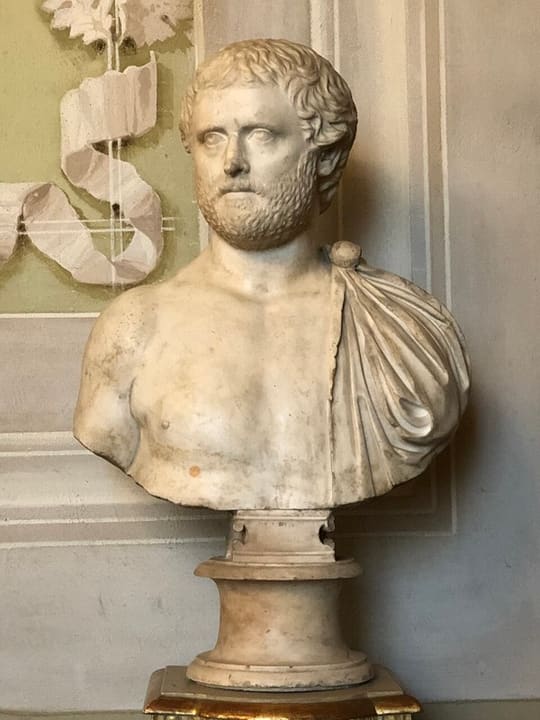
Publius Ovidius Naso (43 BC-AD 17 or 18) was born at Sulmo in central Italy, trained in rhetoric at Rome for a public career, and turned instead to poetry, becoming the leading poet of Rome after the death of Virgil. His early works, the Amores, the Heroides and the Art of Love, were followed by the Metamorphoses and the Fasti. In AD 8 the emperor Augustus banished him to Tomis on the Black Sea, for reasons Ovid called a poem and a mistake, and he died there, writing the Tristia and Letters from Pontus. The translator, Grant Showerman (1870-1935), was a professor of classics at the University of Wisconsin.
The Heroides (Heroines) is a collection of twenty-one verse letters in elegiac couplets, written as if by women of myth and legend to the men who have left, betrayed or endangered them, together with three pairs of letters exchanged between lovers. Ovid claimed to have invented the form.
The Metamorphoses is a Latin poem in fifteen books of dactylic hexameter, about 12,000 lines, that strings together some 250 myths of transformation from the creation of the world to the deification of Julius Caesar and the reign of Augustus. Its unifying thread is change of form: gods, humans and nymphs become animals, plants, stones, stars and springs, usually at moments of extreme passion, violence or divine punishment.