Work record
Addington v. Texas
1979 · Postwar Contemporary · Court Decision · English
Abstract
Question Presented. How certain must a jury be, under the Fourteenth Amendment, before a state may send a person against his will to a psychiatric hospital with no fixed release date?
Arguments. Addington maintained that losing one's freedom and bearing the label of mental illness are as serious as a criminal conviction, so the state should have to remove all reasonable doubt. Texas responded that hospitalization aims at care rather than penalty and that the inexact art of forecasting dangerous behavior could never meet the criminal threshold.
Holding. Unanimously among those participating, the justices set aside the Texas ruling. A bare tipping of the scales leaves the patient too exposed to a mistaken hospitalization, while the reasonable-doubt test belongs to criminal punishment and could keep needed care from those who require it. The Constitution demands at least clear and convincing proof; Texas's instruction met that bar, and the state court was left to fix the exact formula.
Significance. Nearly every state soon met or exceeded the floor this ruling set for involuntary hospitalization. Its reasoning about how to divide the danger of wrong outcomes between a person and the state has guided later decisions on parental rights and medical decision-making.
Text. Burger's opinion is complete apart from notes.
Key figures
- Frank O'Neal Addington: Texan committed indefinitely after his mother's petition
- Warren E. Burger: Chief Justice who set a middle standard of proof
- Lewis F. Powell Jr.: Justice who did not participate
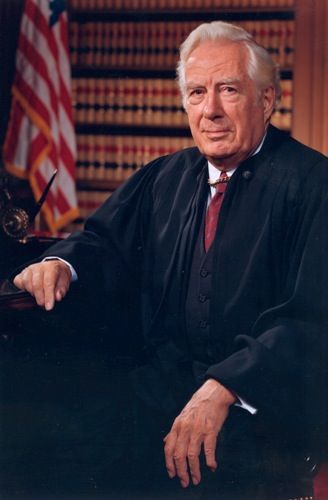

Summary
Frank O'Neal Addington had been hospitalized in Texas state mental hospitals many times between 1969 and 1975. In December 1975, after he was arrested on a misdemeanor charge of assault by threat against his mother, she petitioned for his indefinite commitment. A county psychiatric examiner certified that he was mentally ill and required hospitalization. At a six-day jury trial the State presented evidence of threats against his parents, incidents during earlier hospital stays and damage to property, and two psychiatrists testified that he was ill and probably dangerous. Addington did not dispute the facts or deny that he was ill; he argued that there was no substantial basis for finding him dangerous. The trial judge instructed the jury to decide by clear, unequivocal and convincing evidence, refusing Addington's request for proof beyond a reasonable doubt. The jury found that he was mentally ill and needed hospitalization, and he was committed to Austin State Hospital for an indefinite period. The Texas Court of Civil Appeals reversed, agreeing that the criminal standard was required, but the Texas Supreme Court reinstated the commitment, holding that a mere preponderance of the evidence was enough and that the trial court's stricter instruction had only helped Addington. The question was therefore what standard of proof the Due Process Clause of the Fourteenth Amendment requires before a State may commit a person involuntarily and indefinitely to a mental hospital. Addington argued that, as in In re Winship (1970), the loss of liberty and stigma were as grave as in a criminal case and called for proof beyond a reasonable doubt. Texas argued that commitment is not punishment, that it serves the patient's own welfare, and that the uncertainty of psychiatric prediction would make the criminal standard nearly impossible to meet. On 30 April 1979 the Court, with Chief Justice Burger writing for all eight participating justices, vacated the judgment. Burger described three standards along a continuum: preponderance for ordinary civil disputes, proof beyond a reasonable doubt for crimes, and an intermediate clear and convincing standard for cases where more than money is at stake. Civil commitment is a significant deprivation of liberty with lasting social consequences, and an individual should not share the risk of error equally with the State, so preponderance is too low. But commitment is not punitive, and because psychiatric diagnosis rests largely on clinical impressions, the reasonable-doubt standard could block needed treatment. Due process therefore requires at least clear and convincing evidence; the word unequivocal is permitted but not required, and states remain free to choose the precise level at or above that floor. The library text gives the entire opinion with notes removed. Most states already used a clear-and-convincing standard. The Court applied the same intermediate standard to the termination of parental rights in Santosky v. Kramer (1982), and Addington remains the leading authority on proof in civil commitment, cited in later cases on the confinement of insanity acquittees and of persons found sexually dangerous.
Virtues in this work
- Prudence: The Court chooses a middle standard that protects liberty without making needed care impossible to provide.
- Justice: Burger holds that the State, not the individual, must bear most of the risk of a mistaken commitment.
- Humility: The opinion candidly admits the limits of psychiatric knowledge and of judges' understanding of how jurors apply standards of proof.
Plot or Argument
- Commitment proceedings in Texas
Burger recounts Addington's history of hospitalizations, his mother's petition, the jury trial on mental illness and the need for hospitalization, and the conflicting rulings of the two Texas appellate courts.
- Three standards of proof
The opinion explains that a standard of proof allocates the risk of error: preponderance shares it equally in private civil cases, reasonable doubt places almost all of it on society in criminal cases, and clear and convincing evidence occupies the middle.
- Why preponderance is too low
Weighing the individual's interest in liberty against the State's parens patriae and police-power interests, the Court finds that commitment is a significant deprivation of liberty and that ordinary eccentricity must not be mistaken for illness; the individual should not bear half the risk of error.
- Why reasonable doubt is not required
Civil commitment is not punitive, the criminal standard has a special historic role, the inquiry turns on medical meaning rather than simple facts, and psychiatric uncertainty could make the criminal burden impossible; federalism also leaves room for state variation.
- The middle course and remand
Due process requires at least clear and convincing evidence; Texas's instruction was adequate, but the precise standard is left to the Texas Supreme Court on remand.
Characters
- Frank O'Neal Addington, appellant
Texas man committed indefinitely to Austin State Hospital after his mother's petition.
- Addington's mother, petitioner for commitment
Filed the petition under Texas law after the misdemeanor arrest.
- Chief Justice Warren E. Burger, author of the opinion of the Court
Wrote that due process requires clear and convincing evidence for civil commitment.
- Justice Lewis F. Powell Jr., non-participating justice
Took no part in the consideration or decision of the case.
Lessons
Who should bear the risk of error?
Burger teaches that a standard of proof is a judgment about how mistakes should be distributed. In a money dispute the parties share the risk; in a criminal case society bears almost all of it. Civil commitment falls between, and the Court places more of the risk on the State because the individual's liberty is at stake.
- What three standards of proof does the Court describe, and what kind of case does each govern?
- Why should an individual not share the risk of error equally with the State in a commitment hearing?
- Is it better that some who need care go untreated than that some who do not are confined?
The limits of expert knowledge
The Court acknowledges that psychiatric diagnosis rests largely on clinical impressions and that predictions of dangerousness are uncertain. That candor cuts both ways: it is a reason to require more than a preponderance of evidence and also a reason not to demand certainty beyond reasonable doubt.
- What does the Court say about the nature of psychiatric diagnosis?
- How does the uncertainty of expert opinion lead the Court away from the criminal standard?
Difference is not illness
Burger warns that every person at times behaves in ways others might find odd, and that such behavior is no basis for confinement. A higher standard of proof guards against commitment based on a few isolated episodes of unusual conduct.
- Why does the Court worry that a factfinder might rely on a few instances of unusual conduct?
- How can a society protect those who are truly ill without confining those who are merely different?
- How does this concern echo O'Connor v. Donaldson?
Federalism and a constitutional floor
The Court sets a minimum standard but leaves each state free to require more, even proof beyond a reasonable doubt. Burger writes that states must be free to develop varied solutions, illustrating how constitutional rules can establish a floor while preserving room for experiment.
- What part of the standard does the Court leave to the Texas Supreme Court?
- What are the benefits and costs of allowing states to adopt different commitment standards?
Context
In the 1970s states rewrote their civil-commitment laws in response to court decisions, critiques of institutional psychiatry and the decline of state-hospital populations. Many adopted dangerousness criteria and procedural protections borrowed from criminal law. The Court had already required proof beyond a reasonable doubt in juvenile delinquency cases in In re Winship (1970) and held in O'Connor v. Donaldson (1975) that the harmless could not be confined, leaving open what procedures commitment required.
Composition
Addington's case reached the Court on appeal from the Texas Supreme Court's 1977 decision. After oral argument on 28 November 1978 the Court concluded that no state statute had been challenged as unconstitutional, so it treated the appeal papers as a petition for certiorari and granted it. At the time twenty states used clear and convincing evidence, and only Texas had held that preponderance satisfied due process.
Reception
The decision settled the national floor for commitment proceedings and was widely seen as a middle course between civil libertarian calls for the criminal standard and psychiatric concerns about access to treatment. Its framework for allocating the risk of error was applied to parental-rights terminations in Santosky v. Kramer (1982) and relied on in Cruzan v. Director, Missouri Department of Health (1990).
Comparisons
- oconnor-v-donaldson
Donaldson set the substantive limit that the harmless may not be confined; Addington supplied the procedural standard for proving that a person may be.
- youngberg-v-romeo
Three years later the Court defined the rights of a person already committed, including safety and freedom from undue restraint.
- cruzan-v-director-missouri-department-of-health
Chief Justice Rehnquist cited Addington's account of the clear-and-convincing standard in upholding Missouri's evidentiary rule for withdrawing life-sustaining treatment.
- commentaries-on-the-laws-of-england
Blackstone's maxim that it is better for ten guilty persons to escape than one innocent suffer lies behind the criminal standard of proof that the Court declined to extend to civil commitment.
- a-treatise-on-insanity
Pinel's careful clinical observation of the insane anticipates the difficulty of diagnosis and prediction that shaped the Court's choice of a middle standard.
Quotes
Frequently cited
“This Court repeatedly has recognized that civil commitment for any purpose constitutes a significant deprivation of liberty that requires due process protection.”
Frequently cited
“The individual should not be asked to share equally with society the risk of error when the possible injury to the individual is significantly greater than any possible harm to the state.”
“The question in this case is what standard of proof is required by the Fourteenth Amendment to the Constitution in a civil proceeding brought under state law to commit an individual involuntarily for an indefinite period to a state mental hospital.”
“At one time or another every person exhibits some abnormal behavior which might be perceived by some as symptomatic of a mental or emotional disorder, but which is in fact within a range of conduct that is generally acceptable.”
“The subtleties and nuances of psychiatric diagnosis render certainties virtually beyond reach in most situations.”
“The essence of federalism is that states must be free to develop a variety of solutions to problems and not be forced into a common, uniform mold.”
For Students
A reading companion for classical Christian high school students. See the student guide.
Reading Guide
Watch for
- The three questions the Texas jury was asked under the commitment statute.
- The conflicting holdings of the Texas Court of Civil Appeals and the Texas Supreme Court.
- Burger's description of the continuum of three standards of proof.
- The four reasons the Court gives for not requiring proof beyond a reasonable doubt.
- The survey of what other states required.
Key terms and names
- Standard of proof
- The degree of certainty a factfinder must reach before deciding an issue in favor of the party bearing the burden.
- Preponderance of the evidence
- Proof that a fact is more likely true than not, the usual standard in civil lawsuits.
- Clear and convincing evidence
- An intermediate standard requiring proof that leaves the factfinder with a firm belief in the truth of the facts.
- Beyond a reasonable doubt
- The highest standard, required for criminal convictions, leaving no reasonable doubt of guilt.
- Parens patriae
- The State's authority to care for those unable to care for themselves.
Seminar Questions
- Comprehension What standard of proof did the trial judge use, and what standard did Addington request?
- Comprehension What did the Texas Supreme Court hold, and why?
- Comprehension What standard does the Supreme Court finally require?
- Interpretation Why does the Court think civil commitment is different from a criminal prosecution or a juvenile delinquency case?
- Interpretation How does the uncertainty of psychiatric diagnosis argue both for and against a higher standard of proof?
- Big Question How much certainty should a society require before taking away someone's liberty for his own good or the good of others?
Faith Connections
- Deuteronomy 19:15 (Scripture)
The law requires that a matter be established at the mouth of two or three witnesses, an early principle that weighty judgments require more than slight evidence.
- Proverbs 18:17 (Scripture)
He that is first in his own cause seemeth just, but his neighbour cometh and searcheth him: a reminder that claims must be tested before judgment.
Logic and Rhetoric
Central argument: Burger reasons that a standard of proof allocates the risk of error; because commitment is a serious deprivation of liberty, the individual should not bear half that risk, so preponderance is too low; because commitment is not punitive and psychiatric judgments are uncertain, the criminal standard is unnecessary and could block treatment; therefore due process requires the intermediate standard of clear and convincing evidence.
Rhetorical device: continuum (division into degrees). Burger lays out three standards along a spectrum from private money disputes to criminal cases, then places civil commitment at its proper point between them, supported by the line on sharing the risk of error (quote 3).
Debate: Resolved: that involuntary commitment to a mental hospital should require proof beyond a reasonable doubt.
Memory Work
The individual should not be asked to share equally with society the risk of error when the possible injury to the individual is significantly greater than any possible harm to the state.
At one time or another every person exhibits some abnormal behavior which might be perceived by some as symptomatic of a mental or emotional disorder, but which is in fact within a range of conduct that is generally acceptable.
Writing Prompts
Essay: Explain how the Court reached a middle standard by rejecting both the preponderance and reasonable-doubt standards, and evaluate whether its reasons for rejecting the criminal standard are persuasive.
Comparison with O'Connor v. Donaldson: Compare the substantive rule of O'Connor v. Donaldson with the procedural rule of Addington, and explain how the two decisions together protect persons facing commitment.
Medical Lens
Addington set the constitutional standard of proof for involuntary psychiatric commitment that still governs American mental health law. The opinion is notable for its judicial assessment of psychiatry's limits, describing diagnosis as resting on clinical impressions and predictions of dangerousness as uncertain, and for weighing the State's parens patriae and police-power interests against the patient's liberty and the stigma of commitment. The record omits the clinical particulars given in the opinion.
- Opinion of the Court, Part III-A, paragraph beginning: At one time or another every person exhibits some abnormal behavior
The Court distinguishes ordinary unusual conduct from mental illness warranting confinement and warns against commitment based on isolated episodes.
- Opinion of the Court, Part III-B, paragraph beginning: The subtleties and nuances of psychiatric diagnosis render certainties virtually beyond reach in most situations.
Burger describes psychiatric diagnosis as based on medical impressions filtered through the diagnostician's experience, explaining why certainty about dangerousness is rarely attainable.
- Opinion of the Court, Part III-A, sentence beginning: Moreover, it is indisputable that involuntary commitment to a mental hospital
The Court recognizes the adverse social consequences, whether called stigma or otherwise, that follow involuntary hospitalization.
Creative Prompts
- Classroom
Act out three versions of a jury instruction, one for each standard of proof, and discuss how jurors might understand the differences Burger describes.
- Essay
Write a brief for Addington arguing that In re Winship requires proof beyond a reasonable doubt, then a reply for Texas using the reasons the Court accepted.
- Dialogue
Write a conversation between a psychiatrist and a defense lawyer in 1979 about what the new standard means for testimony at commitment hearings.
- Essay
Explain the idea of allocating the risk of error and apply it to a decision outside the law, such as a school's disciplinary hearing.
Further Reading
- The Mentally Disabled and the Law, Samuel Jan Brakel, John Parry and Barbara A. Weiner
The American Bar Foundation's survey of commitment law, including the standards of proof adopted after Addington.
- The Mentally Ill in America: A History of Their Care and Treatment from Colonial Times, Albert Deutsch
Background on the long history of public institutions for the mentally ill in the United States.
- The Insanity of Place / The Place of Insanity: Essays on the History of Psychiatry, Andrew Scull
Essays by a leading historian of psychiatry on asylums, commitment and deinstitutionalization.
Verification notes
All six quotations from Burger's opinion were confirmed by Grep as exact substrings of content/texts/addington-v-texas.txt; there are no separate opinions. The 8-0 vote with Justice Powell not participating follows the U.S. Reports. The psychiatric diagnosis given in the opinion is deliberately not repeated. Later citations (Santosky, Cruzan) reflect standard accounts.
- Confirm the argument date of 28 November 1978.
- Confirm what the Texas Supreme Court decided on remand.