Work record
The Athenian Constitution
c. 330 BC · Ancient · History · Ancient Greek
Abstract
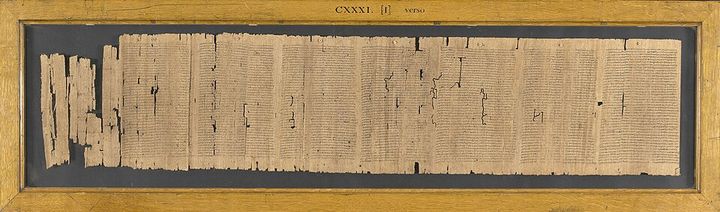
Background. The Lyceum compiled accounts of 158 Greek constitutions; this is the lone survivor, recovered from a papyrus in the British Museum after centuries known only through quotations. Its opening columns are lost, and the extant text begins in the middle of a trial for sacrilege. Kenyon, who identified the roll, issued both the Greek text and this English version in the year of publication.
Scope. The first half traces Athens from aristocratic rule and Draco's code through Solon, the Pisistratid tyranny, Cleisthenes, the leadership of the Areopagus and the reforms of Ephialtes and Pericles, to the oligarchic coups of 411 and 404 and the democratic return.
Content. The second half explains how a young man became a citizen and trained as an ephebe, how the Council worked in prytanies, which boards were filled by lot and which by vote, and how jurors were allotted to courts and cast their ballots.
Method or Sources. Herodotus, the local chroniclers of Attica, documents and Solon's own verse support the history; the institutional chapters read as direct observation by someone who knew the courts, Council and magistracies at first hand. Part 41 links the halves by numbering eleven successive constitutions.
Significance. Its recovery in 1891 transformed knowledge of Solon, Cleisthenes and fourth-century democracy, and finds in the Agora have since confirmed details such as allotment machines and bronze ballots. Authorship by Aristotle himself remains debated.
Key figures
- Solon: Mediator-archon who abolished debt bondage and wrote poems defending it
- Pisistratus: Three-time tyrant remembered for mild rule
- Cleisthenes: Founder of the ten tribes and the Council of Five Hundred
- Ephialtes and Pericles: Popular leaders who curbed the Areopagus and paid jurors
- Thrasybulus: Leader of the exiles who restored democracy in 403 BC

Summary
The Athenian Constitution (Athenaion Politeia) is a short treatise in two parts on the government of Athens, written in the 330s or 320s BC by Aristotle or by a member of his school as one of the 158 constitutions the Lyceum is said to have collected. It was known only from quotations until a papyrus roll, copied on the back of farm accounts from Roman Egypt, was acquired by the British Museum and identified by Frederic G. Kenyon, who published the text and his translation in 1891. The beginning is lost, and the text opens in the middle of the trial of the Alcmeonidae for the sacrilege committed against the followers of Cylon. Parts 1 to 41 are a constitutional history. The author describes the early oligarchy, in which the poor were serfs (Hectemori) of the rich and could be enslaved for debt, and the constitution under Draco. Solon, chosen as mediator and archon, cancels debts and forbids loans on the security of the person (the Seisachtheia), divides citizens into four property classes, reforms the courts, and refuses both the redistribution of land demanded by the poor and the restoration hoped for by the rich; his own poems are quoted at length as evidence. After strife, Pisistratus seizes power three times and rules mildly, and his sons Hippias and Hipparchus follow until the murder of Hipparchus by Harmodius and Aristogeiton and the expulsion of Hippias. Cleisthenes then reorganizes the people into ten tribes, creates the Council of Five Hundred and introduces ostracism. The Areopagus leads after the Persian wars, until Ephialtes strips it of power; Pericles introduces pay for jurors; and the demagogues who follow lead the city through defeat in the Peloponnesian War, the oligarchy of the Four Hundred in 411, the Thirty imposed by Lysander in 404, and the democratic restoration of 403 under Thrasybulus with its amnesty. Part 41 lists eleven changes of constitution and concludes that the people have made themselves masters of everything. Parts 42 to 69 describe the institutions of the author's own day: the enrolment of citizens at eighteen and the two years' training of the ephebes; the Council and its prytanies; the archons, generals and many boards of magistrates, most chosen by lot; and, in detail, the selection of jurors and the procedure of the law courts, ending with the counting of the bronze ballots. The book is the most important single source for Athenian institutions and for the reforms of Solon and Cleisthenes. The library text is Kenyon's translation as reprinted by Project Gutenberg.
Virtues in this work
- Justice: Solon frees the poor from debt slavery while refusing to strip the rich of their land, holding his shield over both.
- Prudence: Athenian institutions in Parts 63–69 use allotment, timing and secret ballots to guard the courts against bribery.
- Charity: The restored democracy of 403 swears an amnesty for past wrongs rather than taking revenge after the rule of the Thirty.
Plot or Argument
- Parts 1–4: the early constitution and Draco
The fragmentary opening on the Cylonian sacrilege and Epimenides' purification; the oligarchic constitution with archons chosen by birth and wealth; the serfdom of the poor; the constitution attributed to Draco.
- Parts 5–12: Solon
Solon chosen as mediator; the cancellation of debts and the ban on loans secured on the person; the four property classes; the law against neutrality in civil strife; the three most democratic features of his reforms; his travels and the poems in which he defends standing between the parties.
- Parts 13–19: Pisistratus and his sons
Party strife of the Plain, the Shore and the Hill; Pisistratus's three seizures of power and his mild rule; the reign of Hippias and Hipparchus, the conspiracy of Harmodius and Aristogeiton, and the expulsion of the tyrants with Spartan help.
- Parts 20–28: Cleisthenes to the death of Pericles
Cleisthenes' ten tribes and the Council of Five Hundred; ostracism; Themistocles and the fleet; the leadership of the Areopagus after the Persian wars; Ephialtes' reform; Pericles and pay for jurors; the succession of popular leaders.
- Parts 29–41: oligarchy and restoration
The Four Hundred of 411 and the Five Thousand; the Thirty after Aegospotami, Theramenes' death, and the return of the exiles from Phyle under Thrasybulus; the reconciliation and amnesty of 403; the list of eleven changes of constitution.
- Parts 42–49: citizenship and the Council
Enrolment of citizens; the ephebes' training and garrison duty; the Council of Five Hundred, the prytanies and the presiding officers; the Council's oversight of magistrates, finances, ships, horses and the support of disabled paupers.
- Parts 50–62: the magistrates
Boards elected by lot, from the city and market commissioners to the auditors, the archons and their duties in festivals and lawsuits, the generals and other officers elected by vote, and the pay of officials.
- Parts 63–69: the law courts
The allotment of jurors to courts, the use of tickets and allotment machines, the timing of speeches by water-clock, and the secret vote with pierced and solid ballots.
Characters
- Solon, lawgiver
Archon of 594/3 BC who cancelled debts and reformed the constitution; quoted through his poems.
- Draco, lawgiver
Early lawgiver whose code was later replaced by Solon's, except the laws on homicide.
- Pisistratus, tyrant
Seized power three times and ruled, the author says, more like a constitutional magistrate than a tyrant.
- Hippias and Hipparchus, sons of Pisistratus
Successors whose rule ended with Hipparchus's murder and Hippias's expulsion.
- Cleisthenes, reformer
Alcmeonid leader who created the ten tribes and the Council of Five Hundred.
- Aristides and Themistocles, statesmen
Leaders after the Persian wars, credited with the fleet and with organizing the city's empire.
- Ephialtes, popular leader
Stripped the Council of the Areopagus of its powers.
- Pericles, popular leader
Introduced pay for jurors and the law limiting citizenship to those of Athenian parents on both sides.
- Theramenes, moderate oligarch
Figure of 411 and 404 whose conduct the author defends.
- Thrasybulus, democratic leader
Led the exiles from Phyle and restored the democracy in 403.
Lessons
Solon's middle course
Solon freed the poor from debt slavery but refused to redistribute land, and his poems show him standing between the parties with his shield held over both. The book presents him as a model of the moderate legislator who disappoints everyone and saves the city.
- Why did both the rich and the poor turn against Solon after his reforms?
- Which three features of Solon's constitution does the author call most democratic, and why?
- Why might a lawgiver require citizens to take sides in civil strife?
A constitution is a history
The author counts eleven changes of constitution from Ion and Theseus to the restoration of 403. Athenian government is shown not as a single design but as a long series of reforms, revolutions and restorations.
- What changes does Part 41 count, and which does the author treat as most important?
- How does knowing the history of the Athenian constitution change how one reads the description of its institutions in Parts 42–69?
Institutions designed against corruption
The second half shows how Athens used the lot, large juries, rotation, audits and secret ballots to keep officials and courts from being bought. The author approves the transfer of judgment to large bodies because small ones are easier to corrupt.
- Why were most Athenian magistrates chosen by lot rather than election?
- What steps in the courts of Parts 63–69 were meant to prevent bribery?
Reconciliation after civil war
After the rule of the Thirty, the restored democracy swore an amnesty for all but a few. The author praises the Athenians for the way they handled past wrongs, contrasting them with cities that took revenge.
- Whom did the amnesty of 403 exclude, and why?
- Is forgiveness a political virtue as well as a personal one?
Context
The work comes from Athens in the age of Alexander, after the Macedonian victory at Chaeronea (338 BC) but while the democracy still governed the city's internal affairs. Aristotle's Lyceum gathered constitutional histories of Greek states as the empirical basis for political philosophy, and this is the only one of the collection to survive in substance.
Composition
Internal references date the surviving version to about 332–322 BC. Its historical half draws on Herodotus, the Atthidographers (local chroniclers of Attica, especially Androtion), and Solon's own poems; the second half is first-hand description. Whether Aristotle himself or a pupil wrote it is disputed: ancient writers cited it as Aristotle's, while many modern scholars, including P. J. Rhodes, attribute it to a member of his school. The papyrus was acquired by the British Museum around 1888–89 and published by Kenyon in 1891.
Reception
The rediscovery caused a sensation in 1891, since the work had been known only from fragments quoted by later writers. It immediately became the chief source for the reforms of Solon and Cleisthenes and for the workings of fourth-century Athenian democracy, and parts of it have since been confirmed by archaeology, such as the allotment machines and bronze ballots found in the Agora.
Comparisons
- politics
Aristotle's Politics theorizes the forms of constitution and the mixed regime; The Athenian Constitution supplies the detailed case history, and the Politics discusses Solon in Book II.
- the-history-of-the-peloponnesian-war
Thucydides narrates the war and the coup of the Four Hundred in 411; Parts 29–33 give a constitutional account of the same oligarchy, with documents Thucydides does not quote.
- plutarch-lives
Plutarch's Lives of Solon, Themistocles, Aristides and Pericles cover the same men; Plutarch knew this treatise and sometimes follows it.
- the-histories
Herodotus is a source for the tyranny of Pisistratus and the reforms of Cleisthenes, and his story of Solon and Croesus shows the lawgiver in legend.
- polybius-histories-book-vi
Polybius's analysis of the cycle of constitutions and Rome's mixed government can be read against the eleven Athenian changes listed in Part 41.
Quotes
Frequently cited
“So I stood with my shield outstretched, and both were safe in its sight, And I would not that either should triumph, when the triumph was not with right.”
“Solon, who was the first to appear as the champion of the people.”
“There are three points in the constitution of Solon which appear to be its most democratic features”
“His administration was temperate, as has been said before, and more like constitutional government than a tyranny.”
“Cleisthenes, being beaten in the political clubs, called in the people by giving the franchise to the masses.”
“The democracy has made itself master of everything and administers everything by its votes in the Assembly and by the law-courts, in which it holds the supreme power.”
“since small bodies are more open to corruption, whether by actual money or influence, than large ones.”
For Students
A reading companion for classical Christian high school students. See the student guide.
Reading Guide
Watch for
- The broken opening in Part 1, which begins mid-sentence because the start of the papyrus is lost.
- Solon's own poems in Parts 5 and 12, used by the author as historical evidence.
- The judgment on Pisistratus in Part 16 and the story of the farmer on Hymettus.
- Part 41's list of eleven changes of constitution, which ends the historical half.
- The step-by-step procedure of the law courts in Parts 63–69, ending with the counting of ballots.
Key terms and names
- Seisachtheia
- The shaking-off of burdens: Solon's cancellation of debts and ban on loans secured on the debtor's person (Part 6).
- Hectemori
- Sixth-parters: poor cultivators of the rich men's land before Solon, so named for the share of the produce they paid, and liable to be enslaved for failure to pay.
- Areopagus
- The ancient council of former archons, guardian of the laws, which led the state after the Persian wars until Ephialtes' reform.
- Council of Five Hundred
- Cleisthenes' council of fifty men from each of the ten tribes, which prepared business for the Assembly and supervised magistrates.
- Ostracism
- A vote by which a leading citizen could be sent into exile for ten years without loss of property, introduced in Cleisthenes' time.
- Ephebi
- Young citizens of eighteen who spent two years in military training and garrison duty under guardians chosen from their tribes (Part 42).
- Allotment
- Selection by lot, used for the Council, most magistracies and the jurors of the law courts.
Seminar Questions
- Comprehension What was the condition of the poor in Athens before Solon, according to Part 2?
- Comprehension What did Cleisthenes change about the organization of the Athenian people?
- Comprehension How were jurors chosen and how did they vote, according to Parts 63–69?
- Interpretation Why does the author rely on Solon's poems, and what does this suggest about his method as a historian?
- Interpretation The author calls Pisistratus's rule more like constitutional government than tyranny. What evidence does he give, and is the judgment persuasive?
- Interpretation Does the author approve of the full democracy described in Part 41, or does he have reservations about the demagogues who followed Pericles?
- Big Question Is choosing officials by lot more just than choosing them by election?
Faith Connections
- Leviticus 25:10, 39-41 (Scripture)
The Mosaic year of jubilee proclaims liberty and forbids holding a poor Israelite as a bondservant forever. Solon's cancellation of debts and ban on debt slavery addressed the same ancient problem in a Greek city.
- Exodus 18:21-22 (Scripture)
Jethro counsels Moses to appoint able men who fear God and hate covetousness as judges over the people. Athens, by contrast, sought honest judgment through large juries chosen by lot; students can weigh the two approaches to incorruptible justice.
- Proverbs 16:33 (Scripture)
The lot is cast into the lap, but its every decision is from the Lord. The Athenian use of the lot for offices and juries raises the question of what is entrusted to chance and what to choice.
- Aristotle, Politics II.12 (Great Conversation)
In the Politics Aristotle discusses Solon as a lawgiver who mixed the constitution, and reports the criticism that his jury courts later gave the people too much power, a view that can be tested against the history in this treatise.
Logic and Rhetoric
Central argument: Athens did not receive its constitution at once but through a series of changes driven by conflict between rich and poor. Each reform, from Solon's debt relief to Cleisthenes' tribes and Ephialtes' curbing of the Areopagus, shifted power toward the people. After oligarchic interruptions the people restored themselves by their own efforts. Therefore the present democracy, controlling Assembly and courts and protected by lot, audit and secret ballot, is the outcome of that history and must be understood through it.
Rhetorical device: argument from documentary evidence. In Parts 5 and 12 the author quotes Solon's poems at length to settle disputed questions about Solon's motives, letting the lawgiver testify in his own words.
Debate: Resolved: that Solon was right to cancel debts but refuse to redistribute land.
Memory Work
So I stood with my shield outstretched, and both were safe in its sight, And I would not that either should triumph, when the triumph was not with right.
Writing Prompts
Essay: Using Parts 5–12, explain how Solon tried to end the conflict between rich and poor in Athens, and argue whether his refusal to satisfy either side fully was wisdom or failure.
Comparison with Politics: Aristotle's Politics argues that the best practicable constitution mixes oligarchy and democracy and rests on a strong middle class. Using the Athenian history in this treatise, especially Solon and the restoration of 403, test whether Athens supports or challenges that claim.
Medical Lens
The second half of the treatise records two features of Athenian civic life relevant to the history of public health and welfare. Part 49 describes a law under which citizens worth less than three minas and so disabled that they cannot work receive two obols a day from the state after examination by the Council, with a treasurer chosen by lot to manage the payments; this is one of the earliest recorded public provisions for the disabled. Part 50 assigns the city commissioners the duty of keeping streets clear of obstructions and drains discharging into the street and of removing the bodies of those who die in the streets, and Part 51 charges the market commissioners with ensuring that goods for sale are pure and unadulterated. The text describes these as administrative duties; it does not discuss medicine.
- Part 49
The Council examines disabled paupers, who receive a state allowance of two obols a day.
- Part 50
City commissioners prevent building into the streets and drains emptying into them, and remove corpses from the streets with public slaves.
- Part 51
Market commissioners see that goods offered for sale are pure and unadulterated.
Creative Prompts
- Classroom
Using Parts 63–69, run a mock Athenian court: allot jurors with name tickets, time each speech with a water-clock (or a measured jug), and vote with pierced and solid tokens. Discuss afterward which steps were meant to prevent bribery.
- Essay
Solon says he stood with his shield over both parties. Compare his reforms with those of Cleisthenes and argue which did more to make Athens a democracy.
- Fiction
Write the diary of an Athenian ephebe in the first year of his training, drawing on Part 42.
Further Reading
- Aristotle and Xenophon on Democracy and Oligarchy, J. M. Moore (trans. and commentary)
Translation of The Athenian Constitution with commentary, alongside the Old Oligarch and Xenophon's Spartan constitution.
- A Commentary on the Aristotelian Athenaion Politeia, P. J. Rhodes
- The Athenian Democracy in the Age of Demosthenes, Mogens Herman Hansen
- Lives (Dryden translation, revised by Arthur Hugh Clough), Plutarch
Read the lives of Solon, Themistocles, Aristides and Pericles.
Verification notes
The attribution is presented as disputed. Part numbers follow the stored Kenyon text, which corresponds to the standard chapter numbering. The opening is lost in the papyrus, and the last part (69) is complete in the stored text though the papyrus's later columns are damaged. The stored text includes one transcriber's note (Part 8) and Kenyon's bracketed glosses, which were avoided except for the bracket-free passages quoted. The verse in Part 12 is Kenyon's rhymed rendering of Solon.
- Date of the British Museum's acquisition of the papyrus (given as c. 1888–89) and of Kenyon's identification (often given as 1890).
- The attribution of the historical sources (Androtion and other Atthidographers) as stated by modern commentators.