Work record
An Introduction to the Study of Experimental Medicine
1865 · 19th Century · Essays · French
Abstract
Background. By 1865 Bernard had made the Collège de France a centre of experimental physiology. He wrote this book to persuade doctors trained in clinical observation that their art needed a science behind it. Its examples come from two decades of his own work on digestion, nerves and the liver.
Method. Discovery begins, he argues, with a fact that prompts an idea; the idea is tested by provoked observation; the result is checked by removing the presumed cause. Hypothesis is indispensable, but no theory and no authority is final. Unexpected results deserve as much attention as expected ones.
Key Concepts. Life obeys determinate physico-chemical conditions, contrary to vitalist claims. Higher animals maintain a regulated fluid medium around their cells. Averages can mislead. Injurious trials on patients are forbidden, while animal vivisection is defended as necessary.
Structure. Part One treats reasoning, Part Two experimentation on organisms, and Part Three worked cases, among them the liver's production of sugar and the poisons curare and carbon monoxide, followed by obstacles facing a scientific medicine.
Significance. Widely read as a model of French scientific prose, the book shaped laboratory medicine, gave Cannon the seed of homeostasis, prompted Zola's experimental novel, and remains a reference point for research ethics. This library edition reproduces Greene's translation from an OCR scan, without the index.
Key figures
- Claude Bernard: Physiologist who uses his own researches as worked examples
- François Magendie: His teacher and predecessor in the chair at the Collège de France
- Francis Bacon: English philosopher whose inductive method Bernard partly adopts and partly corrects
- Hippocrates: Ancient model of the observing physician
- L. J. Henderson: American biochemist who introduces the 1927 translation
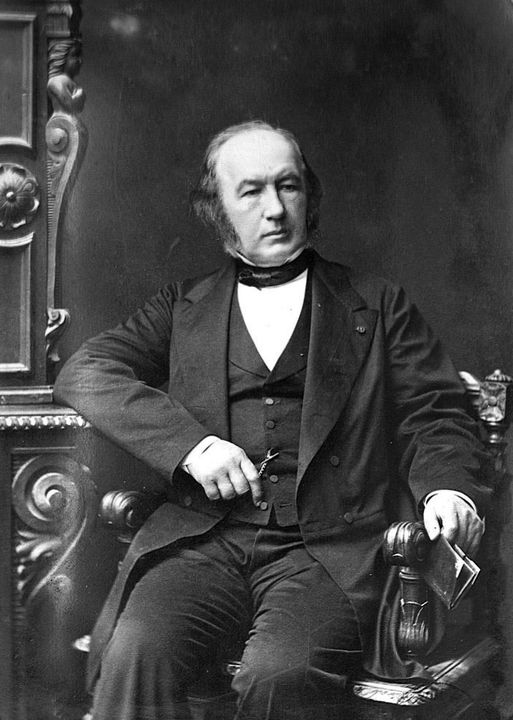

Summary
Claude Bernard published this book in Paris in 1865 as the opening of a larger treatise on experimental medicine that he never completed. It sets out, for physicians, the method by which he had made his own discoveries, and argues that medicine must become a science grounded in physiology and the laboratory. The library text is Henry Copley Greene's 1927 English translation, complete, with an introduction by the Harvard biochemist L. J. Henderson, from an OCR scan with the index omitted. Part One, on experimental reasoning, distinguishes observation, in which the investigator notes phenomena as nature presents them, from experiment, in which he varies conditions on purpose; both end in an observed fact. Reasoning runs from an observed fact to an idea, from the idea to an experiment designed to test it, and from the experiment to a new observation. Bernard insists that the idea, or hypothesis, is the driving force of discovery, yet the experimenter must doubt it and submit it to counterproof, removing the supposed cause to see whether the effect also disappears. He calls theories partial and provisional truths, steps for further work, and warns against systems, against authority, and against the pride that turns scientific disputes into personal ones. Part Two, on experimentation with living beings, defends the claim that the same absolute determinism governs living and inorganic bodies; vital phenomena have physico-chemical conditions that can be known and controlled. The higher animals are partly freed from outer conditions because their cells live in an internal environment of blood and fluids kept relatively constant. Bernard discusses the choice of animals, the use of comparative experiments, the dangers of averages and statistics that blur real physiological states, and the moral question of experiment. He holds that no experiment injurious to a patient may be done on a human being, even for the good of others, and that vivisection of animals is justified by its usefulness to human life, though he recognizes and answers the feelings of its opponents. Part Three applies the method to cases from his own research: the discovery of sugar formation in the liver, which began from an unexpected result; experiments on the cause of death by carbon monoxide; the action of curare on the motor nerves; and examples of faulty reasoning by others. He concludes by describing the obstacles to experimental medicine, including empiricism without understanding, rigid doctrines and the reliance on the hospital alone, and calls the laboratory the true sanctuary of medical science.
Virtues in this work
- Humility: Bernard concludes from the quarrels of physicians that both rival theories are probably insufficient and that science should make its students modest.
- Industry: He describes the science of life as reached only through long labour in the laboratory, and narrates years of experiment on the liver.
- Prudence: He sorts experiments on human beings into forbidden, permitted and obligatory, refusing any that could harm the patient.
- Fortitude: He continues to defend and practise vivisection while acknowledging the strong feelings of those who oppose it.
Plot or Argument
- Introduction: the aim of experimental medicine
Medicine seeks to preserve health and cure disease. It has long advanced by empiricism, but it must now become scientific by joining clinical observation to physiology and pathology studied through experiment. Bernard proposes to set out the principles of the experimental method as they apply to living things.
- Part One, Chapter I: observation and experiment
Bernard reviews definitions of observation and experiment and argues that an experiment is an observation provoked for the purpose of testing an idea. The observer listens to nature; the experimenter questions it. The science of life, he says, is reached only by long labour in the laboratory.
- Part One, Chapter II: the a priori idea and doubt
The experimental idea arises from feeling and intuition and must be tested by facts. The investigator believes in determinism but doubts every theory; counterproof is required; and personal authority counts for nothing before an experiment. Theories are provisional, and disputes should make scientists modest.
- Part Two, Chapter I: living things and inorganic bodies
Against vitalism, Bernard argues that the phenomena of life obey determinate physico-chemical conditions. Higher organisms possess an internal environment, the blood and fluids bathing their tissues, whose relative constancy gives them a measure of independence from the outer world. The question of why remains closed to science; only how can be answered.
- Part Two, Chapter II: experimentation peculiar to living beings
Living organisms are wholes whose parts depend on one another, so analysis must be followed by synthesis. Bernard treats vivisection, the experiments permissible on human beings, the choice of animals, anatomy and normal physiology as preconditions, comparative experiment, the misuse of averages and statistics, and the physiological laboratory as the necessary home of experimental medicine.
- Part Three, Chapters I-II: examples of investigation and criticism
Bernard narrates his own discoveries, starting with the finding that the liver forms sugar even in animals fed no sugar, and shows how unexpected results, counterproofs and new hypotheses led to it. He then examines cases of contradictory experiments and how to resolve them by seeking unrecognised conditions.
- Part Three, Chapters III-IV: application to medicine and philosophic obstacles
The method is applied to pathology and therapeutics, and Bernard reviews the obstacles to experimental medicine: blind empiricism, the claim that medicine is an art closed to science, rigid philosophical and medical systems, and confusion between experimental doubt and scepticism. He ends by calling for the freedom of the experimental method from every system.
Characters
- Claude Bernard, author
Professor of physiology at the Collège de France who narrates his own experiments as examples of method.
- François Magendie, teacher
Bernard's master at the Collège de France, a pioneer of experimental physiology whose laboratory formed him.
- L. J. Henderson, introducer
Harvard biochemist whose 1926 introduction to the translation praises the book as a statement of the biologist's philosophy.
- Francis Bacon, authority discussed
Philosopher of induction whose comparison of research to hunting Bernard adopts and whose method he judges incomplete.
- Hippocrates, authority discussed
Founder of observational medicine whom Bernard honours while arguing that medicine must go beyond observation to experiment.
Lessons
An idea must be tested, not loved
Bernard makes the hypothesis the starting point of discovery, but he asks the investigator to doubt his own idea and to seek the counterproof that could overturn it. The great principle of the method is doubt, not scepticism: belief that nature is lawful, joined with distrust of any present theory.
- What is a counterproof, and why does Bernard call it essential?
- How does Bernard distinguish philosophic doubt from scepticism?
- Why does he warn that a researcher may see only what he is looking for?
Chance favours the prepared observer
Bernard's discovery of sugar formation in the liver began when an experiment gave a result he did not expect. Instead of discarding it, he formed a new hypothesis and tested it. He presents the unforeseen fact as a gift that only an attentive and well-trained mind can use.
- How did Bernard respond when he found sugar in the blood of an animal fed no sugar?
- What does his comparison of research to hunting add to Bacon's?
- What habits would help a student notice the unexpected in a laboratory?
Limits on what may be done to a patient
Bernard holds that it is the physician's duty to experiment on a patient only for that patient's own benefit and never to do harm for the sake of science. He distinguishes injurious, innocent and beneficial experiments and draws a firm line around the first.
- What three kinds of experiment on human beings does Bernard distinguish?
- How does he justify experiments on animals, and what objections does he acknowledge?
- Where would you place the line between the good of one patient and the good of many?
The body keeps its own inner world
Bernard's account of the internal environment explains how warm-blooded animals stay active through heat and cold: their cells live in fluids regulated to remain fairly constant. The idea joins physiology to medicine, since disease can be read as a disturbance of that inner balance.
- What does Bernard mean by the internal environment?
- Why does he say the warm-blooded animal only seems to be independent of outer conditions?
- How might this idea change the way a doctor thinks about a fever or a poisoning?
Context
French medicine in the mid-nineteenth century led the world in clinical observation and pathological anatomy at the Paris hospitals, while experimental physiology was carried on by a few, notably Magendie at the Collège de France. German physiologists such as Carl Ludwig and Hermann von Helmholtz were building physical and chemical methods into physiology. Debates continued over vitalism, the use of statistics in medicine (Pierre Louis's numerical method) and the morality of vivisection, which British and French campaigners opposed.
Composition
Bernard wrote the book during a long illness and retreat to his native Saint-Julien in the early 1860s; it was published by J.-B. Baillière in Paris in 1865 as the introduction to a planned treatise on experimental medicine. Henry Copley Greene's English translation, with L. J. Henderson's introduction dated October 1926, was published by Macmillan in New York in 1927.
Reception
The book was admired in France as a classic of scientific prose and method; Émile Zola drew on it for his essay The Experimental Novel (1880). Its idea of the internal environment was developed by Walter B. Cannon in his concept of homeostasis. Historians and philosophers of science have discussed how Bernard's determinism relates to his rejection of materialism and vitalism alike, and the book is a fixed point in later debates on research ethics and animal experimentation, where it is read both as a defence of vivisection and as an early statement that no injurious experiment may be done on a patient.
Comparisons
- hippocratic-writings
Bernard honours Hippocratic observation and prognosis but argues that medicine must pass from observing the course of disease to experimental knowledge of its mechanism.
- galen-selected-works
Galen also tied off the ureters of living animals to settle a question of function; Bernard turns such vivisection into a general method and defends it at length.
- harvey-on-the-motion-of-the-heart-and-blood
Harvey's quantitative argument and animal experiments are an earlier model of the reasoning from idea to experiment to counterproof that Bernard codifies.
- novum-organum
Bernard adopts Bacon's image of investigation as hunting but faults Baconian induction for neglecting the guiding role of the hypothesis.
- mill-system-of-logic-book-iii
Mill's methods of difference and agreement, published in 1843, parallel Bernard's insistence on comparative experiment and counterproof.
- pasteur-and-lister-germ-theory-papers
Pasteur, Bernard's contemporary and friend, applied the same experimental rigour to fermentation and infection, carrying laboratory medicine into the clinic.
Quotes
“If a comparison were required to express my idea of the science of life, I should say that it is a superb and dazzlingly lighted hall which may be reached only by passing through a long and ghastly kitchen.”
“The great experimental principle, then, is doubt, that philosophic doubt which leaves to the mind its freedom and initiative, and from which the virtues most valuable to investigators in physiology and medicine are derived.”
“all such theories are false. They are only partial and provisional truths which are necessary to us, as steps on which we rest, so as to go on with investigation”
“The truly scientific spirit, then, should make us modest and kindly.”
“The principle of medical and surgical morality, therefore, consists in never performing on man an experiment which might be harmful to him to any extent, even though the result might be highly advantageous to science, i.e., to the health of others.”
“Have we the right to make experiments on animals and vivisect them? As for me, I think we have this right, wholly and absolutely.”
“I consider hospitals only as the entrance to scientific medicine; they are the first field of observation which a physician enters; but the true sanctuary of medical science is a laboratory”
For Students
A reading companion for classical Christian high school students. See the student guide.
Reading Guide
Watch for
- The sequence Bernard lays out in Part One: an observed fact, then an idea, then an experiment to test the idea, then a new observation.
- The image of the science of life as a lighted hall reached through a long and ghastly kitchen, and what it says about scientific work.
- The section in Part Two, Chapter II on experiment on human beings, where he sorts experiments into forbidden, permitted and obligatory.
- Bernard's account in Part Three of how an unexpected result about sugar in the blood led to his discovery about the liver.
- His quarrel with averages and statistics, and the examples of urine and pulse he gives.
Key terms and names
- Internal environment (milieu intérieur)
- The blood and other fluids bathing the cells of higher animals, which Bernard says are kept relatively constant and so give the organism independence from outer conditions.
- Determinism
- Bernard's principle that every phenomenon, living or not, has fixed conditions that, when present, always produce it; he treats it as the foundation of all experimental science.
- Counterproof
- Removing the supposed cause to see whether the effect disappears; for Bernard the necessary final step that confirms a causal relation.
- Philosophic doubt
- The experimenter's distrust of his own theories and of authority, which Bernard distinguishes from scepticism about the lawfulness of nature.
- Vivisection
- Experiment on living animals, which Bernard defends as indispensable to physiology in Part Two.
- Glycogenesis
- The formation of sugar in the animal body, which Bernard showed takes place in the liver.
- Empiricism
- In Bernard's usage, medicine that knows from experience that a remedy works without understanding how; he sees it as a stage to be passed through, not despised.
Seminar Questions
- Comprehension How does Bernard distinguish an observation from an experiment in Part One?
- Comprehension What does Bernard mean by the internal environment, and how does it explain the apparent independence of warm-blooded animals?
- Comprehension What rule does Bernard give for experiments on human patients?
- Interpretation Bernard says the experimenter must believe in determinism but doubt every theory. How can both attitudes be held at once?
- Interpretation Why does Bernard think that averages may give a false picture of a living body? Is his objection still forceful?
- Interpretation Bernard says science can answer how but not why. What does he gain by setting this limit, and what does it leave to philosophy or theology?
- Big Question Bernard defends the use of animals for experiment as he would their use for food and labour. What do human beings owe to animals, and what may they rightly ask of them?
Faith Connections
- Genesis 1:28 and 2:19-20 (Scripture)
God gives human beings dominion over the animals, and Adam names them. Bernard's argument for vivisection rests on a similar claim of human primacy, though he makes it without appeal to Scripture; Christians have debated what responsible dominion requires.
- Proverbs 12:10 (Scripture)
A righteous man regardeth the life of his beast. The proverb sets beside Bernard's rule of usefulness a biblical concern for animals' suffering, which his opponents also invoked.
- Psalm 139:14 (Scripture)
The psalmist calls the body fearfully and wonderfully made. Bernard's account of the internal environment describes the body's regulation with similar admiration, though he speaks only of physical conditions.
- Thomas Aquinas, Summa contra Gentiles III.112 (Great Conversation)
Aquinas holds that God's commands against cruelty to animals exist chiefly so that human beings may not grow cruel to one another. The passage offers a classical Christian frame for weighing Bernard's claim that the physiologist no longer hears the cries of animals.
Logic and Rhetoric
Central argument: Every phenomenon, in living bodies as in inorganic ones, has determinate conditions. Those conditions can be discovered only by experiment, in which an idea is tested by deliberately varying circumstances and confirmed by counterproof. Medicine has so far depended on observation and empiricism, which can describe disease and find remedies but cannot explain them. Therefore medicine must become experimental, founded on physiology and practised in the laboratory, with the investigator holding all theories in doubt and submitting to no authority but the facts.
Rhetorical device: extended metaphor. In Part One, Chapter I Bernard compares the science of life to a lighted hall reached through a ghastly kitchen (quotes[0]), and elsewhere adopts Bacon's comparison of research to hunting, extending it to game that appears when one is looking for something else.
Debate: Resolved: That Bernard's principle of never performing a injurious experiment on a patient, even for the good of others, should be absolute.
Memory Work
The truly scientific spirit, then, should make us modest and kindly.
If a comparison were required to express my idea of the science of life, I should say that it is a superb and dazzlingly lighted hall which may be reached only by passing through a long and ghastly kitchen.
Writing Prompts
Essay: Bernard makes doubt the great experimental principle while insisting on absolute determinism. Explain how these two claims work together in his account of the hypothesis and the counterproof, using his discovery about sugar in the liver as your main example, and evaluate whether his method leaves any place for knowledge that cannot be tested by experiment.
Comparison with Hippocratic Writings: The Hippocratic physicians observed the course of disease and predicted its outcome; Bernard wanted to explain its mechanism by experiment. Compare the two ideals of the physician, and argue what each would think the other was missing.
Medical Lens
This is a founding text of laboratory medicine and of physiology as the basic science of medicine. Its concept of the internal environment, the regulated fluid world of the body's cells, was later developed by Walter Cannon as homeostasis and underlies modern thinking about physiological regulation and its disturbance in disease. Bernard's use of poisons (curare at the junction of nerve and muscle, carbon monoxide binding haemoglobin) as tools to dissect function is the template of experimental pharmacology, and his insistence that a drug's action be understood mechanistically rather than empirically anticipates the aims of psychopharmacology. His critique of averages and statistics, which he thought blurred real physiological states, is a period position that later clinical trial methodology answered; readers can treat it as part of a debate rather than a settled verdict. His rule that no experiment injurious to the patient may be done on a human being is an early formal statement of a principle later written into research ethics codes, and his defence of vivisection, with its acknowledgement of opponents' feelings, records one side of a debate that divided his own household. His claim that the insane no longer learn from experience is a passing remark, not a psychiatric theory.
- Part One, Chapter I
Bernard notes that the insane, having lost reason, no longer learn from experience, which he calls the prerogative of reason.
- Part Two, Chapter I
The internal environment of warm-blooded animals and its protective mechanisms are described as the condition of their apparent independence from the outer world.
- Part Two, Chapter I
Death by carbon monoxide is explained by its firmer union with haemoglobin than oxygen, as an example of how far physiology can answer the question how.
- Part Two, Chapter II
Bernard sets out which experiments on human beings are forbidden, permitted or obligatory, and defends vivisection while discussing the pain of animals and the objections of its critics.
- Part Two, Chapter II, section on averages and statistics
Bernard argues that averaging urine or blood analyses, or pulse rates, produces a state that does not exist in any real animal.
- Part Three, Chapter I
Bernard recounts poisoning frogs with curare and performing a physiological autopsy, which showed that the poison abolishes the action of motor nerves while muscles remain excitable; he follows it with his experiments on death by carbon monoxide.
- Part Three, Chapter I
Bernard narrates how an unexpected finding of sugar in the blood led to his discovery of the glycogenic function of the liver.
- Part Three, Chapter IV
Empirical physicians who know that a remedy works but not how are contrasted with experimenting physicians who seek the mechanism of drug action.
Creative Prompts
- Dialogue
Write a dinner-table conversation in 1869 between Bernard and a member of his family who opposes vivisection, giving each the strongest arguments of the period.
- Classroom
Give students a simple puzzle, such as why a seed sprouts in one tray but not another, and have them design an experiment and a counterproof in Bernard's terms.
- Essay
Explain how Bernard can believe in absolute determinism while calling every theory provisional, and whether the two positions are consistent.
Further Reading
- The Wisdom of the Body, Walter B. Cannon
Cannon's 1932 development of Bernard's internal environment into the concept of homeostasis.
- Claude Bernard and Animal Chemistry, Frederic Lawrence Holmes
- Claude Bernard and the Experimental Method in Medicine, J. M. D. Olmsted and E. Harris Olmsted
- The Experimental Novel, Émile Zola
Zola's 1880 essay applying Bernard's method to the writing of fiction.
Verification notes
All seven quotations were found by search in the stored OCR text (content/texts/bernard-introduction-to-experimental-medicine.txt) and copied exactly; passages with OCR damage were avoided. Chapter locations come from the section markers in the text's metadata and the chapter headings in the file. The 1865 Baillière publication, the 1927 Macmillan translation and Henderson's introduction are given in the source. Biographical facts (Magendie, glycogenesis, vasomotor nerves, curare, the Académie française in 1868, the state funeral) are standard. The book's influence on Zola and on Cannon's homeostasis is widely stated.
- The exact years of Bernard's retreat to Saint-Julien during the writing of the book.
- Publication details of the Olmsted biography (usually given as 1952).