Work record
Charles River Bridge v. Warren Bridge
1837 · 19th Century · Court Decision · English
Abstract
Question Presented. When Massachusetts licensed a toll bridge in 1785, did it silently promise never to license a rival crossing, so that a later free bridge nearby breached a contract the Constitution protects?
Arguments. Owners of the older span contended that a grant carries everything needed to make it worth having, that their revenue was the whole point of the bargain, and that Dartmouth College forbade states to undo charter promises. Defenders of the newer crossing replied that sovereign grants convey nothing beyond their express terms and that no legislature may be supposed to have traded away its duty to provide roads and bridges.
Holding. By four votes to three the justices upheld the Massachusetts ruling against the old proprietors. Taney found no exclusivity clause, read ambiguity against the grantee, and pointed out that the 1792 statute lengthening the term had itself licensed another bridge. Story and Thompson would have enforced the implied promise.
Significance. Coming months after Marshall's death, the ruling showed that Jackson's appointees would keep honoring charters as contracts while declining to enlarge them by inference. It cleared a path for railroads competing with turnpikes and canals, and legislatures thereafter commonly reserved a right to amend what they chartered.
Text. Readers here find the Chief Justice's complete opinion plus a long opening portion of Story's reply, which stops amid his discussion of Crown grants.
Key figures
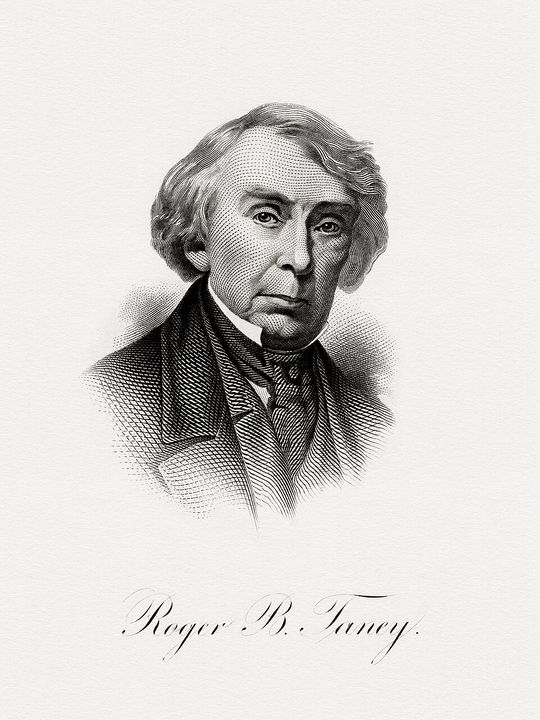
- Roger B. Taney: Chief Justice writing for the four-member majority
- Joseph Story: Senior associate justice who wrote the principal dissent
- Daniel Webster: Advocate for the original toll bridge
- Simon Greenleaf: Harvard law professor arguing for the new bridge

Summary
In 1785 the Massachusetts legislature incorporated the Proprietors of the Charles River Bridge to span the river between Boston and Charlestown, where Harvard College had held a ferry right since 1650. The charter let the proprietors collect tolls for forty years and required them to pay the college two hundred pounds a year for the loss of its ferry; in 1792, when a second bridge to Cambridge was authorized, the term was lengthened to seventy years. The bridge opened in June 1786 and earned handsome returns as traffic grew. In 1828 the legislature chartered the Warren Bridge, whose Charlestown end lay only sixteen rods away, allowing tolls only until its builders were repaid and no longer than six years, after which it would become free. Once that happened, travel deserted the older bridge. The Charles River proprietors sought an injunction, arguing that their charter implied a promise by the state not to authorize a competing bridge that would destroy the value of its toll right, and that the Warren Bridge act therefore impaired the obligation of contracts in violation of Article I, Section 10. Daniel Webster, who argued for them, relied on Dartmouth College v. Woodward and on the rule that a grant carries with it whatever is needed to enjoy it. The Warren Bridge side answered that a public grant conveys only what its words express, and that a legislature cannot be presumed to have surrendered its power to provide new avenues of travel. The Massachusetts high court divided evenly, and the case was first argued in Washington in 1831 but not decided before the bench changed. In February 1837 the Court affirmed the dismissal of the bill, four justices to three. Chief Justice Taney held that public grants are construed strictly in favor of the public: nothing passes by implication, and the charter contained no words of exclusive right. He cited Providence Bank v. Billings (1830) and warned that implied monopolies along lines of travel would let old turnpike companies block the railroads and canals then transforming the country. Justice Story, joined by Justice Thompson, dissented at length, arguing from English authorities that grants of the Crown were never read to defeat their evident object, and that investors would not risk capital on public works if the state could ruin them at will. Justice McLean wrote separately that the Court lacked jurisdiction and would have dismissed the case, though he considered the merits to favor the old proprietors. The library text gives Taney's full opinion and a substantial opening portion of Story's dissent, which breaks off in his survey of royal grants; McLean's opinion and the printed footnotes are absent. The decision became the leading authority for reading corporate charters narrowly. Later cases relied on it in railroad and utility disputes, and states increasingly reserved in their charters an express power to alter or repeal them. Story's dissent is remembered as the classic defense of vested property under the Contract Clause.
Virtues in this work
- Prudence: Taney looks ahead to the railroads and canals then being built and refuses a rule that would let old franchises halt new improvements.
- Justice: Story insists that the state owes the bridge proprietors the full value of the bargain on which they risked their capital in 1785.
- Industry: The proprietors built and maintained the first bridge across the Charles, and the Warren Bridge builders undertook theirs on the promise of recovering their costs from tolls.
Plot or Argument
- The ferry, the bridge and its rival
Taney recounts the 1650 grant of the Charlestown ferry to Harvard College, the 1785 charter of the Charles River Bridge with its payment to the college, the 1792 extension, and the 1828 charter of the Warren Bridge, which by the time of argument had become free.
- The ferry right cannot help the proprietors
Whatever exclusive privileges the college's ferry may once have had, they were not assigned to the bridge company, and the annual payment to Harvard does not make the proprietors its successors. The ferry cannot enlarge what the bridge charter itself grants.
- Public grants are construed strictly
Relying on English canal cases and on Providence Bank v. Billings, Taney holds that grants of franchises by the public are read in favor of the public: any ambiguity counts against the grantee, and a state's power to promote the welfare of its people is never presumed to be surrendered.
- No exclusive right in the charter
The 1785 act grants tolls but contains no words forbidding another bridge. The 1792 act, which chartered a rival bridge to Cambridge in the same law that extended the term, shows that the legislature never understood itself to have promised exclusivity.
- The turnpike and the railroad
If such implied contracts were recognized, Taney warns, every old turnpike company could claim a property in its line of travel, and the millions invested in railroads and canals would be put in jeopardy. The judgment of the Massachusetts court is affirmed.
- Story's dissent: what a grant implies
Story finds jurisdiction, states the facts, and turns to the rule of construction. Surveying Coke, Blackstone, Bacon's Abridgment and cases such as the Royal Fishery of the Banne, he argues that royal grants were construed to give them reasonable effect, and that whatever is necessary to enjoy a grant passes with it. The library excerpt ends within this survey.
Characters
- Roger B. Taney, Chief Justice; author of the opinion
Former Attorney General and Treasury Secretary under Andrew Jackson, writing one of his first major opinions as Chief Justice.
- Joseph Story, dissenting justice
Massachusetts jurist and Harvard law professor, the Court's most learned defender of vested rights.
- Smith Thompson, dissenting justice
New Yorker who joined Story's dissent.
- Daniel Webster, counsel for the Charles River Bridge
Massachusetts senator and leading advocate, who had won Dartmouth College v. Woodward in 1819.
- Proprietors of the Charles River Bridge, plaintiffs in error
Shareholders of the toll bridge opened in 1786 between Boston and Charlestown.
- Proprietors of the Warren Bridge, defendants in error
Company chartered in 1828 to build a nearby bridge that would become free once its costs were repaid.
Lessons
Doubtful words favor the public
Taney's rule is that when a state grants a franchise, the grantee takes only what the words clearly give. The reason is that a government exists to serve the community, so it should never be presumed to have bargained away its power to do so.
- What words would the 1785 charter have needed to contain for the proprietors to win?
- Why should a grant from the public be read differently from a grant between private persons?
- Does this rule make it harder or easier for citizens to rely on promises made by their government?
Security for investors
Story answered that public works depend on private capital, and that no one will build a bridge or canal if the legislature may later destroy its value by chartering a free rival next door. His dissent treats steady protection of property as a condition of public improvement.
- What does Story mean by saying that whatever is necessary to enjoy a grant passes with it?
- Was the Warren Bridge, in effect, a taking of the older bridge's value?
- How might investors in 1837 have reacted to the Court's decision?
Law and new machines
The argument about two bridges was also an argument about railroads. Taney feared that implied monopolies would freeze transportation at the level of the last century, and his opinion reads as a defense of the community's right to adopt new improvements.
- Why did Taney bring turnpikes and railroads into a case about bridges?
- Can you name a modern technology that has made older franchises or businesses less valuable?
Continuity and change on the bench
The case was first argued before Marshall's Court and decided after Jackson's appointees had arrived. Taney did not overrule Dartmouth College, which held that charters are contracts; he narrowed what those contracts were understood to contain.
- How can a court change the effect of an earlier decision without overruling it?
- Why might the first argument in 1831 have ended without a decision?
Context
In the early republic, state legislatures chartered private corporations to build bridges, turnpikes and canals, often granting toll rights as the reward for the risk. By the 1830s railroads were spreading rapidly, and Jacksonian Democrats distrusted special charters they saw as favoring a few, while Whigs stressed the security of contracts as the basis of enterprise.
Composition
The bill was filed in 1828 to stop construction; the Supreme Judicial Court of Massachusetts divided evenly and dismissed it so the case could proceed. Argued in Washington in March 1831, the case was held over amid absences and disagreement, then reargued in January 1837 after Taney and Barbour had joined the Court. The library text, from the Legal Information Institute's transcription of 36 U.S. (11 Pet.) 420, prints Taney's opinion and an excerpt of Story's dissent.
Reception
Jacksonian newspapers welcomed the decision as a victory for the public, while Story privately lamented it and Chancellor James Kent criticized it. Over the following decades the Court continued to enforce charter contracts under Dartmouth College while applying Taney's rule of strict construction, and many state constitutions came to require that charters be subject to amendment or repeal.
Comparisons
- dartmouth-college-v-woodward
Dartmouth held in 1819 that a corporate charter is a contract protected from state impairment; Charles River Bridge accepts that premise but refuses to read implied promises into the contract.
- fletcher-v-peck
Marshall's first Contract Clause decision protected a land grant against legislative repeal, the line of authority Webster and Story invoked for the bridge proprietors.
- gibbons-v-ogden
Like the bridge dispute, Gibbons concerned a franchise over a route of travel, a New York steamboat monopoly that the Court set aside under federal commerce law.
- the-founding-documents
The Contract Clause of Article I, Section 10, forbidding any state law impairing the obligation of contracts, is the constitutional text on which the proprietors rested their case.
- democracy-in-america
Tocqueville, writing in the same decade, described Americans' passion for public improvements and associations, the commercial setting in which this charter dispute arose.
- commentaries-on-the-laws-of-england
Story's dissent argues directly with Blackstone's rules for construing grants of the king, quoting the Commentaries and contesting their application.
Quotes
Frequently cited
“But the object and end of all government is to promote the happiness and prosperity of the community by which it is established; and it can never be assumed, that the government intended to diminish its power of accomplishing the end for which it was created.”
Frequently cited
“While the rights of private property are sacredly guarded, we must not forget, that the community also have rights, and that the happiness and well-being of every citizen depends on their faithful preservation.”
“The millions of property which have been invested in railroads and canals, upon lines of travel which had been before occupied by turnpike corporations, will be put in jeopardy.”
“We shall be thrown back to the improvements of the last century, and obliged to stand still, until the claims of the old turnpike corporations shall be satisfied; and they shall consent to permit these states to avail themselves of the lights of modern science, and to partake of the benefit of those improvements which are now adding to the wealth and prosperity, and the convenience and comfort, of every other part of the civilized world.”
“It is a principle of common sense, as well as of law, that when a thing is granted, whatever is necessary to its enjoyment, is granted also.”
“This is an admonition, in my humble judgment, very fit to be remembered and acted upon by all judges, who are called upon to interpose between the government and the citizen, in cases of public grants.”
For Students
A reading companion for classical Christian high school students. See the student guide.
Reading Guide
Watch for
- The long history of the Harvard ferry and why Taney decides it does not matter.
- Taney's appeal to Providence Bank v. Billings and to English canal cases for the rule of strict construction.
- How the 1792 extension act, which chartered another bridge, is used against the proprietors.
- Taney's picture of turnpike companies blocking railroads and canals.
- Story's argument with Blackstone over how grants of the king should be read.
Key terms and names
- Franchise
- A special right granted by the government, such as the right to collect tolls on a bridge.
- Contract Clause
- Article I, Section 10 of the Constitution, forbidding states to pass laws impairing the obligation of contracts.
- Strict construction
- Reading a grant or law narrowly, so that only what its words clearly state is included.
- Implied grant
- A right not stated in a grant's words but treated as included because it is needed to enjoy what was granted.
- Injunction
- A court order forbidding a party to do something, here sought to stop the Warren Bridge.
- Rod
- An old unit of length equal to sixteen and a half feet; the bridges' Charlestown ends were sixteen rods apart.
Seminar Questions
- Comprehension What rights did the 1785 charter give the Charles River Bridge proprietors, and what did the Warren Bridge charter of 1828 provide?
- Comprehension Why does Taney conclude that the Harvard ferry right gives the proprietors no help?
- Interpretation How does Taney use the 1792 act extending the charter as evidence against an implied promise of exclusivity?
- Interpretation Story says whatever is necessary to enjoy a grant is granted too. Was freedom from a free bridge sixteen rods away necessary to enjoy the toll right?
- Interpretation Why does Taney think the future of railroads depends on the outcome of a case about a bridge?
- Big Question When a government's earlier promises stand in the way of the common good, how far should it be bound by them?
Faith Connections
- Psalm 15:4 (Scripture)
The psalm praises one who swears to his own hurt and does not change, a standard of faithfulness that sharpens the question whether the legislature kept faith with the proprietors.
- Proverbs 11:26 (Scripture)
A curse on him who withholds grain and a blessing on him who sells it echo Taney's concern that private claims should not hold back what benefits the whole community.
- Edward Coke, Institutes of the Laws of England (Great Conversation)
Story quotes Coke's counsel that judges construe the king's grants beneficially, joining the dissent to the long English common-law tradition.
Logic and Rhetoric
Central argument: Because government exists to promote the welfare of the community, a public grant must be read strictly in favor of the public; since the Charles River Bridge charter contains no words of exclusive right, the state did not promise to forgo another bridge, and the Warren Bridge act impairs no contract.
Rhetorical device: reductio ad absurdum. Taney follows the proprietors' theory to its consequences, picturing old turnpike corporations suing to put down the railroads and the states thrown back to the improvements of the last century (quotes 2 and 3).
Debate: Resolved: that the Charles River Bridge charter should have been read to forbid a competing free bridge.
Memory Work
While the rights of private property are sacredly guarded, we must not forget, that the community also have rights, and that the happiness and well-being of every citizen depends on their faithful preservation.
It is a principle of common sense, as well as of law, that when a thing is granted, whatever is necessary to its enjoyment, is granted also.
Writing Prompts
Essay: Weigh Taney's rule that public grants are read in favor of the public against Story's argument that investors need secure property, and explain which better serves both justice and public improvement.
Comparison with Trustees of Dartmouth College v. Woodward: Compare Marshall's treatment of the Dartmouth charter as an inviolable contract with Taney's narrow reading of the Charles River Bridge charter, and explain whether the two decisions can be reconciled.
Medical Lens
The dispute turns on toll charters, contract rights and the construction of public grants; nothing in the opinions bears on medicine.
Creative Prompts
- Classroom
Hold a moot court with Daniel Webster's team arguing for the Charles River proprietors and Simon Greenleaf's team for the Warren Bridge, before a bench of seven that must reach a written decision.
- Essay
Draft the clause the 1785 legislature would have needed to write if it truly meant to promise that no rival bridge would ever be built, and explain why legislatures rarely wrote such clauses.
- Dialogue
Write an exchange in a Charlestown tavern in 1829 between a shareholder in the old bridge and a carter who now crosses the new one free.
Further Reading
- Privilege and Creative Destruction: The Charles River Bridge Case, Stanley I. Kutler
Detailed history of the litigation and of the economic setting of the bridge dispute.
- Supreme Court Justice Joseph Story: Statesman of the Old Republic, R. Kent Newmyer
Biography of Story that treats his dissent in this case as a statement of his constitutional outlook.
- Roger B. Taney, Carl Brent Swisher
Standard older biography of the Chief Justice, with an account of his early opinions.
Verification notes
All six quotations were matched by Grep as exact strings in content/texts/charles-river-bridge-v-warren-bridge.txt. The vote is recorded here as four to three, with Story and Thompson dissenting and McLean writing separately. Verified Oct 2026 (Ballotpedia, National Archives M1843, Duquesne Law Review): decided 14 February 1837, 4-3; Taney, Baldwin, Wayne and Barbour in the majority; Story and Thompson dissented on the merits; McLean, though he thought the merits favored the Charles River Bridge proprietors, would have dismissed for want of jurisdiction and is counted with the three.
- Confirm that Simon Greenleaf argued for the Warren Bridge proprietors alongside John Davis.