Work record
Evangelium Vitae
1995 · Postwar Contemporary · Essays · Latin
Abstract
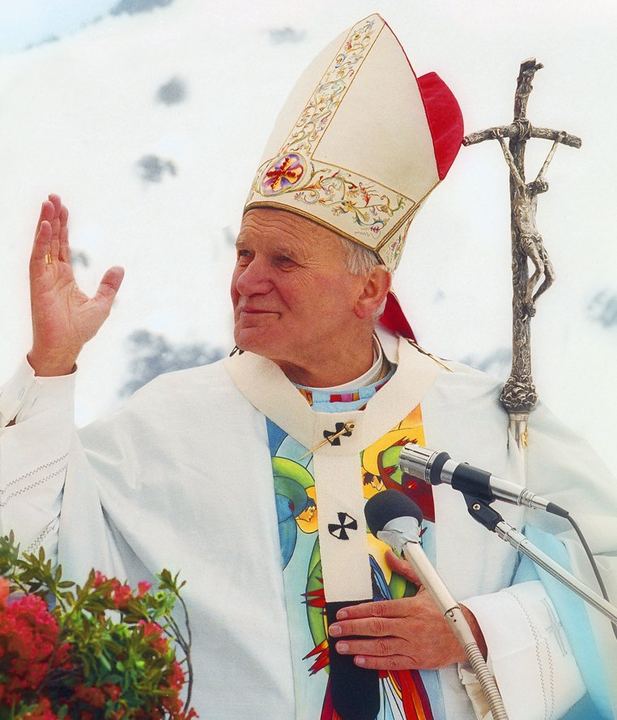
Background. After cardinals meeting in consistory in April 1991 asked him to reaffirm the Church's teaching on human life, John Paul II consulted the bishops worldwide and signed this letter on the Annunciation feast of 1995, as several legislatures debated abortion, euthanasia and assisted suicide.
Audience. It addresses bishops, clergy, religious, lay faithful and 'all people of good will', with direct appeals to physicians, nurses, pharmacists, researchers, legislators, families and women who have had abortions.
Content. Chapter I reads present threats through Cain's murder of Abel; Chapter II presents life as a gift fulfilled in Christ; Chapter III expounds the commandment 'You shall not kill', with solemn statements on the killing of the innocent, on abortion and on euthanasia; Chapter IV, 'You did it to me', calls for a culture of life in medicine, law, education and politics.
Teaching. The letter separates euthanasia from forgoing disproportionate or burdensome treatment, accepts pain relief that may shorten life when death is not intended, defends conscientious objection to laws permitting abortion or euthanasia, and limits the death penalty to cases of absolute necessity, judged very rare.
Significance. It became a principal reference for Catholic bioethics and health-care ethics, informed later magisterial statements, and gave public debate the phrase 'culture of life'.
Key figures
- John Paul II: Polish-born pope writing the encyclical's teaching and appeals
- Cain and Abel: Brothers of Genesis 4 whose story frames the first chapter
- The Extraordinary Consistory of Cardinals (1991): Meeting that asked the pope to restate the value of human life
- The Hebrew midwives of Exodus: Cited as models of refusing an unjust command to kill
- Mary: Contemplated in the conclusion as mother of the Living One

Summary
Evangelium Vitae is John Paul II's 1995 encyclical on the dignity and inviolability of human life. It opens with biblical meditation, especially the story of Cain and Abel, and then develops a moral analysis of what the pope calls threats to life in modern law, medicine, family life, and political culture. The encyclical addresses abortion, euthanasia, assisted suicide, embryo destruction, violence, poverty, war, capital punishment, and the abandonment of the weak. Its central opposition is between a culture of life and a culture of death, but the argument is not only rhetorical. John Paul II ties moral judgments to anthropology: the person is created, dependent, embodied, relational, and never reducible to usefulness, autonomy, health, or social approval. Evangelium Vitae is one of the most explicitly medical-ethical works in this set. It speaks directly about physicians, nurses, pharmacists, researchers, legislators, parents, disability, suffering, pain, prenatal life, terminal illness, conscience, and palliative care. The text is especially concerned with situations in which medical skill can become separated from care for the vulnerable. It distinguishes killing from refusing disproportionate treatment, treats suffering as a place for accompaniment rather than abandonment, and calls for legal protections for life at its weakest. The encyclical also places responsibility beyond clinicians: families, lawmakers, educators, media, and economic structures all shape whether fragile lives are welcomed or excluded. Written after major late twentieth-century bioethical debates, it draws on Scripture, natural law, Catholic tradition, and modern rights language. Its importance lies in its sustained effort to connect theology, law, medicine, and culture around one question: whether a community recognizes every human life as a good before it calculates burden, prognosis, dependency, or cost. That is why its bioethical claims are inseparable from its broader account of law, culture, and mercy. Its pastoral urgency comes from imagining law and medicine as guardians, not owners, of life.
Plot or Argument
- Threats to life
The encyclical names cultural and legal patterns that weaken protection for vulnerable persons.
- Gospel and dignity
Scripture and Christian anthropology ground the defense of life.
- Medicine and law
Conscience, care, and public responsibility become central tests.
Key claims
The main steps of the argument, in order, and how they fit together.
- Every human life is created by God in his image and is a gift entrusted to human care.How it is supported: Scripture's account of creation and the fulfillment of life in Christ.
- Modern cultural and legal patterns increasingly threaten the weak, forming what the letter calls a culture of death.How it is supported: A reading of present threats through Cain's murder of Abel.
- The direct and voluntary killing of an innocent human being is always gravely wrong, whatever its stage or condition.How it is supported: The commandment against killing, expounded with solemn teaching statements.
- Abortion and euthanasia are grave forms of such killing, while forgoing burdensome treatment or relieving pain is not.How it is supported: Careful moral distinctions about intention and proportionate care.
- The right to life is the foundation of the common good that law exists to protect.How it is supported: Reasoning about the purpose of civil law.
- Laws permitting the killing of the innocent lack true moral authority and must not be cooperated with.How it is supported: A defense of conscientious objection for clinicians and citizens.
- A person is never reducible to usefulness, autonomy, or health, so suffering calls for accompaniment rather than abandonment.How it is supported: Christian anthropology and Christ's identification with the least of his brethren.
- Families, clinicians, lawmakers, and educators share the task of building a culture that welcomes and cares for the weakest.How it is supported: Direct appeals to each group in the final chapter.
Argument map
Supported by
- 3The direct and voluntary killing of an innocent human being is always gravely wrong, whatever its stage or condition.
which rests on
- 1Every human life is created by God in his image and is a gift entrusted to human care.
- 7A person is never reducible to usefulness, autonomy, or health, so suffering calls for accompaniment rather than abandonment.
- 4Abortion and euthanasia are grave forms of such killing, while forgoing burdensome treatment or relieving pain is not.
which rests on
- 2Modern cultural and legal patterns increasingly threaten the weak, forming what the letter calls a culture of death.
- 6Laws permitting the killing of the innocent lack true moral authority and must not be cooperated with.
which rests on
- 5The right to life is the foundation of the common good that law exists to protect.
- 8Families, clinicians, lawmakers, and educators share the task of building a culture that welcomes and cares for the weakest.
Therefore
Plain-language summaries of the author's argument, not quotations.
Lessons
Evangelium Vitae: formed attention
Evangelium Vitae teaches students to slow down before judgment. twelfth-grade readers can connect theology, law, medicine, disability, family, and political culture in one sustained moral argument
- Where does Evangelium Vitae reward patient attention?
- Which early impression in Evangelium Vitae has to be revised?
Evangelium Vitae: order and disorder
Evangelium Vitae makes order visible by showing what damages it. John Paul II moves from biblical meditation to moral analysis, bioethical judgment, social responsibility, and a call to build a culture of life
- What kind of disorder is most dangerous in Evangelium Vitae?
- Does Evangelium Vitae restore order, expose its fragility, or both?
Evangelium Vitae: body and soul
Evangelium Vitae gives the medical lens a human scale. this is one of the batch's most explicit medical-ethics texts, addressing abortion, euthanasia, suffering, conscience, and care for the vulnerable
- How does bodily vulnerability change the argument of Evangelium Vitae?
- Where should a reader avoid reducing moral or spiritual suffering to diagnosis?
Context
Evangelium Vitae stands at a historically important crossing point for postwar contemporary study. It should be read with attention to its original language, audience, institutional setting, and later classroom life.
Composition
Evangelium Vitae is dated 1995; the record uses the date as a teaching anchor while recognizing that transmission, translation, and publication history may be more complicated than a single year suggests.
Reception
Evangelium Vitae has remained teachable because later readers found in it more than antiquarian interest: it continues to frame arguments about truth, order, suffering, imagination, and the moral life.
Comparisons
- dignitatis-humanae
Evangelium Vitae can be compared with dignitatis-humanae to test how different periods handle authority, suffering, formation, and the shape of a good life.
- the-communist-manifesto
Evangelium Vitae can be compared with the-communist-manifesto to test how different periods handle authority, suffering, formation, and the shape of a good life.
Quotes
For Students
A reading companion for classical Christian high school students. See the student guide.
Reading Guide
Where it fits: In the twelfth-grade year on Society and Politics, Evangelium Vitae asks whether a democracy can remain just once its law withdraws protection from the weakest, carrying forward the questions of Dignitatis Humanae and Centesimus Annus about freedom, truth and the common good, and answering in sharp contrast to Aristotle's Politics on who belongs in the city.
Watch for
- The meditation on Cain and Abel that opens Chapter I. Track how John Paul II reads Cain's evasive answer to God about his brother as the pattern of every later refusal to take responsibility for another's life.
- The contrast between a culture of life and a culture of death, introduced in Chapter I (around section 12) and returned to in Chapter IV. Notice that the pope describes cultures and structures, not only individual choices.
- The three solemn doctrinal statements in Chapter III on the killing of the innocent (57), abortion (62) and euthanasia (65), each framed with unusual formal weight.
- Section 65's distinction between euthanasia and the refusal of overzealous medical treatment, and its acceptance of painkillers that may shorten life when death is not intended.
- The pastoral turn near the end of Chapter IV (99), where the pope speaks directly to women who have had abortions, and the treatment of legislators and imperfect laws in section 73.
Key terms and names
- Culture of death
- John Paul II's name for a set of social, legal and economic attitudes that treat the weak, the sick and the unborn as burdens to be removed. He describes it as a structure of sin, not only the sum of individual acts.
- Culture of life
- The alternative the encyclical calls Christians and all people of good will to build: families, medicine, law and media that welcome every human life as a gift, especially when it is weakest.
- Euthanasia
- Defined in section 65 as an action or omission that of itself and by intention causes death in order to eliminate suffering. The definition turns on intention and act, not on the presence of illness alone.
- Overzealous medical treatment
- Procedures that no longer correspond to the patient's real situation because they are disproportionate to any expected benefit. Section 65 holds that refusing them is acceptance of the human condition in the face of death, not euthanasia.
- Conscientious objection
- The refusal to take part in an act one judges gravely unjust. Sections 73-74 call it a grave duty for doctors, nurses and others when the law permits the taking of innocent life, and a right the law should protect.
- Eclipse of the sense of God
- The encyclical's diagnosis, in Chapter I, of the deepest root of the threats to life: when God is forgotten, the sense of the human person as his image is lost with him.
Seminar Questions
- Comprehension How does Chapter I use the story of Cain and Abel, and what does John Paul II make of Cain's answer when God asks where his brother is?
- Comprehension How does section 65 define euthanasia, and how does it distinguish euthanasia from refusing overzealous treatment and from using painkillers that may shorten life?
- Comprehension What does the encyclical teach about capital punishment in section 56, and under what conditions does it say the state may still use it?
- Interpretation Why does John Paul II describe a culture of death rather than simply a list of wrong acts? What does the word culture add to the argument?
- Interpretation The encyclical claims that a law permitting the killing of the innocent loses its authority as true law. What view of law and of democracy lies behind this claim?
- Interpretation Section 73 allows a legislator to support a law that limits the harm of an existing unjust law when full repeal is not possible. How does this fit with the encyclical's refusal to compromise elsewhere?
- Big Question The encyclical argues that a society reveals its true character by how it treats those who are unborn, disabled, sick or dying. Is the measure of a just society how it treats its weakest members, and if so, what would that require of law and medicine?
Faith Connections
- Genesis 4:1-16 (Scripture)
The first murder, Cain's evasion of God's question and the cry of Abel's blood from the ground form the biblical frame of Chapter I. The encyclical reads the story as showing that every attack on human life is also a refusal of brotherhood and of responsibility before God.
- Deuteronomy 30:15-20 (Scripture)
Moses sets life and death before Israel and commands them to choose life. The encyclical takes up this call, presenting the defence of life as a choice a whole people must make in its laws and customs.
- Matthew 25:31-46 (Scripture)
The title of Chapter IV comes from Christ's words that what is done to the least of his brethren is done to him. The passage grounds the encyclical's demand that care for the sick, the poor and the dying be treated as service to Christ himself.
- Didache 2 (Church Fathers)
This early Christian manual of the first or second century forbids killing a child by abortion or killing a newborn. Evangelium Vitae cites it to show that the Church's teaching on unborn life goes back to the earliest generations of Christians.
Logic and Rhetoric
Central argument: Every human life is created by God in his image and is a gift entrusted to human care. Therefore the direct and voluntary killing of an innocent human being is always gravely wrong, whatever the stage or condition of that life. Laws exist to protect the common good, of which the right to life is the foundation. So a law that permits the killing of the innocent contradicts the purpose of law and has no true moral authority. It follows that citizens, clinicians and legislators must refuse cooperation with such laws and work to build a culture that welcomes and cares for the weakest.
Rhetorical device: antithesis. The whole encyclical is organised around the opposition of a culture of life and a culture of death, introduced in Chapter I and resolved in Chapter IV's call to a new culture of life, so that every particular question is placed on one side or the other of a single contrast.
Debate: Resolved: A law that permits the taking of innocent human life has no binding moral authority.
Writing Prompts
Essay: Evangelium Vitae distinguishes euthanasia from the refusal of overzealous treatment and from pain relief that may shorten life. Explain the principles behind these distinctions in section 65 and argue whether they give physicians and families a clear and workable guide at the end of life.
Comparison with Politics: Aristotle's Politics (Book VII) recommends that the city regulate which children are raised, while Evangelium Vitae insists that the city exists to protect every human life, especially the weakest. Compare the two accounts of who belongs to the political community and why, and argue what difference the doctrine of the image of God makes to political life.
Medical Lens
this is one of the batch's most explicit medical-ethics texts, addressing abortion, euthanasia, suffering, conscience, and care for the vulnerable
- Threats to life
Evangelium Vitae gives this tag concrete force through this is one of the batch's most explicit medical-ethics texts, addressing abortion, euthanasia, suffering, conscience, and care for the vulnerable
- Gospel and dignity
Evangelium Vitae gives this tag concrete force through this is one of the batch's most explicit medical-ethics texts, addressing abortion, euthanasia, suffering, conscience, and care for the vulnerable
- Medicine and law
Evangelium Vitae gives this tag concrete force through this is one of the batch's most explicit medical-ethics texts, addressing abortion, euthanasia, suffering, conscience, and care for the vulnerable
- Medicine and law
Evangelium Vitae gives this tag concrete force through this is one of the batch's most explicit medical-ethics texts, addressing abortion, euthanasia, suffering, conscience, and care for the vulnerable
- Medicine and law
Evangelium Vitae gives this tag concrete force through this is one of the batch's most explicit medical-ethics texts, addressing abortion, euthanasia, suffering, conscience, and care for the vulnerable
Creative Prompts
- Essay
Write a class essay on how Evangelium Vitae defines maturity without reducing maturity to success.
- Dialogue
Stage a dialogue between a defender and a critic of Evangelium Vitae's central moral claim.
Further Reading
Verification notes
Analysis only; no full text is attached because the work or the likely classroom edition is copyrighted.
No verification flags recorded.