Work record
The History of Tom Jones, a Foundling
1749 · 18th Century · Novel · English
Abstract
Background. Having left the theatre for the law and the novel, Fielding built on Joseph Andrews to write a longer comic epic of English life. He was sitting as a Westminster magistrate when it appeared.
Plot. Raised as a foundling beside the sly Blifil, Tom is cast out of Allworthy's house after drink, a brawl and slander. Sophia escapes her father's plan to wed her to Blifil, and both travel toward London by way of the crowded inn at Upton. In the capital Tom drifts into Lady Bellaston's keeping, fights a duel and lands in jail, until Jenny Jones and the lawyer Dowling disclose that he is Bridget Allworthy's son.
Structure. Six country books, six road books and six London books give the design its symmetry. The narrator speaks to readers in essays heading each book, and plants clues early that pay off late.
Themes. Benevolence against calculation, the need for prudence, the gap between profession and practice, and the comedy of appetite. Fielding treats Tom's amours with humour and without lingering detail.
Significance. Admirers since Coleridge have praised its construction, while Richardson and Johnson objected to its leniency. It set a pattern for the English comic novel through Dickens and found a large new audience with the 1963 film.
Main characters
- Tom Jones: Warm-hearted, rash foundling who must learn prudence
- Sophia Western: Spirited heiress who flees an unwanted match
- Squire Allworthy: Benevolent guardian too trusting of appearances
- Blifil: Allworthy's nephew, decorous in manner and scheming in secret
- Squire Western: Boisterous fox-hunting father of Sophia
- Partridge: Superstitious barber and former schoolmaster who follows Tom
- Thwackum and Square: Quarrelling tutors, a severe divine and a deist philosopher
- Jenny Jones: Supposed mother of Tom, reappearing as Mrs Waters
- Lady Bellaston: Fashionable London patroness of Tom and rival of Sophia
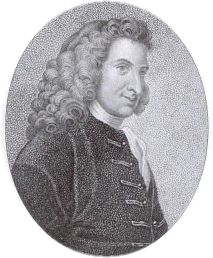

Summary
Tom Jones tells the story of a foundling raised by a good country gentleman, his expulsion from home, his adventures on the road and in London, and his final restoration and marriage. The eighteen books are each opened by an essay in which the narrator talks with the reader about the art of writing, critics, love, or human nature. In Somerset the benevolent Squire Allworthy finds an infant in his bed and adopts him. Jenny Jones, a servant, confesses to being the mother, and the schoolmaster Partridge is judged the father and ruined. Allworthy's sister Bridget marries the fortune-hunting Captain Blifil, who soon dies, and her son, Master Blifil, is brought up with Tom. Their tutors are the clergyman Thwackum, who preaches grace and practises the rod, and the philosopher Square, who talks of the natural beauty of virtue. Tom is generous, reckless and warm-hearted; Blifil is careful, correct and secretly malicious. Tom protects the poor gamekeeper Black George, falls into an affair with George's daughter Molly Seagrim, and wins the love of Sophia Western, daughter of the hard-drinking, fox-hunting Squire Western, by breaking his arm to save her from a fall. When Allworthy falls ill and recovers, Tom celebrates too freely, fights Blifil and Thwackum, and through Blifil's misrepresentations is banished. Western, wanting to unite the estates, orders Sophia to marry Blifil; she runs away to London with her maid Honour. On the road Tom joins soldiers marching against the Jacobite rising of 1745, is struck down by Ensign Northerton, and meets Partridge, now a barber, who becomes his talkative companion. He hears the long history of the Man of the Hill, rescues a Mrs Waters from Northerton, and spends the night with her at the inn at Upton, where Sophia also arrives, learns of it, and leaves her muff as a reproach. In London Tom becomes entangled with the rich Lady Bellaston, takes up the cause of his landlady Mrs Miller and her family, wounds Mr Fitzpatrick in a duel and is imprisoned. Partridge is horrified to learn that Mrs Waters is Jenny Jones, but she reveals that Tom's mother was Bridget Allworthy, and the lawyer Dowling discloses that Blifil suppressed his mother's dying letter. Allworthy recognizes Tom as his nephew and heir, Blifil is disgraced, and Sophia, satisfied that Tom has learned prudence, marries him. Published in six volumes by Andrew Millar in February 1749, the novel was an immediate success; Samuel Richardson and Samuel Johnson disapproved of its morals, while Coleridge later ranked its plot among the most perfect ever planned. The library text is the complete Project Gutenberg edition.
Virtues in this work
- Charity: Tom sells his horse and Bible to help Black George's starving family and later rescues Mrs Miller's relations in London.
- Prudence: By the final chapter Tom has learned the discretion the narrator called a guard to virtue in Book III.
- Fortitude: Sophia defies her father's threats and an unwanted marriage by leaving home with only her maid.
- Friendship: Partridge follows Tom through danger and poverty, and Tom provides for him in the end.
Plot or Argument
- Books I-III: The foundling at Paradise Hall
Allworthy adopts the infant Tom; Jenny Jones and Partridge are blamed and sent away; Bridget marries Captain Blifil, whose death is disputed by two physicians; Tom and Master Blifil grow up under Thwackum and Square.
- Books IV-VI: Love and banishment
Sophia Western is introduced in mock-heroic style; Tom breaks his arm saving her; his affair with Molly Seagrim ends in comedy when Square is found behind her curtain; Allworthy's illness, Tom's drunken joy and Blifil's reports lead to Tom's expulsion, while Western presses Sophia to marry Blifil.
- Books VII-IX: The road to Upton
Sophia flees; Tom marches with soldiers against the Jacobites, is wounded by Northerton, gains Partridge as companion, hears the Man of the Hill's history and rescues Mrs Waters.
- Books X-XII: The inn at Upton and after
Farcical night scenes at the Upton inn bring Sophia, Mrs Fitzpatrick, Squire Western and Tom under one roof; Sophia leaves her muff; pursuers and pursued cross paths on the way to London.
- Books XIII-XV: London
Tom becomes Lady Bellaston's lover; he helps Mrs Miller, Nightingale and Nancy; Lady Bellaston encourages Lord Fellamar's designs on Sophia; Tom escapes his entanglement by a pretended proposal.
- Books XVI-XVIII: Prison, discovery and marriage
Partridge sees Garrick's Hamlet; Tom wounds Fitzpatrick and is jailed; Mrs Waters's identity and Bridget's letter reveal Tom's parentage and Blifil's schemes; Allworthy and Western reconcile with Tom, who marries Sophia.
Characters
- Tom Jones, the foundling hero
Brave, generous and good-natured, but imprudent and easily led by his appetites.
- Sophia Western, heroine
Squire Western's daughter, loving, witty and principled, who refuses to marry against her heart or without her father's consent.
- Squire Allworthy, Tom's guardian
A benevolent, upright gentleman whose goodness makes him slow to suspect deceit.
- Master Blifil, Allworthy's nephew
Outwardly pious and dutiful, inwardly calculating, he works quietly to ruin Tom.
- Squire Western, Sophia's father
A loud, affectionate, hard-drinking fox-hunter who bullies his daughter one moment and dotes on her the next.
- Partridge, schoolmaster turned barber
Tom's superstitious, talkative, cowardly and loyal companion on the road.
- Thwackum, clergyman and tutor
Holds that human nature since the fall is wholly corrupt and teaches with the birch.
- Square, philosopher and tutor
Speaks of the natural beauty of virtue and the fitness of things while pursuing his own advantage.
- Jenny Jones (Mrs Waters), servant, later a lady of adventure
Accused at first of being Tom's mother; her later testimony unlocks the mystery.
- Molly Seagrim, gamekeeper's daughter
Tom's first romantic entanglement, bold and quick-tempered.
- Lady Bellaston, London lady of fashion
A wealthy, worldly woman who takes Tom up and schemes against Sophia.
- Mrs Miller, London landlady
A grateful widow whose family Tom helps and who pleads his cause with Allworthy.
Lessons
A good heart needs prudence
Fielding's narrator says plainly in Book III that goodness of heart will not by itself carry a young man safely through the world. Tom's generosity is real, but his drinking, his affairs and his carelessness of appearances give Blifil the means to ruin him. The novel ends only when Tom has added discretion to his warmth.
- Which of Tom's troubles come from vice and which from mere carelessness about how things look?
- Why does Sophia insist on proof of Tom's change before she will marry him?
- Is prudence a virtue in itself, or only a guard for other virtues, as the narrator says?
Seeming and being
Blifil says the right things and keeps the outward rules; Tom breaks them and keeps faith with the poor. Thwackum and Square each have a theory of virtue and neither shows much charity. Fielding asks readers to judge people by their deeds and their kindness, not their professions.
- How does Blifil turn Tom's kindness to Black George against him?
- What do Thwackum and Square agree on, despite their opposite doctrines?
The narrator as host
The essays that open each book make the reader a guest at the narrator's table, from the bill of fare in Book I to the farewell in Book XVIII. Fielding uses them to explain his new kind of writing, to tease critics and to teach the reader how to read. The novel becomes a conversation as well as a story.
- What does the narrator claim in Book II about his right to make the laws of his new province of writing?
- How do the introductory essays change the experience of reading the plot that follows?
- Which of the essays would you keep if you had to cut the book in half?
Comic providence
The plot is full of chance meetings at inns, lost letters and mistaken identities, yet every thread is tied at the end, from Bridget's letter to Black George's banknote. Coleridge admired the design of the plot. The comic ending rewards patience and honesty and exposes concealment.
- Which early details turn out to matter in Books XVII and XVIII?
- Does the happy ending feel earned by Tom, or given to him?
Context
Tom Jones is set in the England of George II, moving from a Somerset estate along the western roads to London during the Jacobite rising of 1745, when Charles Edward Stuart's army marched south. Squire Western is a Tory and Jacobite sympathizer who rails against Hanover, while Fielding himself was a firm supporter of the Hanoverian settlement who had written anti-Jacobite journalism. The novel's world of country squires, parsons, inns, highwaymen, magistrates and fashionable London households is drawn closely from life.
Composition
Fielding worked on the novel for several years in the mid-1740s, dedicating it to his patron George Lyttelton; parts were reportedly read in manuscript before publication. Andrew Millar published it in six volumes on 28 February 1749, and further editions followed within the year. Fielding had already called Joseph Andrews a comic epic poem in prose, and Tom Jones develops that idea on a larger scale, with eighteen books like an epic and an essay before each.
Reception
The novel sold quickly and was much discussed. Samuel Richardson, author of Clarissa, and Samuel Johnson thought it morally lax, while admirers praised its humour and construction; Coleridge later named it, with Oedipus the King and Jonson's The Alchemist, among the three most perfect plots ever planned. It shaped the English comic novel from Smollett and Sterne to Dickens and Thackeray, and Tony Richardson's 1963 film won the Academy Award for Best Picture.
Comparisons
- don-quixote
Fielding called himself an imitator of Cervantes; both send a hero and a talkative companion along roads and through inns, mixing adventure with commentary on books.
- sterne-tristram-shandy
Both novels put a chatty narrator in the foreground, but Fielding's digressions frame a tightly plotted story, while Sterne's swallow the story itself.
- hamlet
In Book XVI Partridge watches Hamlet and is terrified by the Ghost, mistaking Garrick's art for nature and praising the king as the best player.
- the-odyssey
Fielding's comic epic in prose borrows the epic's division into books and its long journey home, with Sophia and Paradise Hall as the goal of the wanderer.
Quotes
Frequently cited
“I am, in reality, the founder of a new province of writing, so I am at liberty to make what laws I please therein.”
Frequently cited
“Prudence and circumspection are necessary even to the best of men. They are indeed, as it were, a guard to Virtue, without which she can never be safe.”
“Square held human nature to be the perfection of all virtue, and that vice was a deviation from our nature, in the same manner as deformity of body is.”
“Thwackum, on the contrary, maintained that the human mind, since the fall, was nothing but a sink of iniquity, till purified and redeemed by grace.”
“Hushed be every ruder breath.”
“Dr Y. holding that he died of an apoplexy, and Dr Z. of an epilepsy.”
“why, I could act as well as he myself. I am sure, if I had seen a ghost, I should have looked in the very same manner, and done just as he did.”
“He hath also, by reflection on his past follies, acquired a discretion and prudence very uncommon in one of his lively parts.”
For Students
A reading companion for classical Christian high school students. See the student guide.
Reading Guide
Watch for
- The essay that opens each book, beginning with the bill of fare in Book I, Chapter i.
- How Tom's protection of Black George in Book III is reported to Allworthy by Blifil, Thwackum and Square.
- The comic confusion of rooms and identities at the Upton inn in Books IX and X, and Sophia's muff.
- Partridge at the theatre in Book XVI, Chapter v.
- Small early details, such as Bridget's interest in the foundling and the letter given to Dowling, that unlock the ending.
Key terms and names
- Foundling
- An abandoned infant found and raised by others; Tom is discovered in Allworthy's bed in Book I.
- Comic epic in prose
- Fielding's name for his kind of novel: an epic's scope and divisions applied to ordinary, comic life.
- Paradise Hall
- Allworthy's Somerset estate, the home from which Tom is expelled and to which he returns.
- Upton
- The inn town where many of the novel's characters cross paths in a single night of farce.
- The Forty-five
- The Jacobite rising of 1745, whose army is marching south when Tom joins the soldiers in Book VII.
- Introductory chapter
- Each of the eighteen books begins with an essay in which the narrator discusses writing, critics or human nature.
Seminar Questions
- Comprehension Why is Tom banished from Paradise Hall in Book VI, and what part does Blifil play?
- Comprehension What does Sophia learn at Upton, and how does she let Tom know?
- Comprehension How is the secret of Tom's birth finally revealed?
- Interpretation Thwackum and Square hold opposite doctrines of human nature. Why does Fielding make both of them fail as teachers of goodness?
- Interpretation Tom gives his money away and Blifil keeps every rule. Which of them does Fielding think is closer to virtue, and why?
- Interpretation What does the narrator's voice add to the story? Would the novel be better or worse without the introductory essays?
- Big Question Can a person be good at heart and still need to change before he deserves happiness?
Faith Connections
- Luke 15:11-32 (Scripture)
Tom, like the prodigal son, wastes his early chances and is received again by a generous father figure, while Blifil, the dutiful one at home, resents the welcome.
- 1 Corinthians 13:1-7 (Scripture)
Thwackum's learning and Square's philosophy profit nothing without charity; Allworthy and Mrs Miller, by contrast, show love that is patient and kind.
- Matthew 10:16 (Scripture)
Be wise as serpents and harmless as doves: Tom has the dove's harmlessness and must learn the serpent's wisdom, the prudence the narrator commends in Book III.
- Augustine, Enchiridion (Church Fathers)
Augustine's account of the fall and of grace stands behind Thwackum's doctrine, which Fielding satirizes not for its theology but for being preached without mercy.
Logic and Rhetoric
Central argument: Goodness of heart is the root of virtue, but it is not enough: without prudence a good man's actions will be misjudged and he will be harmed by those who only seem good. Tom's warmth and Blifil's correctness are tested by events, and concealment is finally exposed. Therefore a well-ordered life joins a generous heart to prudence, and judges others by their deeds and charity rather than by their professions.
Rhetorical device: mock-heroic. Book IV, Chapter ii introduces Sophia with an epic invocation to the winds and Flora, beginning Hushed be every ruder breath, before the narrator descends to describe a country gentleman's daughter.
Debate: Resolved: that Tom Jones deserves Sophia by the end of the novel.
Memory Work
Prudence and circumspection are necessary even to the best of men. They are indeed, as it were, a guard to Virtue, without which she can never be safe.
Writing Prompts
Essay: Compare Tom and Blifil as Fielding's two versions of a young man. Argue what each lacks, and whether Tom's change by Book XVIII answers the narrator's warning in Book III.
Comparison with Don Quixote: Partridge and Sancho Panza are both talkative companions on the road. Compare how each servant's view of the world comments on his master's.
Medical Lens
Fielding, who had satirized physicians on the stage, gives Tom Jones a gallery of mid-eighteenth-century practitioners. Two doctors dispute whether the dead Captain Blifil died of apoplexy or epilepsy; a surgeon bleeds Sophia after her fall from her horse; and after Northerton breaks a bottle on Tom's head an inn surgeon parades Latin terms (contusion, cutis, vulnus, phlebotomy) and boasts of drawing twenty ounces of blood, then insists on bleeding the feverish patient. Phlebotomy appears as the routine remedy for fevers, falls and wounds, in keeping with practice of the time. Allworthy's illness in Book V shows the period's deathbed customs and the physician's role in judging danger. Squire Western's drinking and the many tavern scenes record the hard drinking of the gentry, which the narrator treats comically rather than clinically.
- Book II, Chapters viii-ix
Captain Blifil dies suddenly; two physicians called in after death dispute apoplexy versus epilepsy.
- Book IV, Chapter xiv
A surgeon arrives after Tom saves Sophia, advises that she be blooded after her fall, and sets Tom's broken arm.
- Book V, Chapter vii
Allworthy, seriously ill, gathers his household to settle his affairs, believing himself near death.
- Book VII, Chapter xiii, and Book VIII, Chapter iii
The inn surgeon treats Tom's head wound with jargon and phlebotomy and quarrels when the patient refuses to be blooded again.
Creative Prompts
- Classroom
Read three of the introductory essays (Books I, V and XVIII) and write a short introductory chapter of your own for a story you know, in Fielding's voice.
- Dialogue
Stage the debate between Thwackum and Square over Tom's protection of Black George, and let Allworthy judge it.
- Fiction
Retell the night at the Upton inn from the point of view of the landlady.
Further Reading
- Joseph Andrews, Henry Fielding
Its preface defines the comic epic poem in prose.
- Clarissa, Samuel Richardson
The great rival novel of 1747-48.
- The Rise of the Novel, Ian Watt
- Henry Fielding: A Life, Martin C. Battestin with Ruthe R. Battestin
Verification notes
Plot, structure and publication facts (Andrew Millar, six volumes, 28 February 1749; dedication to George Lyttelton) are standard. Coleridge's remark on the three most perfect plots is recorded in his Table Talk. Book and chapter locators follow the attached Gutenberg text. Medical passages are pointers checked against the text. Quotes are exact substrings of the attached file. The text itself names Garrick as the Hamlet whom Partridge watches in Book XVI, Chapter v.
- The years Fielding spent composing the novel (often given as c. 1746-1748).