Work record
The History of the Decline and Fall of the Roman Empire (Selections)
1776-1789 · 18th Century · History · English
Abstract
Background. A member of Parliament and a former militia captain, Gibbon spent over twenty years on a history linking ancient Rome to the late Middle Ages. He wrote for educated readers of the Enlightenment, joining learned citation to polished, ironic prose.
Content. Opening chapters paint the second-century empire: frontier legions, a tolerant civic religion, roads and cities, and an emperor clothed in republican offices whose good rule rested on character alone. A reflective essay at the close of volume three then weighs size, soldiers, a split throne, the church and northern migrations as reasons the West gave way. A final chapter narrates the 1453 siege, from the cannon and the overland ships to the last stand at the walls.
Edition. This library copy reproduces Milman's Victorian annotated version, whose added notes frequently soften or correct the author on Christian matters. Some opening pages of the first chapter are absent.
Debate. Clergy replied to Gibbon's treatment of the early church within months, and later scholars disagree over whether the late Roman centuries saw decline or transformation; both sides still begin with him.
Significance. No English history is more famous for its style. Its themes of prosperity breeding weakness and of civilization surviving catastrophe continue to shape public thinking about great powers.
Key figures
- Augustus: Founder who ruled as first citizen behind republican titles
- Marcus Aurelius: Philosopher-emperor ending the age Gibbon calls happiest
- Constantine the Great: Convert and city-builder whose two decisions Gibbon weighs
- Mahomet (Mehmed) II: Young Ottoman sultan who takes the city in 1453
- Constantine Palaeologus: Final Byzantine ruler, killed defending his walls
- H. H. Milman: Victorian churchman whose footnotes answer and update Gibbon
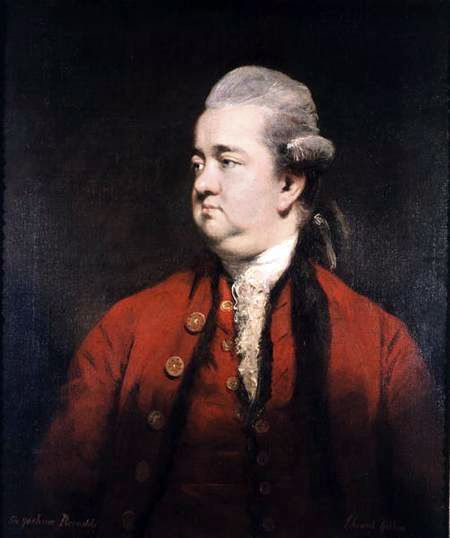

Summary
Edward Gibbon's History of the Decline and Fall of the Roman Empire runs in seventy-one chapters from the age of the Antonines in the second century to the fall of Constantinople in 1453 and the condition of the city of Rome in the fifteenth century. The library holds a selection from the Milman edition, with Gibbon's footnotes and the added notes of the editors: Chapters I to III, the General Observations on the Fall of the Roman Empire in the West that close the third volume, and Chapter LXVIII on Mahomet the Second and the capture of Constantinople. The first three chapters form a portrait of the empire at its height. The stored text of Chapter I begins partway through, with the orderly Roman camp, the legion on the march and the two standing fleets at Ravenna and Misenum, and then surveys every province from Spain and Britain to Egypt and Mauretania, closing with the empire's measurements. Chapter II explains the empire's unity: a tolerant civil religion, a gradual extension of citizenship, Latin in the West and Greek in the East, the condition of slaves, a population Gibbon estimates at a hundred and twenty millions, and the cities, roads, harbors, farms and luxury trades that bound the provinces together. Its last pages warn that long peace was quietly draining Roman courage and genius. Chapter III describes how Augustus kept the outward forms of the republic while holding absolute power, how later emperors were checked only by the army or by their own character, and how the adoptive emperors from Nerva to Marcus Aurelius governed so well that Gibbon names their reign the happiest period in human history, while noting that it rested on the virtue of a single man. The General Observations step back to explain the fall in the West: Rome's immense size, the soldiers who learned to make and unmake emperors, the division of the throne between East and West, the influence of Christianity and the monastic life, and the pressure of the northern peoples. Gibbon then asks whether modern Europe, divided into rival states and armed with artillery, could suffer the same fate, and ends with confidence that the useful arts can never be wholly lost. Chapter LXVIII tells the rise of the young sultan Mahomet (Mehmed) II, his fortress on the Bosphorus, the great cannon cast by Urban, a founder whom Gibbon calls a Dane or Hungarian, the reluctant union of the Greek and Latin churches proclaimed in St. Sophia in December 1452, and the fifty-three-day siege of 1453. The Turkish fleet is dragged overland into the harbor; the Genoese captain John Justiniani is wounded and withdraws; Constantine Palaeologus dies fighting at the walls on 29 May; and the sultan prays in St. Sophia and recites a Persian couplet on fallen greatness. The chapter ends with the conquest of the Morea and Trebizond, the alarm of Latin Christendom and the sultan's death in 1481.
Virtues in this work
- Fortitude: Constantine Palaeologus refuses to leave the breach and dies fighting with his nobles when the walls are carried (Chapter LXVIII).
- Prudence: Augustus, mindful of Caesar's murder, rules through the consent of the Senate and the forms of the republic rather than by open force (Chapter III).
- Justice: Gibbon praises Antoninus Pius and Marcus Aurelius for governing a vast empire under the guidance of virtue and wisdom (Chapter III).
- Magnanimity: Constantine answers the wounded Justiniani that the danger is pressing and his presence necessary, holding to his post when others withdraw (Chapter LXVIII).
Plot or Argument
- Ch. I (from the camp onward): the army, the fleets and the provinces
The library text of Chapter I begins with the legion's square fortified camp, its march and its numbers, then the fleets at Ravenna and Misenum. Gibbon surveys the provinces from Spain, Gaul and Britain through the Danube lands, Asia Minor, Syria, Egypt and North Africa, noting the modern states that occupy each, and closes with the empire's breadth of more than two thousand miles and length of more than three thousand.
- Ch. II, Parts I–II: religion, citizenship, language and slavery
The emperors tolerated every local cult, so that the many forms of worship lived side by side; Gibbon makes the exceptions of Jews and Christians the subject of later chapters. Citizenship spread by degrees, Italy and then the provinces were drawn into Roman life, Latin prevailed in the West and Greek in the East, and slaves, though without rights at first, were protected by later laws and often freed. The editors' notes here add qualifications from Guizot, Wenck, Benjamin Constant and Milman.
- Ch. II, Parts III–IV: cities, roads, agriculture and the decline of genius
Gibbon estimates the population, describes public works paid for by emperors and private benefactors such as Herodes Atticus, the network of highways and the imperial post, and the spread of vines, olives and flax. Luxury trade brought silk, gems and spices from the East. He ends by suggesting that long peace and uniform government acted as a slow poison, extinguishing genius and the military spirit, so that the provinces depended on hired defenders.
- Ch. III, Part I: Augustus and the disguised monarchy
Augustus purged and flattered the Senate, accepted the consulship, tribunician power and command of the frontier armies, and left the republic's names standing. Gibbon defines the result as an absolute monarchy wearing the dress of a commonwealth, sustained by the legions and by the Senate's consent, and describes the deification of emperors and the adoption of successors.
- Ch. III, Part II: the Antonines and the fragility of good government
Nerva, Trajan, Hadrian, Antoninus Pius and Marcus Aurelius ruled a vast empire with restraint, and Gibbon names the years from Domitian's death to Commodus's accession the happiest in history. Yet everything hung on one man's character; the memory of Tiberius, Caligula, Nero and Domitian showed what the same power could do, and an empire that filled the known world left its enemies no place of refuge.
- General Observations: why the West fell
Rome's greatness itself, the ambition of the soldiers, the division of the throne after Theodosius, the clergy's preaching of patience and the drain of men and wealth into the cloister, and the pressure of northern peoples are each weighed. Gibbon allows that Christianity also softened the conquerors. He then compares the Roman world with modern Europe, a commonwealth of rival states defended by science and artillery, and closes with the claim that the basic arts of life will always survive.
- Ch. LXVIII, Part I: Mahomet II and the fortress on the Bosphorus
Gibbon sketches the sultan's learning, ambition and severity, drawn from Phranza and the Turkish sources, his accession in 1451, and the fortress he built at Asomaton on the European shore in 1452, which commanded the strait. Urban, a cannon founder (a Dane or Hungarian, says Gibbon) who had been half-starved in Greek service, deserts to the sultan and casts the giant gun that will batter the walls.
- Ch. LXVIII, Parts II–III: the union of the churches and the siege
Phranza's count finds only 4,970 Greeks able to bear arms, joined by some two thousand foreigners under the Genoese John Justiniani. The union of the Greek and Latin churches agreed at Florence is proclaimed in St. Sophia on 12 December 1452, and many Greeks shun the church; the great duke Notaras is reported preferring the sultan's turban to a cardinal's hat. The siege opens in April 1453; five relief ships fight their way into the harbor, and the sultan answers by hauling some eighty vessels overland on greased planks behind Galata into the Golden Horn.
- Ch. LXVIII, Part IV: the fall of the city and its aftermath
On 29 May the final assault breaks through after Justiniani is wounded and withdraws; Constantine is last seen fighting and dies by an unknown hand. The city is sacked, the sultan prays in St. Sophia and recites a Persian couplet on the vanity of power, and Notaras is later executed. Gibbon follows the conquest of the Morea and Trebizond, the Burgundian Feast of the Pheasant, Pius II's failed crusade, the Turkish landing at Otranto, and the sultan's death in 1481.
Characters
- Augustus, first emperor
The founder of the principate in Chapter III, who kept the Senate and the republican magistracies while holding real power through the army.
- The Antonine emperors (Nerva, Trajan, Hadrian, Antoninus Pius, Marcus Aurelius), rulers of the happiest age
The adoptive emperors whose reigns from 96 to 180 Gibbon presents as the high point of good government in history.
- Constantine the Great, emperor and founder of Constantinople
Weighed in the General Observations, where his new capital and his conversion are both assessed for their effect on the empire.
- Mahomet (Mehmed) II, Ottoman sultan
The learned and ambitious conqueror of Constantinople in 1453, portrayed in Chapter LXVIII from Greek and Turkish sources.
- Constantine Palaeologus, last Byzantine emperor
Defends the city with a small force and dies fighting at the walls on 29 May 1453.
- John Justiniani (Giovanni Giustiniani Longo), Genoese commander
Leads the defense of the land walls until a wound takes him from his post in the final assault.
- Lucas Notaras, Byzantine grand duke
First minister of the empire, remembered for preferring the turban to the papal tiara and executed after the conquest.
- Urban, cannon founder
Cannon founder, a Dane or Hungarian in Gibbon's account, who left Greek service for the sultan and cast the gun that battered the walls.
- H. H. Milman, editor and annotator
Anglican clergyman and historian whose notes, marked M., often qualify Gibbon's judgments on religion and update his facts.
Lessons
Greatness can carry the seeds of its own decline
Gibbon's most famous judgment is that Rome fell because of its immoderate greatness: the larger it grew, the more it depended on armies, distant governors and a single ruler. He even says we should wonder that it lasted so long. His account invites readers to see that the strengths of an empire and its weaknesses may be the same things seen at different times.
- Which features of Rome praised in Chapters I and II reappear as causes of decay in the General Observations?
- What does Gibbon mean when he says long peace introduced a slow and secret poison into the empire?
- Is it possible for a state to be too large to be governed well, or is the problem always the character of its rulers?
Forms can hide realities
In Chapter III Augustus keeps the consuls, the Senate and the language of the republic while holding absolute power. Gibbon admires his skill and notices how gladly the Romans accepted names in place of freedom. The same chapter shows that the Antonines' good government depended on their personal virtue, not on any law that bound them.
- List the offices Augustus held and explain how each gave him a share of real power.
- Why does Gibbon think the Senate and people accepted this arrangement?
- If good government depends on a good ruler, what happens when the next ruler is a Commodus?
A historian's judgments on religion invite a reply
Gibbon writes of Roman paganism with ironic detachment and argues that Christianity and monasticism weakened the empire's military spirit, while granting that the faith softened the conquerors. Christian scholars answered him from his first volume onward, and Milman's notes in this very edition qualify several of his claims. Reading Gibbon well means hearing his argument in his own words and also listening to the replies.
- Summarize the four effects of Christianity that Gibbon names in the General Observations, including the one he counts in its favor.
- How does Milman's note on celibacy and the morals of active Christians change the force of Gibbon's argument?
- Can a historian be fair to a religion he does not share? What would fairness require?
Courage at the end
Chapter LXVIII shows a besieged city divided by quarrels over the church union and outnumbered many times over, yet its last emperor stays at his post and dies with his men. Gibbon, who rarely praises Byzantine rulers, gives Constantine Palaeologus a soldier's honor, and contrasts him with the commander who left the wall.
- What does Constantine say to Justiniani when the Genoese commander asks to leave the wall?
- How did the quarrel over the union of the churches weaken the city before the siege began?
- Why do people honor a defense that fails?
Context
Gibbon wrote in the age of the Enlightenment, when British and French historians sought to write history as philosophy teaching by examples, with attention to manners, laws and religion as well as wars. He drew on the ancient historians, the Byzantine chroniclers and the great collections of seventeenth- and eighteenth-century scholarship, especially Tillemont, and wrote with the ironic poise of a man who had read Montesquieu and Voltaire. The first volume appeared in the year of American independence and the Wealth of Nations, and Gibbon's comparisons between Rome and modern Europe reflect a Britain at war with its American colonies and confident in the European balance of power.
Composition
Volume I (Chapters I–XVI) was published in London in February 1776, Volumes II–III in 1781, and Volumes IV–VI in 1788; the publication spans the dates 1776-1789 given in the manifest. The General Observations stand at the end of Chapter XXXVIII, closing Volume III and the story of the West. Henry Hart Milman's annotated edition (1838–1839) added notes by the French historian François Guizot and the German scholar J. G. Wenck as well as his own, marked M., G. and W.; Project Gutenberg's text follows that edition and divides chapters into numbered parts. The library text omits the opening of Chapter I.
Reception
The book was an immediate success and has never gone out of print. Chapters XV and XVI, on the growth of the early church and the persecutions, drew replies from Richard Watson, Henry Edward Davis and others, and Gibbon answered in his Vindication (1779). Milman, later Dean of St. Paul's, annotated the whole to supply what he saw as a fairer account of Christianity, and J. B. Bury's edition (1896–1900) brought the scholarship up to date. Modern historians still argue over Gibbon's framework: some, following Peter Brown, describe late antiquity as an age of transformation rather than decline, while others, such as Peter Heather and Bryan Ward-Perkins, have restated the reality of collapse in the West. Gibbon's prose and his model of learned, readable history remain widely admired.
Comparisons
- polybius-histories-book-vi
The General Observations open by praising the Greek historian who explained Rome's rise through its mixed constitution and its army; Gibbon begins his account of the fall exactly where Polybius's account of the rise ends.
- the-annals-of-imperial-rome
Tacitus is Gibbon's chief model and source for the early emperors; his picture of a Senate flattering Tiberius under republican names lies behind Chapter III's definition of the principate.
- city-of-god
Augustine wrote after the sack of 410 to answer the charge that Christianity had ruined Rome; Gibbon revives a version of that charge in the General Observations, and the two works make a natural debate.
- ammianus-marcellinus-roman-history
The last great Latin historian of Rome, whom Gibbon calls an accurate and faithful guide for the fourth century, wrote from inside the decline that Gibbon later described from outside.
- fall-of-constantinople-1453-eyewitness-accounts
Chapter LXVIII rests on Phranza (Sphrantzes), Ducas and Leonard of Chios; reading those witnesses beside Gibbon shows how he selected and shaped their testimony.
- heather-the-fall-of-the-roman-empire
A modern historian who, after decades of emphasis on transformation, argues again that the western empire fell under outside pressure, a debate in which Gibbon's General Observations remain a starting point.
Quotes
“The various modes of worship, which prevailed in the Roman world, were all considered by the people, as equally true; by the philosopher, as equally false; and by the magistrate, as equally useful.”
“it may be defined an absolute monarchy disguised by the forms of a commonwealth.”
“which is, indeed, little more than the register of the crimes, follies, and misfortunes of mankind.”
“If a man were called to fix the period in the history of the world, during which the condition of the human race was most happy and prosperous, he would, without hesitation, name that which elapsed from the death of Domitian to the accession of Commodus.”
“But the decline of Rome was the natural and inevitable effect of immoderate greatness.”
“If the decline of the Roman empire was hastened by the conversion of Constantine, his victorious religion broke the violence of the fall, and mollified the ferocious temper of the conquerors.”
“every age of the world has increased, and still increases, the real wealth, the happiness, the knowledge, and perhaps the virtue, of the human race.”
“The spider has wove his web in the Imperial palace; and the owl hath sung her watch-song on the towers of Afrasiab.”
For Students
A reading companion for classical Christian high school students. See the student guide.
Reading Guide
Watch for
- Gibbon's irony: sentences that seem to praise while quietly judging, especially on religion in Chapter II.
- The footnotes marked M., G. and W., where later editors correct or qualify Gibbon; notice when they disagree with him.
- The turn at the end of Chapter II from celebrating Roman peace to warning about its hidden costs.
- The single long paragraph on Christianity in the General Observations and how its last sentence balances the rest.
- In Chapter LXVIII, the church union in St. Sophia, the ships hauled overland, Justiniani's wound and Constantine's last stand.
Key terms and names
- Antonines
- The adoptive emperors from Nerva to Marcus Aurelius (96–180), whose age opens Gibbon's history.
- Principate
- The system founded by Augustus, in which the emperor ruled as 'first citizen' under the forms of the old republic.
- Praetorian Guard
- The emperor's household troops in Rome, whose power to make and unmake emperors Gibbon treats as a mark of decay.
- Monasticism
- The life of monks and nuns withdrawn for prayer and discipline, which Gibbon counts among the drains on the empire's manpower and wealth.
- Union of Florence
- The agreement of 1439 between Greek and Latin churchmen, proclaimed in Constantinople in 1452 and rejected by many Greeks.
- Janizaries
- The Ottoman sultan's elite infantry, who led the final assault on Constantinople.
- Golden Horn
- The harbor of Constantinople, closed by a chain and entered by the Turkish fleet dragged overland.
Seminar Questions
- Comprehension According to Chapter II, what held the many peoples of the empire together under the Antonines?
- Comprehension What causes of the fall of the West does Gibbon list in the General Observations?
- Comprehension How did Mahomet II get his ships into the harbor of Constantinople, and why did it matter?
- Interpretation Gibbon calls the Antonine age the happiest in history and then shows how fragile it was. Is he praising the age or warning against it?
- Interpretation Why does Gibbon think modern Europe is safer from barbarian conquest than Rome was, and what do his reasons reveal about his own century?
- Interpretation Milman added notes to qualify Gibbon on religion. Choose one and decide whether it answers Gibbon's point or changes the subject.
- Big Question Do civilizations decline mainly from outside pressure or from inner causes?
- Big Question Is a faith that teaches patience and charity a weakness or a strength to the society that holds it?
Faith Connections
- Daniel 2:31–45 (Scripture)
Gibbon's footnote to the iron monarchy of Rome cites Daniel's image of the fourth kingdom of iron mixed with clay; Daniel's vision ends with a kingdom not made with hands that shall never be destroyed.
- Augustine, City of God I.1 and XIV.28 (Church Fathers)
Augustine answered pagans who blamed Christianity for Rome's sack by distinguishing the earthly city, built on love of self, from the city of God, which no fall of Rome could touch.
- Hebrews 13:14 (Scripture)
'Here have we no continuing city, but we seek one to come' frames the fall of both Romes, in 476 and 1453, within a longer Christian hope.
- H. H. Milman, notes to the Decline and Fall (Great Conversation)
Milman, an Anglican priest, kept Gibbon's text intact while adding notes that defend the moral contribution of the early Christians, a model of answering an opponent in his own book.
Logic and Rhetoric
Central argument: Rome's very size made it depend on armies, distant officials and the character of a single ruler. Long peace weakened the citizens' courage, the army learned to make emperors, the throne was divided, religion turned energies away from public life, and outside peoples pressed on the frontiers. Therefore Rome's fall was the natural result of its greatness, and the surprise is that it lasted so long.
Rhetorical device: antithesis. In Chapter II the forms of worship are 'equally true' to the people, 'equally false' to the philosopher and 'equally useful' to the magistrate (quote 1), three balanced clauses that carry Gibbon's irony.
Debate: Resolved: That the Roman empire in the West fell chiefly from internal causes rather than external pressure.
Memory Work
But the decline of Rome was the natural and inevitable effect of immoderate greatness.
The spider has wove his web in the Imperial palace; and the owl hath sung her watch-song on the towers of Afrasiab.
Writing Prompts
Essay: Using the General Observations, explain Gibbon's view of Christianity's role in the fall of the West, then present the strongest reply to it from Milman's notes or from Augustine, and argue which account is more persuasive.
Comparison with City of God: Augustine and Gibbon both write about the fall of Rome and the role of Christianity, fourteen centuries apart. Compare their purposes and their conclusions.
Medical Lens
The selections are political and military history, and their medical interest is modest. Gibbon repeatedly uses the language of the body for the state: long peace introduces a slow and secret poison into the vitals of the empire, and the deepest wounds are inflicted during the minorities of the Theodosian princes. A footnote in Chapter II records that many Roman physicians were slaves, and a note by the editors lists physicians among the learned men of the Antonine age. Chapter LXVIII turns on a wound: Justiniani, struck in the final assault, leaves the wall in search of a surgeon, and the editors' notes compare the sources on where he was hit and how serious it was. Constantine's death and the burial of his body under the slain are described from conflicting chroniclers. Gibbon's estimate of a hundred and twenty million inhabitants is an early exercise in historical demography.
- Chapter II, Part II, note 57
Footnote observing that many Roman physicians were slaves.
- Chapter II, Part IV
Long peace described as a slow and secret poison in the vitals of the empire, an organic metaphor for decline.
- Chapter LXVIII, Part IV, and notes 58–59
Justiniani's wound, his withdrawal to seek a surgeon, the varying accounts of the injury, and the death of Constantine Palaeologus.
Creative Prompts
- Classroom
Divide the General Observations into its causes of the fall (size, the army, the divided throne, religion, the northern peoples). Give each group one cause to defend as the chief one, using only Gibbon's text and the editors' notes, then vote.
- Dialogue
Write a conversation in 1781 between Gibbon and a Christian critic such as Richard Watson about the paragraph on Christianity in the General Observations, letting each speak in his strongest terms.
- Fiction
Tell the night of 28 May 1453 from inside Constantinople, through the eyes of a young defender at the gate of St. Romanus, using the details of Chapter LXVIII.
- Essay
Gibbon says history is little more than the register of crimes, follies and misfortunes. Using the Antonine chapters, argue whether a happy age really leaves less for the historian to record.
- Adaptation
Make an illustrated map of the empire as Chapter I surveys it, labeling each province with Gibbon's note on what modern state it had become by 1776.
Further Reading
- Memoirs of My Life, Edward Gibbon
Gibbon's own account of his education, his conversion and return, and the conception of the history in Rome.
- The History of the Decline and Fall of the Roman Empire (ed. David Womersley), Edward Gibbon
A complete modern scholarly edition of the full text.
- Edward Gibbon: Making History, Roy Porter
A short study of Gibbon as an Enlightenment historian.
- The World of Late Antiquity, Peter Brown
The influential account of the period as one of transformation and religious creativity.
- The Fall of Rome and the End of Civilization, Bryan Ward-Perkins
An archaeological argument for the reality of material decline in the West.
Verification notes
The selection, source and inclusion of Milman's notes follow the stored text's meta file. On inspection, the stored text of Chapter I begins at Project Gutenberg's 'Part III' of the chapter (the Roman camp); the opening pages on Augustus's policy and the conquests of Claudius and Trajan are not in the file, and the summary says so. All eight quotations were found by searching the stored text and copied exactly (whitespace collapsed across line breaks). Biographical facts (Putney, Magdalen, conversion and Lausanne, Hampshire militia, Parliament 1774–1784, the Capitol reverie of 15 October 1764, volume dates 1776/1781/1788, death 1794) are standard. The replies of Watson and Davis and Gibbon's Vindication (1779) are standard; Ammianus as 'accurate and faithful guide' is Gibbon's phrase from Chapter XXVI, which is not in the library selection. The phrase 'triumph of barbarism and religion' is from Chapter LXXI and is not quoted here because it is not in the stored text.
- Whether the missing opening of Chapter I (Gutenberg Parts I–II) should be added to the stored text.
- Exact dates of Milman's first annotated edition (1838–1839 is usual).
- Phranza's figure of 4,970 Greek defenders plus about two thousand foreigners, as Gibbon reports it, against modern estimates.