Work record
Treatise on Light
1690 · Renaissance Early Modern · Essays · French
Abstract
Background. Seventeenth-century thinkers disputed whether light was instantaneous pressure, a stream of corpuscles or a vibration. Römer's 1676 timing of Io and Bartholinus's report of a crystal that doubles images supplied Huygens with decisive puzzles. Huygens had already made his name with the pendulum clock and the discovery of Titan.
Thesis. Light, Huygens holds, is motion handed on through an elastic ether, travelling at finite speed in expanding spherical fronts. Every point struck becomes a fresh source, and the fronts' envelope gives the new position, yielding rectilinear travel, equal angles of reflection and the sine law.
Structure. Six chapters move from propagation to reflection, refraction, atmospheric bending, Iceland spar and the shapes of lenses. The fifth, longest by far, models the crystal's extraordinary ray with spheroidal fronts and checks the model against many measured cuts.
Method. Hypotheses earn credence by matching observation and forecasting new effects, a standard the preface defends as nearly equal to proof. An anomaly involving two stacked crystals is candidly left open. Geometry carries every step, from tangents to ellipsoids.
Significance. Overshadowed for a century by Newtonian optics, the book was revived when Young and Fresnel added interference. Its construction survives in physics teaching as the Huygens-Fresnel principle. Thompson's literal rendering of 1912 was its first English version.
Key figures
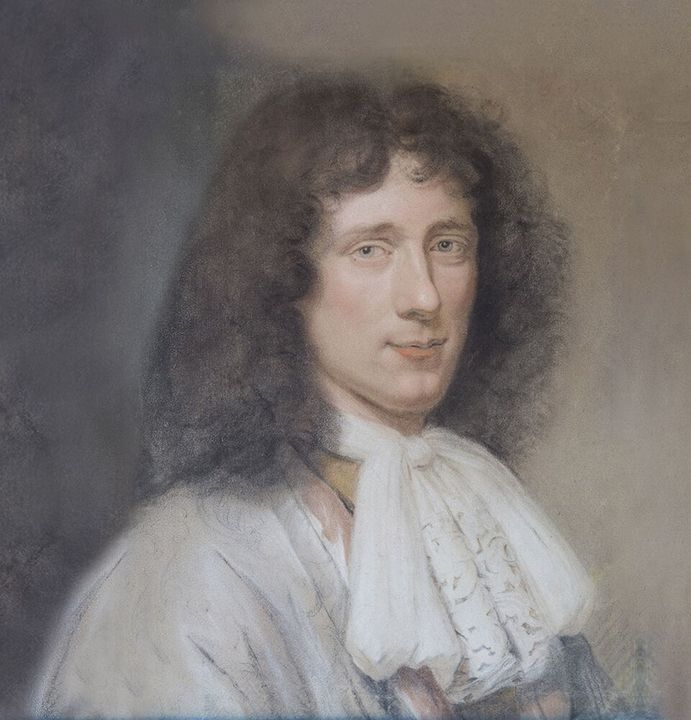
- Christiaan Huygens: Dutch geometer, astronomer and clockmaker
- Ole Römer: Danish astronomer whose Io timings proved light's finite speed
- René Descartes: Proponent of instantaneous light whose optical curves are rederived
- Erasmus Bartholinus: Copenhagen professor who first reported Iceland spar's double image
- Pierre de Fermat: Author of the least-time principle demonstrated in Chapter III

Summary
Christiaan Huygens read the substance of this treatise to the Royal Academy of Sciences in Paris in 1678 and published it in French at Leiden in 1690 as Traité de la lumière, with a short discourse on the cause of gravity. The library text is Silvanus P. Thompson's literal English translation of 1912, complete, with the author's preface, Thompson's note and a table of matters; the many geometrical figures are marked but not reproduced. In the preface Huygens explains that his demonstrations cannot have the certainty of geometry, because here principles are confirmed by the conclusions drawn from them, yet agreement with many observations and with newly predicted effects can give a probability scarcely short of proof. Chapter I argues that light is a motion of some matter, since it comes from fire and can burn and since rays cross without hindering one another. Like sound in air, it must spread by spherical waves through a very fine ethereal matter of hard, elastic particles. Huygens relates Ole Römer's observations of the eclipses of Jupiter's moon, which show that light takes some twenty-two minutes to cross the Earth's orbit and so travels more than six hundred thousand times faster than sound. He then states the principle that bears his name: each particle reached by a wave becomes the centre of its own particular wave, and the visible wave is the envelope, the common tangent, of these. Chapter II derives the law of reflection, and Chapter III explains transparency and derives the law of sines for refraction on the assumption that light moves more slowly in glass and water than in air, reaching Fermat's principle of least time. Chapter IV treats the bending of light in the atmosphere, which makes the Sun visible before it rises. Chapter V, the longest, examines the strange double refraction of Iceland crystal, first described by Erasmus Bartholinus: Huygens explains the ordinary ray by spherical waves and the extraordinary ray by spheroidal waves, measures the crystal's refractions, and reports a further puzzle he cannot solve, that light passing through two crystals behaves differently as the second is turned, the effect later called polarization. He closes the chapter with conjectures about the crystal's internal structure from its cleavage. Chapter VI applies the wave construction to the shapes of lenses and mirrors, including Descartes's ovals and caustic curves. The book stands as the first sustained wave theory of light, a counterpart to the particle view later associated with Newton.
Virtues in this work
- Humility: Huygens publishes the behaviour of light through two crystals while admitting he has found no cause for it, so that others may investigate.
- Industry: He measures the refractions of Iceland crystal with great exactness and tests his hypothesis on many differently cut sections before explaining them.
- Prudence: In the preface he claims for his theory only a high probability, not geometrical certainty, and states the conditions under which it deserves belief.
Plot or Argument
- Preface: probable demonstration
Huygens dates the work to his years in Paris and its reading at the Academy in 1678. He explains that in physics principles are verified by their consequences, so that agreement with many phenomena, and especially the successful prediction of new ones, gives a probability close to proof. He invites others to go further, noting that he has left colours untouched.
- Chapter I: on rays propagated in straight lines
Light is the motion of a matter between the luminous body and the eye, not a transport of bodies, since rays cross without hindering one another. Römer's observations of Jupiter's moon show that light takes time. Light therefore spreads by spherical waves in an ether of hard, elastic particles, and every point of a wave produces a particular wave whose envelope forms the next position of the wave, which explains straight-line propagation.
- Chapter II: on reflexion
Using the construction of particular waves, Huygens shows why the angles of incidence and reflection are equal and why the incident and reflected rays lie in one plane, and argues that a surface need not be perfectly smooth to reflect regularly.
- Chapter III: on refraction
Transparent bodies let the ethereal matter pass through them. If light moves more slowly in water and glass than in air, the wave construction yields the law of sines and explains total internal reflection in a prism. Huygens also derives Fermat's theorem that light takes the path of least time.
- Chapter IV: on the refraction of the air
Because the air grows denser toward the Earth, waves of light in the atmosphere are not spherical and rays curve. Objects therefore appear higher than they are, and the Sun can be seen on the horizon before it has risen.
- Chapter V: on the strange refraction of Iceland crystal
Huygens describes the crystal, its cleavage and its double refraction, separating a regular refraction from an irregular one. He explains the irregular ray by spheroidal waves, tests the hypothesis with measurements and with differently cut sections, and reports the unexplained behaviour of light passing through two crystals. He ends with a conjecture that the crystal is built of small spheroidal particles.
- Chapter VI: on the figures of transparent bodies
The wave theory gives a general rule for the shapes of lenses and mirrors that bring rays to a point. Huygens recovers Descartes's ovals, solves for the second surface of a lens when the first is given, and discusses the caustic curves formed by spherical surfaces.
Characters
- Christiaan Huygens, author
Dutch mathematician and astronomer who presents his wave theory as a probable explanation tested against observation.
- Ole Römer, authority cited
Danish astronomer whose timing of the eclipses of Jupiter's moon showed that light takes time to travel.
- René Descartes, authority discussed
Philosopher whose argument that light is instantaneous Huygens answers and whose ovals he rederives.
- Pierre de Fermat, authority cited
Mathematician whose principle that light takes the path of least time Huygens demonstrates from the wave theory.
- Erasmus Bartholinus, authority cited
Danish physician and mathematician who first described the double refraction of Iceland crystal in 1669.
- Silvanus P. Thompson, translator
English physicist whose 1912 note explains Huygens's terms and his care to avoid importing later ideas.
Lessons
Confirmation by consequences
Huygens admits in the preface that his principles cannot be proved as in geometry; they are verified by how well their consequences match the phenomena. His treatment of Iceland crystal shows the method at work: an hypothesis of spheroidal waves is tested against measurements and against new cuts of the crystal.
- Why, according to the preface, are proofs in physics different from proofs in geometry?
- What does Huygens count as the strongest kind of confirmation?
- How do the tests of differently cut sections in Chapter V strengthen his hypothesis?
Reasoning by analogy
Huygens builds his account of light on the spreading of sound in air and the circles formed in water when a stone is thrown in. He also marks where the analogy fails, arguing that light and sound must travel in different media. A good analogy suggests a theory without replacing the evidence for it.
- What features of sound does Huygens borrow to describe light?
- Why does he conclude that the medium of light cannot be the air?
- Where else in science has an analogy led to discovery?
Reporting what one cannot explain
At the end of the Iceland crystal chapter Huygens describes a phenomenon with two crystals that his theory cannot account for and leaves it to others. The puzzle was later understood as polarization. His candour shows that honest science records its anomalies.
- What happens to light passing through two pieces of the crystal when the second is turned?
- Why does Huygens publish an effect he cannot explain?
- What might have been lost if he had left it out?
Context
In the seventeenth century the nature of light was debated within the new mechanical philosophy. Descartes had treated light as an instantaneous pressure in a subtle matter; Robert Hooke and others proposed pulses or vibrations; Newton, in papers from 1672, explained colours by the different refrangibility of rays and leaned toward a corpuscular view. In 1669 Bartholinus described the double refraction of Iceland spar, and in 1676 Römer, working at the Paris Observatory, inferred a finite speed of light from the timing of Io's eclipses.
Composition
Huygens wrote the treatise in Paris and read it to the Royal Academy of Sciences in 1678. He intended to translate it into Latin and publish it with a work on dioptrics, but delayed; it appeared in French at Leiden in 1690, bound with his Discours de la cause de la pesanteur, the preface dated The Hague, 8 January 1690. Silvanus P. Thompson's English translation appeared in 1912.
Reception
Newton's Opticks (1704) and the authority of his followers kept the particle view dominant in Britain through the eighteenth century, though Euler and others favoured waves. Étienne-Louis Malus's discovery of polarization by reflection (1808), Thomas Young's experiments on interference (1801-1803) and Augustin Fresnel's work of the 1810s and 1820s revived the wave theory, and Fresnel combined Huygens's construction with interference in what is now called the Huygens-Fresnel principle. Thompson's note of 1912 regretted that no English edition had appeared in two centuries.
Comparisons
- newton-opticks
Newton treats light as rays of different refrangibility and inclines to particles; Huygens explains reflection, refraction and double refraction by waves but leaves colours aside, the field Newton made his own.
- principia
Huygens admired the Principia but rejected attraction at a distance; the gravity discourse bound with the Treatise offers a mechanical vortex explanation instead.
- galileo-selected-writings
In the First Day of the Two New Sciences Galileo proposed a lantern experiment to test whether light is instantaneous; Huygens reports Römer's astronomical answer.
- discourse-on-method
Descartes published his Dioptrics with the Discourse in 1637; Huygens answers its claim that light is instantaneous and rederives its ovals from the wave theory.
- einstein-relativity
The ether Huygens imagined as the medium of light waves is the concept Einstein's relativity made unnecessary, while the finite speed of light Huygens defended becomes its central constant.
Quotes
“here the Principles are verified by the conclusions to be drawn from them; the nature of these things not allowing of this being done otherwise.”
“I hope also that there will be some who by following these beginnings will penetrate much further into this question than I have been able to do, since the subject must be far from being exhausted.”
“It is inconceivable to doubt that light consists in the motion of some sort of matter.”
“for I call them waves from their resemblance to those which are seen to be formed in water when a stone is thrown into it”
“hence the velocity of Light is more than six hundred thousand times greater than that of Sound. This, however, is quite another thing from being instantaneous, since there is all the difference between a finite thing and an infinite.”
“So it arises that around each particle there is made a wave of which that particle is the centre.”
“For though I have not been able till now to find its cause, I do not for that reason wish to desist from describing it, in order to give opportunity to others to investigate it.”
For Students
A reading companion for classical Christian high school students. See the student guide.
Reading Guide
Watch for
- The preface's account of how physical principles are confirmed, and Huygens's claim that predicting new phenomena gives the strongest support.
- The comparison of light with sound in Chapter I, and the point where Huygens says the two must travel in different media.
- The account of Römer's timing of Jupiter's moon and the calculation of how much faster light is than sound.
- The construction of particular waves and their common tangent, which Huygens reuses in every later chapter.
- The unexplained effect with two Iceland crystals near the end of Chapter V.
Key terms and names
- Particular wave
- Huygens's name for the small wave that spreads from each point a light wave reaches; today called a secondary wavelet.
- Termination of the wave
- The envelope or common tangent of all the particular waves, which forms the next position of the main wave front.
- Ethereal matter
- The very fine, hard and elastic particles that Huygens supposes fill space and transmit light by passing motion from one to the next.
- Iceland crystal
- A clear form of calcite from Iceland that splits a ray of light into two, producing a double image.
- Irregular refraction
- The second, extraordinary ray in Iceland crystal, which does not obey the ordinary law of sines and which Huygens explains by spheroidal waves.
- Law of sines
- The rule that the sines of the angles of incidence and refraction keep a constant ratio, which Huygens derives from a slower speed of light in denser media.
- Spheroidal emanation
- A wave shaped like a flattened or lengthened sphere, which Huygens supposes travels in Iceland crystal alongside the ordinary spherical wave.
Seminar Questions
- Comprehension What two properties of light does Huygens say no one has yet explained probably, at the start of Chapter I?
- Comprehension How did Römer's observations of Jupiter's moon show that light takes time to travel?
- Comprehension How does Huygens explain the two refractions of Iceland crystal in Chapter V?
- Interpretation Huygens's theory requires light to move more slowly in water than in air, while Newton's later view required the opposite. Why does this difference matter for deciding between them?
- Interpretation Why does Huygens think rays crossing without hindrance is strong evidence against light being a stream of bodies?
- Interpretation The preface says physics can reach a probability scarcely less than proof. Is that enough to justify believing a theory?
- Big Question Huygens explains light entirely by the motion of matter, yet light has long been a symbol of God and of truth. Can the same thing be understood both as a mechanism and as a sign?
Faith Connections
- Genesis 1:3-5 (Scripture)
God's first spoken work is light, divided from darkness before the Sun is made on the fourth day. Huygens studies how light travels; the creation account asks students to consider where it comes from.
- Psalm 104:1-2 (Scripture)
The psalmist praises God who covers himself with light as with a garment and stretches out the heavens like a curtain. The image sets the delight Huygens takes in the marvels of light within a song of praise.
- Basil the Great, Hexaemeron, Homily II (Church Fathers)
Basil reflects on the creation of light on the first day, before the luminaries, and on its beauty and swiftness. His meditation on light as a created reality offers a theological counterpart to Huygens's physical inquiry.
- Robert Grosseteste, On Light (De luce) (Great Conversation)
The thirteenth-century bishop of Lincoln treated light as the first bodily form, spreading itself spherically from a point to make the world. Huygens's spherical waves recall, in a mechanical idiom, Grosseteste's picture of light multiplying itself in every direction.
Logic and Rhetoric
Central argument: Light comes from fire and burns when concentrated, so it is a motion of matter. Rays from opposite directions cross without hindering one another, so light is not a transport of bodies but a motion passed through a medium. Römer's observations show this motion takes time, so it must spread successively, like sound, by spherical waves. If each point of a wave sends out its own particular wave and the visible wave is their envelope, then straight-line propagation, reflection, refraction and even the double refraction of Iceland crystal all follow. Since so many phenomena agree with these consequences, the wave hypothesis is highly probable.
Rhetorical device: argument from analogy. In Chapter I Huygens builds his case on the spreading of sound in air and names light's spherical surfaces waves from their resemblance to ripples formed when a stone is thrown into water (quotes[3]), then limits the analogy by showing that light and sound need different media.
Debate: Resolved: That a scientific theory confirmed by many consequences but not by geometrical proof deserves to be believed.
Memory Work
So it arises that around each particle there is made a wave of which that particle is the centre.
For though I have not been able till now to find its cause, I do not for that reason wish to desist from describing it, in order to give opportunity to others to investigate it.
Writing Prompts
Essay: In his preface Huygens claims that a hypothesis can reach a probability scarcely short of proof when it explains many phenomena and predicts new ones. Using his treatment of Iceland crystal in Chapter V, explain how he tests his hypothesis, and evaluate whether the unexplained effect with two crystals weakens or strengthens his case.
Comparison with Opticks: Huygens explains light by waves, Newton by rays that he inclined to treat as particles. Compare what each theory explains well (reflection, refraction, double refraction, colours) and what it leaves unexplained, and argue which account a careful reader in 1704 had better reason to accept.
Medical Lens
The treatise is optical physics, not medicine, but it touches the physiology of vision at its starting point: Chapter I assumes, with the mechanical philosophy of the day, that sight is excited by a motion of matter acting on the nerves at the back of the eye, and the preface calls the refraction of light the foundation of the construction of our eyes. Like Galileo, Huygens uses one beat of the pulse as a rough unit of a second when computing the speed of light, a reminder that the pulse served as a common measure of time. Bartholinus, whose description of Iceland spar Huygens builds on, was a physician and professor of medicine at Copenhagen.
- Chapter I
Sight is described as excited by the impression of a movement of matter on the nerves at the back of the eye, supporting the claim that light is a motion.
- Chapter I, on Römer's observations
Huygens converts the speed of light into Earth diameters per second, equated with one beat of the pulse.
Creative Prompts
- Classroom
Drop pebbles into a shallow tray of water and trace the circles; then place a barrier with a gap and sketch how Huygens's particular waves would form the wave beyond it.
- Classroom
Lay a piece of calcite (Iceland spar) over a printed word and rotate it, recording what the two images do, then compare the observations with Chapter V.
- Dialogue
Write an exchange of letters in 1690 between Huygens and Newton on whether light is a wave or a stream of particles, each citing the phenomena his view explains best.
- Essay
Huygens says principles in physics are verified by their conclusions. Explain how this differs from Euclid's method and whether it can ever reach certainty.
Further Reading
- Opticks, Isaac Newton
- Huygens: The Man Behind the Principle, C. D. Andriesse
- QED: The Strange Theory of Light and Matter, Richard P. Feynman
A later physicist's account of light, useful for seeing what became of the wave and particle debate.
Verification notes
All seven quotations were found by search in the stored Project Gutenberg text (content/texts/huygens-treatise-on-light.txt) and copied exactly. Chapter locations follow the chapter headings in the file. The dates of the Academy reading (1678), the Leiden publication (1690) and the preface (8 January 1690) come from the text itself. Biographical facts (Titan 1655, Horologium Oscillatorium 1673, Paris 1666-1681) and the reception history (Young, Malus, Fresnel) are standard.
- The publisher of the 1690 Leiden edition (usually given as Pieter van der Aa).
- The publisher of Thompson's 1912 translation (London, Macmillan; the Gutenberg title page names the University of Chicago Press, which reissued it).