Work record
The Abolition of Man
1943 · Early 20th Century · Essays · English
Abstract
Background. Invited to give Durham's Riddell lectures in wartime, Lewis chose an unlikely starting point: an English primer for older schoolchildren whose authors he disguised under Latin names. The library offers the work in summary only, since the text remains under copyright.
Thesis. Calling a waterfall sublime claims something about the falls, not merely about the speaker. Teaching otherwise leaves pupils with intellect and appetite but no disciplined emotion to link them, and any morality cut loose from the old objective standard collapses or quietly borrows from it.
Structure. The first lecture criticizes the textbook and recovers the classical aim of educating the affections; the second refutes the reformer who would rebuild ethics on utility or instinct; the third follows humanity's mastery over nature to the point where a ruling generation reshapes human nature itself.
Key Concepts. Ordinate love; the chest as magnanimity; the Tao as a shared moral law; debunking versus seeing; the Conditioners; the magician's bargain by which power over nature becomes subjection to it.
Significance. Short and dense, the book underlies Lewis's novel That Hideous Strength and is widely read in classical schools, philosophy courses and bioethics. Its appendix, gathering parallel precepts from Egypt to China, remains one of the most cited features of the book.
Key figures
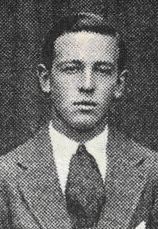
- C. S. Lewis: Oxford literary scholar and Christian apologist, giving the Riddell lectures
- Gaius and Titius: Pseudonymous authors of the schoolbook Lewis calls The Green Book
- Coleridge: Source of the anecdote of two tourists at a waterfall
- The Conditioners: Hypothetical planners who would manufacture the values of later generations

Summary
The Abolition of Man is the text of three lectures C. S. Lewis gave as the Riddell Memorial Lectures at King's College, Newcastle upon Tyne, then part of the University of Durham, in February 1943, and published that year by Oxford University Press with the subtitle Reflections on Education with Special Reference to the Teaching of English in the Upper Forms of Schools. The first lecture, Men without Chests, begins with a small English textbook for schoolchildren, which Lewis calls The Green Book and whose authors he names Gaius and Titius out of courtesy. They comment on the story of Coleridge at a waterfall, where one tourist called it sublime and another pretty, and they conclude that such a statement is only about the speaker's feelings. Lewis argues that this lesson, slipped into a grammar exercise, teaches pupils that all judgments of value are subjective and trivial. Against it he sets the shared doctrine of Plato, Aristotle, Augustine, the Hindu and Chinese sages and the Hebrew Scriptures that some responses are fitting to their objects and others are not, and that education consists in training the affections to love what is lovable. Reason governs appetite only through trained sentiment, the chest, the seat of magnanimity, and modern education that debunks sentiment produces men without chests. The second lecture, The Way, examines the educator or Innovator who rejects traditional values and tries to found morals on something else: on reason stripped of sentiment, on instinct, or on the preservation of the species. Lewis argues that each attempt either fails to yield any duty at all or secretly borrows a fragment of the traditional morality it claims to discard. He calls that traditional morality the Tao, the doctrine of objective value, and insists that no new system of values can be made from outside it; what is offered as a new ethic is always a part of the old one swollen into madness. The third lecture, The Abolition of Man, asks what man's power over nature really means. Lewis answers that it is the power of some men over other men, with nature as the instrument, and that the final stage would be the power of a generation of Conditioners, armed with eugenics, prenatal conditioning and applied psychology, to shape all their successors. Having stepped outside the Tao, the Conditioners would have no ground for choosing except their own impulses, so man's conquest of nature would turn out to be nature's conquest of man. An appendix, Illustrations of the Tao, gathers parallel moral teachings from Egyptian, Babylonian, Hebrew, Greek, Roman, Norse, Indian, Chinese and Christian sources under eight laws, among them general and special beneficence, duties to parents and to children, justice, good faith, mercy and magnanimity.
Virtues in this work
- Magnanimity: Lewis makes the chest, the seat of magnanimity and trained sentiment, the necessary link between reason and appetite in Lecture I.
- Prudence: Lecture III asks what wisdom must govern humanity's growing power over nature and over future generations.
- Justice: The appendix gathers laws of justice, good faith and duty to parents and children as part of the Tao shared by many civilizations.
Plot or Argument
- Lecture I: Men without Chests
Lewis examines a school textbook on English (The Green Book, by 'Gaius and Titius') whose commentary on Coleridge's waterfall teaches that value statements only describe the speaker's feelings. He argues that this undermines the traditional aim of education, which was to train pupils to feel rightly about what is truly admirable, and that without trained sentiment, the chest, reason cannot rule appetite.
- Lecture II: The Way
The Innovator who debunks traditional values still wants pupils to serve the community or the species. Lewis shows that neither bare reason nor instinct can supply such a duty, and that every rival ethic is a fragment of the traditional doctrine of objective value, which he names the Tao.
- Lecture III: The Abolition of Man
Power over nature is power exercised by some men over others. If a final generation of Conditioners gains power to shape the values of all later people, standing outside the Tao, they will act only from impulse, and humanity as a moral being will have been abolished.
- Appendix: Illustrations of the Tao
Short passages from many ancient and Christian sources, grouped under eight laws (general beneficence, special beneficence, duties to parents and elders, duties to children and posterity, justice, good faith and veracity, mercy, magnanimity), to show the broad agreement of moral traditions.
Characters
- C. S. Lewis, author and lecturer
Oxford don giving the Riddell lectures on education and objective value.
- Gaius and Titius, authors criticized
Lewis's courtesy names for the authors of The Green Book, a school English textbook.
- Samuel Taylor Coleridge, anecdote
Poet whose story of two tourists at a waterfall begins the argument.
- Orbilius, author criticized
Lewis's name for the author of a second textbook he examines in Lecture I.
- The Innovator, type
Lecture II's figure of the reformer who discards traditional values and tries to found new ones.
- The Conditioners, type
Lecture III's imagined final generation with power to fix the values of all who come after.
Lessons
Education trains the affections
Lewis recovers the classical and Christian view that the aim of education is not only to inform but to teach the young to like and dislike what they ought. A pupil taught that every value judgment is merely a feeling has been given a philosophy without knowing it.
- What does Lewis think The Green Book actually teaches about the waterfall, and why does it matter that the lesson is hidden in an English exercise?
- What does Lewis mean by the chest, and why does reason need it?
- How does he say the right defence against false sentiment differs from simply debunking all sentiment?
No values from outside the Tao
Lecture II argues that every attempt to build an ethic from instinct or from bare utility smuggles in some part of traditional morality. Lewis's point is that moral first principles are not invented but recognized.
- Why can the Innovator not get a duty to posterity from instinct alone?
- What does Lewis mean by calling a new ideology a fragment of the Tao swollen to madness?
Power over nature as power over men
Lewis argues that every technical advance gives some people power over others, including power of the present over the future. When that power reaches human nature itself, the question of which values guide it becomes decisive.
- Why does Lewis say that man's conquest of nature may turn out to be nature's conquest of man?
- What inventions does Lewis use as examples of power exercised by one generation over the next?
The common moral inheritance
The appendix gathers parallel teachings from many civilizations to show that the Tao is not one culture's private code. Lewis presents the parallels as evidence, not as a claim that all religions are the same.
- Which of the eight laws in the appendix seem most widely shared, and which most surprising?
- Does agreement among traditions prove that values are objective, or only support the claim?
Context
Lewis gave the lectures in the middle of the Second World War, when propaganda, total war and programmes of eugenics and social planning in several nations had made questions of value urgent. His immediate target was not a political regime but a common educational assumption, absorbed from logical positivism and popular psychology, that statements of value carry no truth.
Composition
The Riddell Memorial Lectures, Fifteenth Series, were delivered at King's College, Newcastle, on 24-26 February 1943 and published by Oxford University Press in 1943; an American edition followed from Macmillan in 1947. The Green Book was The Control of Language (1939) by Alec King and Martin Ketley, whom Lewis left unnamed. His novel That Hideous Strength (1945) presents the same argument in fiction, as he says in its preface.
Reception
The book sold modestly at first but has become one of Lewis's most discussed works, cited in debates on education, natural law and biotechnology. Philosophers have defended and extended its argument for natural law, while some readers have questioned whether it treats the authors of The Green Book fairly. National Review placed it on a list of the best nonfiction books of the twentieth century.
Comparisons
- that-hideous-strength
Lewis says in its preface that the novel is a tall story with the same serious point as The Abolition of Man; the N.I.C.E. and its plans for remaking man dramatize the Conditioners of Lecture III.
- the-screwtape-letters
Screwtape's advice to keep the patient from thinking about truth and to treat ideas as merely old-fashioned or modern is a satirical version of the debunking Lewis criticizes in The Green Book.
- the-republic
Lewis draws his picture of the soul, with spirit as the ally of reason against appetite, and his view of education as training the young to love the beautiful, from Plato's Republic.
- the-nicomachean-ethics
Aristotle's teaching that the aim of education is to make the pupil like and dislike what he ought is cited in Lecture I as part of the Tao.
- orwell-politics-and-the-english-language
Orwell, writing three years later, also treats the teaching of English as a moral and political matter, arguing that corrupt language corrupts thought.
- we
Zamyatin's One State, which plans to remove the imagination by surgery, is an earlier fictional picture of the conditioned humanity Lewis describes in Lecture III.
Quotes
Frequently cited
“The task of the modern educator is not to cut down jungles but to irrigate deserts.”
Frequently cited
“We make men without chests and expect of them virtue and enterprise.”
For Students
A reading companion for classical Christian high school students. See the student guide.
Reading Guide
Watch for
- The opening pages on The Green Book, where a short note about Coleridge's waterfall becomes the evidence for the whole first lecture.
- Lewis's picture of the soul in Lecture I, with the head, the belly and the chest between them, and where he says the picture comes from.
- The Innovator's attempts in Lecture II to ground duty in reason alone and then in instinct, and the step at which each attempt breaks down.
- Lecture III's turn from airplanes, wireless and contraception to the power of the last generation, the Conditioners, over all who follow.
- The appendix, where Lewis lets texts from many civilizations speak side by side under eight headings.
Key terms and names
- The Green Book
- Lewis's name for an English textbook for upper forms, by authors he calls Gaius and Titius, whose commentary on a waterfall anecdote he examines in Lecture I.
- The chest
- Lewis's image for trained emotion or magnanimity, standing between intellect and appetite and enabling reason to rule; modern education, he says, produces people without it.
- The Tao
- Lewis's name, borrowed from Chinese thought, for the doctrine of objective value shared by Platonic, Aristotelian, Stoic, Christian and Eastern traditions.
- Ordinate affection
- Augustine's idea, cited by Lewis, that virtue is a rightly ordered love in which each object receives the kind and degree of love it deserves.
- The Innovator
- The reformer of Lecture II who debunks traditional morality while hoping to keep some of its results by founding them on reason or instinct.
- The Conditioners
- The imagined final generation of Lecture III who, having stepped outside the Tao, produce the values of their successors by applied psychology and conditioning.
Seminar Questions
- Comprehension What did the two tourists in Coleridge's story say about the waterfall, and what did Gaius and Titius conclude from it?
- Comprehension What are the three parts of the person in Lewis's image in Lecture I, and what does each do?
- Comprehension Why does Lewis say the Innovator cannot get a duty to future generations from instinct?
- Interpretation Lewis says the authors of The Green Book did not intend to teach a philosophy. Why does he think their exercise is more dangerous because it is unintended?
- Interpretation Why does Lewis use a Chinese word, the Tao, for a moral law he finds also in Plato, the Psalms and Christian teaching?
- Interpretation In Lecture III, why does Lewis think the Conditioners would end by obeying only their own impulses?
- Interpretation What is the difference, for Lewis, between seeing through something and seeing something through it?
- Big Question If values were only feelings, could education still ask students to be brave, honest or just?
Faith Connections
- Romans 2:14-15 (Scripture)
Paul says the Gentiles who do not have the law show the work of the law written in their hearts. Lewis's appendix of parallel moral teachings from many peoples is a modern illustration of the same claim.
- Philippians 4:8 (Scripture)
Paul tells believers to think on whatever is true, honest, just, pure, lovely and of good report. Lewis's argument that some things deserve our love and admiration matches this call to fix the affections on what is worthy.
- Augustine, City of God XV.22 (Church Fathers)
Augustine defines virtue as the order of love. Lewis cites this ordo amoris in Lecture I as the classical Christian statement that education should teach the young to love things in their right degree.
- Plato, Republic III (Great Conversation)
Plato says that rightly educated youth will love the beautiful before they can give reasons, and welcome reason when it comes as a friend. Lewis builds his case for trained sentiment directly on this passage.
Logic and Rhetoric
Central argument: If statements of value only report feelings, education cannot train the young to love what deserves love, and reason is left without the trained sentiment it needs to rule appetite. Any attempt to replace traditional value with reason or instinct either yields no duty or borrows from traditional value. So all real ethics depends on objective value, the Tao. If a generation steps outside the Tao and gains power to condition all its successors, it will have nothing to guide it but impulse; therefore the conquest of nature without the Tao ends in the abolition of man.
Rhetorical device: synecdoche (the part for the whole). Lecture I takes one sentence from a schoolbook note about Coleridge's waterfall and treats it as standing for a whole philosophy of education, so that the small example carries the weight of the larger argument.
Debate: Resolved: that a school cannot teach character without teaching that some values are objectively true.
Writing Prompts
Essay: Lewis argues in Lecture I that an English exercise about a waterfall teaches pupils a philosophy of value. Explain his argument, including his image of the chest, and evaluate whether his reading of The Green Book is convincing.
Comparison with That Hideous Strength: Lewis said That Hideous Strength makes the same point as The Abolition of Man. Compare the N.I.C.E. and its plans for Mark Studdock with the Conditioners of Lecture III, and argue whether the novel or the lectures make the case more persuasively.
Medical Lens
Lecture III bears on the history of medical ethics. Writing in 1943, Lewis names eugenics, prenatal conditioning and an education and propaganda based on applied psychology as the means by which one generation might fix the character of all later ones, and he treats contraception as an example of power exercised by the living over those who might have been born. His argument is philosophical rather than clinical: the danger he identifies is not a particular technique but the loss of any standard outside the planners' own impulses by which to judge it. The lecture is often cited in later bioethics debates on genetic enhancement; readers should keep in view that Lewis was answering the eugenic and behaviourist programmes of his own day.
- Lecture III
Power over nature analysed as power of some men over others, with contraception, eugenics and prenatal conditioning as examples of control by one generation over its successors.
- Lecture III
The Conditioners, who use applied psychology to produce whatever consciences they choose in their pupils.
Creative Prompts
- Classroom
Read the Coleridge waterfall anecdote aloud and have students write down what they think a person means by calling something sublime. Compare their answers with Gaius and Titius's interpretation and with Lewis's reply.
- Essay
Choose any textbook or study guide you have used and examine one exercise the way Lewis examines The Green Book: what does it teach, without saying so, about value?
- Fiction
Write a scene in which a pupil who has learned The Green Book's lesson is asked to show courage, and discovers what Lewis meant by the chest.
Further Reading
- That Hideous Strength, C. S. Lewis
The novel Lewis described as making the same point in story form.
- The Control of Language, Alec King and Martin Ketley
The textbook Lewis called The Green Book.
- C. S. Lewis as Philosopher: Truth, Goodness and Beauty, David Baggett, Gary R. Habermas and Jerry L. Walls (eds.)
- C. S. Lewis: A Life, Alister McGrath
- Mere Christianity, C. S. Lewis
Book I, Right and Wrong as a Clue to the Meaning of the Universe, gives the popular version of the argument for objective moral law.
Verification notes
Lecture titles, the Riddell series, the identification of The Green Book and the appendix's eight laws are standard. The two quotations were checked against the C. S. Lewis Institute page https://www.cslewisinstitute.org/resources/chapter-one-men-without-chests/ (both), and the second also against the C. S. Lewis Institute article https://www.cslewisinstitute.org/Men_without_Chests (citing the Touchstone 1996 edition, pp. 35-37) and Wikiquote https://en.wikiquote.org/wiki/C._S._Lewis (Ch. I). The Orbilius textbook is recalled as E. G. Biaggini's The Reading and Writing of English; it is not named in the record.
- Text is under copyright; check quotations against an authorized edition before publication.
- Exact lecture dates (recalled as 24-26 February 1943) and the 1947 Macmillan American edition.
- The National Review list placement (recalled as its 1999 list of the 100 best nonfiction books of the century).
- Whether Lewis names contraception explicitly among his examples in Lecture III (recalled).