Work record
Mapp v. Ohio
1961 · Postwar Contemporary · Court Decision · English
Abstract
Question Presented. Must state judges refuse to admit material that officers obtained through a search violating the Fourth Amendment, or may each state decide for itself, as Wolf v. Colorado had allowed in 1949?
Arguments. For Mapp: police broke into her home with no genuine warrant, and a protection against unlawful searches means little if its fruits can convict. For Ohio: Wolf left remedies to the states, the items were not taken from her body by violence, and juries ought to hear relevant proof of guilt; Mapp's own brief concentrated on the obscenity statute.
Holding. Six Justices reversed the conviction, with three dissenting. Clark declared that federal and state courts alike must reject evidence seized unconstitutionally, because the right and its remedy cannot be separated, other deterrents had failed, and courts may not lend themselves to lawless methods.
Dissent. Harlan, with Frankfurter and Whittaker, objected that Wolf had barely been argued and that due process guards a general principle of privacy rather than importing every federal rule. He would let the states experiment with different remedies.
Significance. Mapp opened the decade in which the Warren Court applied most criminal-procedure guarantees of the Bill of Rights to the states. Later Justices limited its retroactive effect in 1965 and created a good-faith exception in 1984, and debate over the rule's costs and benefits continues among judges and scholars.
Key figures
- Dollree Mapp: Cleveland resident convicted on evidence taken from her house
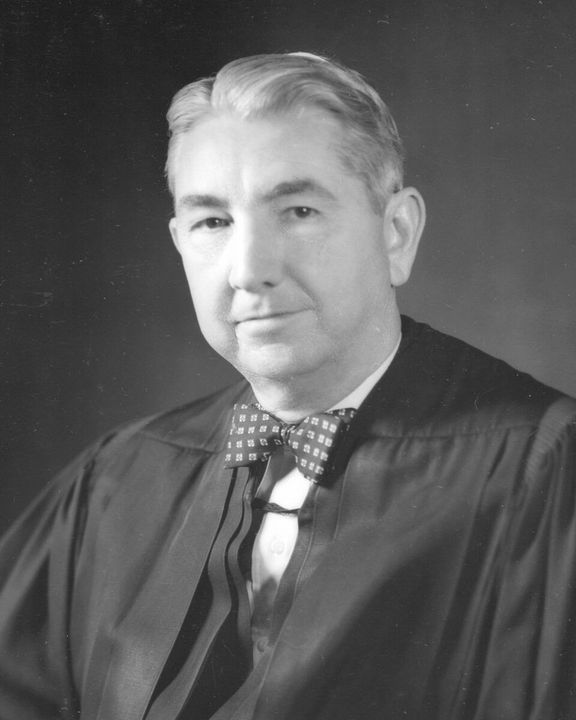
- Tom C. Clark: Justice who wrote for the six-member majority
- John Marshall Harlan II: Justice who wrote the principal dissent defending state choice
- Felix Frankfurter: Wolf's author, who joined the dissent

Summary
On 23 May 1957 three Cleveland police officers came to the home of Dollree Mapp looking for a man wanted for questioning about a bombing and for gambling slips. On her lawyer's advice she refused to let them in without a search warrant. About three hours later more officers forced a door, waved a paper they called a warrant, handcuffed Mapp after she seized it, and searched the whole house. They found no fugitive, but in a trunk in the basement they found books and pictures that Ohio law treated as obscene, and Mapp was convicted of possessing them. No warrant was ever produced at trial. The Ohio Supreme Court upheld the conviction, reasoning that the evidence had not been taken from her person by brutal force. The question was whether a state court may convict a defendant with evidence gathered in an unreasonable search. In Wolf v. Colorado (1949) the Court had held that the Fourth Amendment's core protection of privacy binds the states through the Fourteenth Amendment, but that states need not adopt the federal rule of Weeks v. United States (1914) excluding illegally seized evidence. Ohio stood on Wolf: each state could choose its own remedies, and relevant evidence of a crime should reach the jury. Mapp's lawyers argued chiefly that the obscenity statute violated the First Amendment, while an amicus brief from the American Civil Liberties Union asked the Court to reconsider Wolf. By a vote of 6 to 3 the Court reversed, and Justice Tom C. Clark's opinion overruled Wolf on the remedy. Clark traced the exclusionary principle from Boyd v. United States (1886) through Weeks and argued that, without it, the right against unreasonable searches would be only a form of words. He noted that more than half the states had by then adopted some form of exclusion, that other remedies had proved worthless, and that it made no sense for a federal prosecutor to be barred from using evidence that a state attorney across the street could use. The deciding consideration, he wrote, was the imperative of judicial integrity. Justice John Marshall Harlan II, joined by Justices Frankfurter and Whittaker, dissented. He argued that the case had been briefed and argued as a First Amendment case, so that the majority had reached out to overrule Wolf without full argument; that the Fourteenth Amendment protects the principle of privacy rather than every federal rule built around the Fourth; and that states should remain free to try different remedies. The library text gives Clark's opinion in full and the first two parts of Harlan's dissent; the concurrences of Black and Douglas and Stewart's memorandum are not included, and footnotes have been left out. In Linkletter v. Walker (1965) the Court declined to apply Mapp to convictions already final, and United States v. Leon (1984) recognised a good-faith exception for officers relying on a warrant later found invalid.
Virtues in this work
- Justice: Clark insists that the citizen receive no more than the Constitution guarantees and the officer no less than honest law enforcement deserves.
- Prudence: Harlan counsels patience and restraint before overruling a recent precedent on a question the parties had hardly argued.
- Fortitude: Dollree Mapp, after calling her lawyer, held to her demand for a search warrant while officers waited outside her door for hours.
Plot or Argument
- The forced entry at the Mapp house
Clark recounts the events of May 1957: the refused entry, the three-hour wait, the broken door, the paper waved as a warrant, the handcuffs, the search of every room and the trunk in the basement. He notes that no warrant was produced at trial and that Ohio relied on Wolf v. Colorado.
- Part I: from Boyd to Weeks
The opinion traces the federal exclusionary principle from Boyd v. United States (1886), which read the Fourth and Fifth Amendments together, to Weeks v. United States (1914), which barred federal courts from admitting evidence seized in violation of the Fourth Amendment.
- Parts II and III: Wolf and its weakening
Clark sets out Wolf's holding of 1949, then shows that the factual grounds Wolf relied on have changed: more states now exclude such evidence, California explains that other remedies failed, and later cases such as Elkins v. United States (1960) abandoned the silver platter doctrine that let federal prosecutors use evidence seized by state officers.
- Part IV: the right and its remedy belong together
Because the right of privacy has been declared enforceable against the states, Clark holds that it must be enforced by the same sanction of exclusion used against the federal government; otherwise the right would be an empty promise. The Court says it closes the only courtroom door still open to evidence secured by official lawlessness.
- Part V: common sense and judicial integrity
Clark answers the objection that the criminal will go free because the constable blundered, citing federal experience as proof that the rule has not crippled law enforcement and resting the decision finally on the courts' duty not to participate in lawless conduct.
- Harlan's dissent, Part I: the question not argued
Harlan argues that the case came to the Court on the validity of Ohio's obscenity statute, that Wolf was raised only in passing, and that five members of the Court reached out to overrule it without the briefing and argument such a step deserved.
- Harlan's dissent, Part II: privacy is not a federal code
Harlan grants for argument that Weeks is of constitutional origin but denies that the Fourteenth Amendment carries every federal rule of search and seizure into the states. He describes states choosing different remedies, some adopting exclusion and some relying on other sanctions, and asks for patience with that variety. The library excerpt stops here.
Characters
- Dollree Mapp, appellant
Cleveland woman whose home was searched in 1957 and who was convicted on the evidence found there.
- Justice Tom C. Clark, author of the opinion of the Court
Texan and former Attorney General who wrote the majority opinion overruling Wolf on the question of remedy.
- Justice John Marshall Harlan II, principal dissenter
Argued that the Court should not have reached Wolf and that states should be free to choose remedies.
- Justice Felix Frankfurter, dissenter
Author of the Wolf opinion of 1949; joined Harlan's dissent.
- A. L. Kearns, counsel for the appellant
Cleveland lawyer who argued for Mapp before the Supreme Court.
- Gertrude Bauer Mahon, counsel for the State of Ohio
Assistant prosecutor for Cuyahoga County who argued for Ohio.
Lessons
A right needs a remedy
Clark's central argument is that the Fourth Amendment would be a mere form of words if courts could still use what officers seized in violation of it. The old legal maxim that every right has a remedy stands behind his reasoning, though Harlan answered that remedies can take more than one shape.
- What remedies besides excluding evidence might a state use to deter illegal searches?
- Why did Clark think those other remedies had proved worthless?
- Can a right be real if there is no practical way to enforce it?
When should a precedent be overruled?
Only twelve years separated Wolf from Mapp. The majority pointed to changes among the states and to the confusion Wolf produced; Harlan answered that the respect owed to precedent, stare decisis, required more caution, especially when the parties had not fully argued the point.
- What reasons does Clark give for thinking Wolf's factual foundations had changed?
- Why does Harlan think it matters what the parties briefed and argued?
- Is it better for a court to correct a mistake quickly or to wait for the right case?
One standard or many?
Clark found it senseless that a federal prosecutor could not use illegally seized evidence while a state attorney across the street could. Harlan valued the freedom of states to experiment with their own rules, and the case shows two serious views of American federalism side by side.
- What is the double standard Clark describes?
- How does Harlan defend letting each state decide?
- Which matters more in criminal justice, uniform rules or local choice?
The integrity of the courts
Clark admits that sometimes the criminal goes free, but insists it is the law that sets him free, and that a government which disregards its own charter invites contempt for law. The argument rests on the idea that courts must keep their own hands clean.
- What does Clark mean by the imperative of judicial integrity?
- Is it fair to the public when relevant evidence is kept from a jury?
- How should a judge weigh the conviction of one guilty person against the lawfulness of the process?
Context
The Fourth Amendment of 1791 forbids unreasonable searches and seizures but says nothing about what happens to evidence taken in violation of it. Federal courts began excluding such evidence with Weeks v. United States in 1914, while most state courts followed the older common-law rule that evidence is admissible however it was obtained. During the 1950s the Warren Court began reconsidering how far the Bill of Rights restrains the states through the Fourteenth Amendment.
Composition
Mapp's appeal was argued on 29 March 1961, with A. L. Kearns for the appellant, Bernard A. Berkman for the American Civil Liberties Union as amicus, and Gertrude Bauer Mahon for Ohio. The Court decided the case on 19 June 1961. The library text, from Wikisource, gives Clark's opinion of the Court and an excerpt of Harlan's dissent covering his first two parts.
Reception
Mapp became one of the first and best known decisions in what came to be called the incorporation of criminal-procedure rights against the states, followed by Gideon v. Wainwright (1963) and Miranda v. Arizona (1966). Supporters valued the uniform rule and its deterrent effect on police; critics, including some judges and later Justices, argued that the cost of letting guilty defendants go free was too high. The Court later narrowed the rule's reach in cases such as United States v. Leon (1984) and Herring v. United States (2009). Scholars continue to debate whether exclusion is required by the Constitution itself or is a judge-made deterrent.
Comparisons
- the-founding-documents
The Fourth Amendment in the Bill of Rights is the text Clark and Harlan interpret: its ban on unreasonable searches and its requirement of particular warrants are the starting point for both opinions.
- commentaries-on-the-laws-of-england
Blackstone describes the common-law rule that every right has a remedy and the old protections of a man's house, the background Clark draws on when he argues that a right without exclusion would be empty.
- the-anti-federalist-papers
Anti-Federalist writers protested general warrants and pressed for a bill of rights; Mapp asks how those protections bind the states, a question the 1791 amendments left open.
- gideon-v-wainwright
Two years after Mapp the Court again carried a federal criminal-procedure guarantee to the states, this time the right to counsel, and again overruled a recent precedent.
- miranda-v-arizona
Harlan dissented in both cases; in Miranda he contrasted the warnings rule with Mapp, saying Mapp at least reflected a changing consensus among state courts.
- barron-v-baltimore
Marshall's 1833 holding that the Bill of Rights restrained only the federal government is the older rule that cases like Mapp, working through the Fourteenth Amendment, steadily revised.
Quotes
Frequently cited
“The criminal goes free, if he must, but it is the law that sets him free.”
Frequently cited
“Nothing can destroy a government more quickly than its failure to observe its own laws, or worse, its disregard of the charter of its own existence.”
“There is no war between the Constitution and common sense.”
“Our decision, founded on reason and truth, gives to the individual no more than that which the Constitution guarantees him, to the police officer no less than that to which honest law enforcement is entitled, and, to the courts, that judicial integrity so necessary in the true administration of justice.”
“In overruling the Wolf case, the Court, in my opinion, has forgotten the sense of judicial restraint which, with due regard for stare decisis, is one element that should enter into deciding whether a past decision of this Court should be overruled.”
“The preservation of a proper balance between state and federal responsibility in the administration of criminal justice demands patience on the part of those who might like to see things move faster among the States in this respect.”
For Students
A reading companion for classical Christian high school students. See the student guide.
Reading Guide
Watch for
- The details of the 1957 search that Clark recounts, including the paper said to be a warrant.
- How Clark uses Boyd and Weeks to argue that exclusion is part of the Fourth Amendment itself.
- The phrase a form of words, and why Clark thinks the right would be empty without the rule.
- Clark's picture of the federal prosecutor and the state attorney across the street.
- Harlan's objection that the parties argued about obscenity, not about Wolf.
Key terms and names
- Exclusionary rule
- The rule that evidence gathered in violation of the Constitution may not be used to prove guilt at trial.
- Search warrant
- A written order from a judge authorizing officers to search a particular place for particular things.
- Incorporation
- The process by which the Court held that rights in the Bill of Rights also restrain the states through the Fourteenth Amendment's Due Process Clause.
- Stare decisis
- Latin for to stand by things decided; the practice of following earlier decisions, which Harlan says the majority neglected.
- Silver platter doctrine
- The former practice, ended in Elkins v. United States (1960), of letting federal prosecutors use evidence that state officers seized illegally.
- Judicial integrity
- The idea that courts must not become partners in lawbreaking by using its fruits.
Seminar Questions
- Comprehension What happened at Dollree Mapp's house on 23 May 1957, and what did the officers find?
- Comprehension What had Wolf v. Colorado decided, and which part of it did Mapp overrule?
- Comprehension According to Harlan, what question had the parties actually argued to the Court?
- Interpretation Why does Clark think a right against unreasonable searches would be only a form of words without the exclusionary rule?
- Interpretation How does Harlan distinguish the principle of privacy from the particular federal rules built around the Fourth Amendment?
- Interpretation What does Clark mean when he says the law, not the court, sets the criminal free?
- Big Question Should a court ever refuse to consider true evidence of a crime because of the way it was gathered?
Faith Connections
- Deuteronomy 24:10-11 (Scripture)
The Mosaic law forbids a creditor to enter a debtor's house to seize a pledge, requiring him to wait outside; Scripture already honours the threshold of the home.
- Romans 3:8 (Scripture)
Paul rejects the slander that Christians say let us do evil that good may come; Clark's judicial-integrity argument raises a similar question about ends and means.
- William Pitt the Elder, speech on the excise (1763) (Great Conversation)
Pitt's famous words that the poorest man in his cottage may bid defiance to the Crown, that the King of England cannot enter his ruined tenement, are often cited in the history of the right against unreasonable searches.
Logic and Rhetoric
Central argument: Since the right of privacy against unreasonable searches now binds the states, and since experience shows that only exclusion actually deters violations, the same remedy that applies in federal courts must apply in state courts; to allow otherwise would make the right empty, create a senseless double standard, and make courts partners in lawbreaking.
Rhetorical device: antithesis. Clark sets the guilty man's release against its true cause, the criminal goes free, if he must, but it is the law that sets him free (quote 0), turning an objection into an argument for the rule.
Debate: Resolved: that the exclusion of unlawfully seized evidence is the best remedy for violations of the Fourth Amendment.
Memory Work
The criminal goes free, if he must, but it is the law that sets him free.
Nothing can destroy a government more quickly than its failure to observe its own laws, or worse, its disregard of the charter of its own existence.
Writing Prompts
Essay: Explain the disagreement between Clark and Harlan about whether the exclusionary rule is part of the Fourth Amendment itself or one remedy among several that a state may choose.
Comparison with Barron v. Baltimore: Compare Marshall's view in Barron v. Baltimore that the Bill of Rights limits only the federal government with Clark's reasoning in Mapp that the Fourteenth Amendment carries the exclusionary rule to the states.
Medical Lens
The opinions concern search warrants, the admissibility of evidence and the relation of state to federal courts; nothing in them bears on medicine or the mind.
Creative Prompts
- Classroom
Hold a moot court in which one team argues for Ohio from Wolf v. Colorado and the other argues for Mapp, then compare your arguments with Clark's and Harlan's.
- Essay
Write a short appellate brief for a state that wants to keep the common-law rule, proposing an alternative remedy for illegal searches and answering Clark's claim that such remedies are worthless.
- Dialogue
Write a conversation between a Cleveland police officer and a federal agent in 1962 about how the Mapp decision will change their work.
- Classroom
Draw a timeline from Boyd (1886) through Weeks (1914), Wolf (1949), Elkins (1960), Mapp (1961) and Leon (1984), writing one sentence on what each case added or changed.
Further Reading
- Mapp v. Ohio: Guarding against Unreasonable Searches and Seizures, Carolyn N. Long
Study of the case from the 1957 search to its later history, in the Landmark Law Cases series.
- The Constitution and Criminal Procedure: First Principles, Akhil Reed Amar
A constitutional scholar's argument that the Fourth Amendment's history points toward remedies other than exclusion.
- Super Chief: Earl Warren and His Supreme Court, Bernard Schwartz
History of the Warren Court that includes the deliberations behind Mapp.
Verification notes
All six quotations were found by Grep in content/texts/mapp-v-ohio.txt. The vote (6 to 3, with five Justices joining Clark's opinion and Stewart concurring in the judgment on First Amendment grounds), the dates of argument and decision, and the facts of the 1957 search are taken from the opinion and general references on the case. The names of counsel follow standard accounts of the argument and should be checked against the U.S. Reports listing.
- Confirm the names of counsel at argument (A. L. Kearns, Bernard A. Berkman, Gertrude Bauer Mahon) against the U.S. Reports.
- Confirm that the Cleveland officers were also looking for policy (gambling) materials, as the opinion's quoted record suggests.