Work record
Miranda v. Arizona
1966 · Postwar Contemporary · Court Decision · English
Abstract
Question Presented. May prosecutors introduce what a suspect said during police questioning in custody if officers never informed him that he could stay silent and consult a lawyer?
Arguments. Counsel for the four defendants maintained that the guarantee against compelled self-accusation reaches the station house, where isolation and practiced persuasion wear down resistance. Arizona and the other governments replied that due process already barred coerced statements, that questioning is essential to solving crimes, and that legislatures, not judges, should craft any new procedures.
Holding. Five Justices against four reversed. Warren drew on the Star Chamber history and on interrogation manuals, required four warnings and a knowing waiver before questioning, and directed that it end once the suspect asks for counsel or declines to talk, while allowing alternative safeguards of equal effectiveness.
Dissents. Harlan saw a novel code lacking historical support that would discourage all confessions. White argued that answers given after arrest are not thereby compelled and that the majority had studied no actual transcripts of questioning.
Significance. Congress tried in 1968 to restore the older federal test, and later rulings carved out impeachment and public-safety exceptions. In 2000 the Court reaffirmed the decision as constitutional, and the warnings are now part of everyday American life.
Key figures
- Ernesto Miranda: Phoenix defendant convicted on an unwarned confession
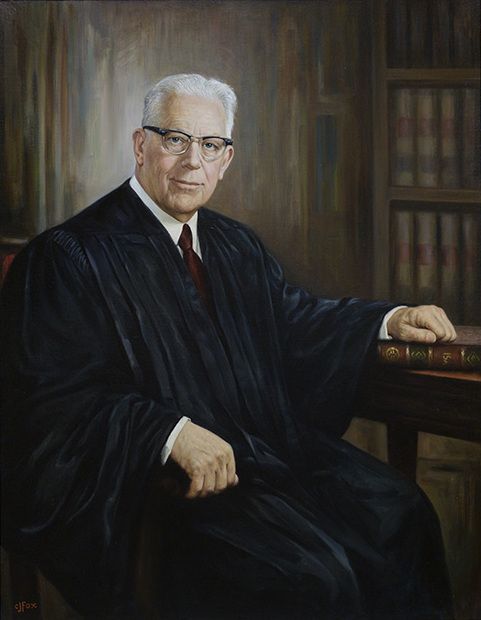
- Earl Warren: Chief Justice who wrote for the five-member majority
- John Marshall Harlan II: Dissenter defending the due process voluntariness test
- Byron R. White: Dissenter reading the Fifth Amendment as barring only compulsion

Summary
On 13 March 1963 Phoenix police arrested Ernesto Miranda at his home in connection with a kidnapping and sexual assault. After the victim identified him, two officers questioned him in Interrogation Room No. 2 for about two hours. They did not tell him that he could remain silent or have a lawyer present. He emerged with a signed written confession, which included a typed statement that it was made voluntarily and with full knowledge of his legal rights. The confession was used at trial, he was convicted, and the Arizona Supreme Court affirmed. The Court heard his case together with three others raising the same issue: Vignera v. New York, Westover v. United States and California v. Stewart. The question was whether statements obtained by police questioning a suspect in custody may be used against him when he has not been informed of his rights. Miranda's lawyers, John J. Flynn and John P. Frank, argued that the privilege against self-incrimination applies in the police station as well as the courtroom, and that the pressures of incommunicado questioning make warnings and access to counsel necessary. Arizona, through Gary K. Nelson, answered that the longstanding test of voluntariness under the Due Process Clause already forbade coerced confessions, that police questioning is indispensable to solving crimes, and that new rules for interrogation should come from legislatures rather than the Court. By a vote of 5 to 4 the Court reversed Miranda's conviction. Chief Justice Earl Warren traced the right against self-incrimination to the trial of John Lilburne before the Star Chamber in 1637, reviewed police manuals describing techniques of isolation and persuasion, and concluded that custodial interrogation contains inherently compelling pressures. Before questioning, he held, a suspect must be warned that he has the right to remain silent, that anything he says can be used against him in court, that he has the right to the presence of an attorney, and that one will be appointed if he cannot afford one. If he asks for a lawyer or wishes to stay silent, questioning must stop. Warren added that Congress and the states remain free to devise other safeguards equally effective. Justice John Marshall Harlan II, joined by Justices Stewart and White, called the decision a new constitutional code of rules for confessions, unsupported by history or precedent and likely to discourage confessions altogether. Justice Byron R. White, joined by Harlan and Stewart, argued that the Fifth Amendment forbids only compelled testimony and that the Court had no factual basis for presuming every answer in custody compelled. Justice Clark also dissented in a separate opinion. The library text gives substantial excerpts of Warren's opinion and both principal dissents, without Clark's dissent or the footnotes. Miranda was retried in 1967 and convicted on other evidence. Congress passed a statute in 1968 meant to restore the voluntariness test in federal courts, but Dickerson v. United States (2000) held that Miranda announced a constitutional rule that Congress could not override.
Virtues in this work
- Justice: Warren insists that the government produce evidence by its own labors rather than by compelling it from the accused.
- Prudence: Harlan and White weigh the practical effects of the new rules on police work and on the public's safety.
- Humility: Warren acknowledges that the Constitution does not require any specific code and invites legislatures to devise their own safeguards.
Plot or Argument
- The question and the holding in brief
Warren describes the four consolidated cases and Escobedo v. Illinois (1964), then states the holding: statements from custodial interrogation may not be used unless the prosecution shows procedural safeguards effective to secure the privilege against self-incrimination, beginning with clear warnings.
- Part I: the interrogation room
The Court recalls the third-degree methods documented by the Wickersham Commission in the 1930s and then quotes police manuals on isolating the suspect, displaying confidence in his guilt, offering excuses, and the friendly-unfriendly routine. Even without brutality, Warren concludes, the setting carries its own badge of intimidation.
- Part II: the history of the right against self-incrimination
Warren traces the right from John Lilburne's refusal to take the Star Chamber oath in 1637 through its adoption in the Bill of Rights, describes it as resting on respect for the dignity and integrity of the citizen, and holds that it applies wherever a person's freedom of action is significantly curtailed.
- Part III: the required warnings
The opinion sets out the warnings: the right to remain silent, that anything said can and will be used in court, the right to consult a lawyer and have one present, and appointment of a lawyer for those who cannot afford one. Waiver must be knowing and intelligent, and questioning must cease when the suspect invokes his rights.
- Part IV: society's need for interrogation
Warren answers the argument that society's need for confessions outweighs the right against self-incrimination, pointing to the FBI's existing practice of warning suspects and to rules in England, Scotland, India and Ceylon. He adds that the Constitution does not require any specific code and invites legislatures to develop equally effective safeguards.
- Harlan's dissent: voluntariness with a vengeance
Harlan describes the new rules, argues that they will not stop officers who already lie about brutality, and contends that due process supplies an adequate test, that Fifth Amendment precedents do not support the rules, and that the Sixth Amendment cases concern trials, not police stations.
- White's dissent: history, text and consequences
White argues that the right against self-incrimination was never applied to questioning outside court in English or American history, that the Court relied on manuals rather than any transcript of real interrogations, and that it is unsound to treat the first answer to the first question in custody as compelled.
Characters
- Ernesto Miranda, petitioner
Phoenix man whose confession, given without warnings, was used to convict him in 1963.
- Chief Justice Earl Warren, author of the opinion of the Court
Former California prosecutor and governor who wrote the majority opinion setting out the required warnings.
- Justice John Marshall Harlan II, dissenter
Argued that the due process voluntariness test was adequate and that the new rules lacked support in precedent.
- Justice Byron R. White, dissenter
Former Deputy Attorney General who argued that the Fifth Amendment forbids only compelled testimony.
- John J. Flynn, counsel for Miranda
Phoenix trial lawyer who argued the case with John P. Frank, both working through the American Civil Liberties Union.
- Gary K. Nelson, counsel for Arizona
Assistant attorney general of Arizona who defended the conviction.
- John Lilburne, historical figure
English Leveller whose 1637 refusal to answer questions under the Star Chamber oath Warren treats as a turning point in the history of the right against self-incrimination.
Lessons
No man bound to accuse himself
Warren roots the right against self-incrimination in the old maxim that no one should be compelled to accuse himself, and in the story of John Lilburne before the Star Chamber. The accusatory system, he wrote, requires the government to find its evidence by its own labors rather than drawing it from the mouth of the accused.
- Who was John Lilburne, and why does Warren tell his story?
- What does Warren mean by an accusatory system as opposed to an inquisitorial one?
- Why might a free society refuse to compel people to testify against themselves?
Pressure without force
The Court found that even without violence, isolation and skilled persuasion in a police station could overbear a suspect's will. White answered that the Fifth Amendment forbids compulsion, not all pressure, and that the Court had not examined any real interrogation.
- What techniques from police manuals does Warren describe?
- How does White distinguish pressure from compulsion?
- Can a confession be voluntary if it is given in an unfamiliar and isolated setting?
A bright line or a case-by-case test?
Before Miranda, judges asked whether each confession was voluntary under all the circumstances. Warren replaced that inquiry with fixed warnings; Harlan defended the older test as flexible and fair, and called the new rules a constitutional code imposed over widespread objection.
- What were the advantages of the totality-of-the-circumstances test?
- Why might clear warnings be easier for police and courts to apply?
- Who should write rules for police questioning, courts or legislatures?
Weighing the cost to law enforcement
Arizona and the dissenters warned that the rules would reduce confessions and make crimes harder to solve. Warren replied that the FBI already warned suspects without crippling its work and that the Constitution itself had struck the balance. Both sides took the public's safety seriously.
- What evidence does Warren offer that warnings will not cripple police work?
- What does Harlan predict the rules will do to confessions?
Context
During the 1960s the Warren Court applied more of the Bill of Rights to state criminal proceedings, including the exclusionary rule in Mapp v. Ohio (1961) and the right to counsel in Gideon v. Wainwright (1963). In Malloy v. Hogan (1964) the Court held that the privilege against self-incrimination binds the states, and in Escobedo v. Illinois (1964) it reversed a conviction resting on a confession taken after police refused a suspect's request for his lawyer. Lower courts disagreed about how far Escobedo reached, and the Court took Miranda and three other cases to settle the matter.
Composition
The four cases were argued from 28 February to 2 March 1966. John J. Flynn argued for Miranda and Gary K. Nelson for Arizona; Solicitor General Thurgood Marshall argued for the United States in Westover. The decision came on 13 June 1966. The library text, from Wikisource, gives excerpts of Warren's opinion, including the statement of Miranda's own case, and of the dissents of Harlan and White.
Reception
The decision was sharply debated in the 1968 presidential campaign, and Congress enacted 18 U.S.C. section 3501 that year to make voluntariness the test of admissibility in federal courts. Later cases recognized limits, including the use of unwarned statements to impeach a testifying defendant (Harris v. New York, 1971) and a public-safety exception (New York v. Quarles, 1984). In Dickerson v. United States (2000) the Court, by 7 to 2, reaffirmed Miranda as a constitutional decision. The warnings have become familiar to the public, while scholars continue to debate their effect on confessions and clearance rates.
Comparisons
- the-founding-documents
The Fifth Amendment's clause that no person shall be compelled in any criminal case to be a witness against himself is the provision Warren, Harlan and White each interpret.
- gideon-v-wainwright
Warren relies on Gideon for the right of an indigent suspect to appointed counsel; Harlan contrasts Gideon's gradual erosion of Betts with what he calls Miranda's sudden rule.
- mapp-v-ohio
Both decisions keep evidence from juries to enforce a constitutional right, and Harlan dissented in each.
- commentaries-on-the-laws-of-england
Blackstone records the common-law maxim that no man is bound to accuse himself, part of the English inheritance Warren and White read differently.
- crime-and-punishment
Porfiry Petrovich's patient, psychological questioning of Raskolnikov dramatizes the persuasive interrogation methods Warren found in police manuals.
- the-anti-federalist-papers
Anti-Federalist writers demanded protection against compelled self-accusation in a federal bill of rights, a demand the Fifth Amendment answered.
Quotes
Frequently cited
“Prior to any questioning, the person must be warned that he has a right to remain silent, that any statement he does make may be used as evidence against him, and that he has a right to the presence of an attorney, either retained or appointed.”
Frequently cited
“All these policies point to one overriding thought: the constitutional foundation underlying the privilege is the respect a government — state or federal — must accord to the dignity and integrity of its citizens.”
“This atmosphere carries its own badge of intimidation.”
“We have already pointed out that the Constitution does not require any specific code of procedures for protecting the privilege against self-incrimination during custodial interrogation.”
“Those who use third-degree tactics and deny them in court are equally able and destined to lie as skillfully about warnings and waivers.”
“But it has never been suggested, until today, that such questioning was so coercive and accused persons so lacking in hardihood that the very first response to the very first question following the commencement of custody must be conclusively presumed to be the product of an overborne will.”
For Students
A reading companion for classical Christian high school students. See the student guide.
Reading Guide
Watch for
- The brief statement of the holding near the beginning of Warren's opinion.
- The police manual techniques Warren quotes in Part I.
- The story of John Lilburne and the Star Chamber in Part II.
- Each of the four warnings and the rule that questioning must stop when rights are invoked.
- Harlan's phrase voluntariness with a vengeance and White's appeal to common sense.
Key terms and names
- Custodial interrogation
- Questioning by officers after a person has been taken into custody or otherwise significantly deprived of his freedom of action.
- Privilege against self-incrimination
- The Fifth Amendment right not to be compelled to be a witness against oneself.
- Waiver
- The voluntary, knowing and intelligent giving up of a right.
- Voluntariness test
- The older due process approach asking whether, under all the circumstances, a confession was freely given.
- Incommunicado
- Held without means of communicating with others, such as family or a lawyer.
- Star Chamber
- An English royal court abolished in 1641, known for requiring suspects to answer questions under oath.
Seminar Questions
- Comprehension What warnings does the Court require before police question a suspect in custody?
- Comprehension What happened to Ernesto Miranda between his arrest and his conviction, according to the opinion?
- Comprehension What test did courts use before Miranda to decide whether a confession could be used?
- Interpretation Why does Warren believe custodial interrogation is inherently compelling even without physical force?
- Interpretation Why does Harlan think the new rules will not prevent the worst abuses?
- Interpretation How do Warren and White read the history of the right against self-incrimination differently?
- Big Question Is confession of wrongdoing more valuable when it is freely given, and what should the law do to make sure it is?
Faith Connections
- Deuteronomy 19:15 (Scripture)
A charge must be established by the testimony of two or three witnesses, a biblical rule that places the burden of proof on the accuser.
- Psalm 32:3-5 (Scripture)
David describes the freedom of confessing his sin to God, a picture of confession as a free act of the heart rather than something extracted.
- John Chrysostom, Homilies on Hebrews 31 (Church Fathers)
Chrysostom urges confession to God rather than forced public accusation of oneself, a patristic text often cited in the history of the maxim that no one is bound to accuse himself.
Logic and Rhetoric
Central argument: Because the privilege against self-incrimination protects the dignity of the citizen wherever his freedom is significantly restrained, and because custodial interrogation carries inherent pressures that can overcome the will, statements made in custody may be used only if the suspect has been warned of his rights and has knowingly waived them.
Rhetorical device: argument from evidence. Warren quotes the police manuals' own instructions at length before concluding that this atmosphere carries its own badge of intimidation (quote 1), letting the opponents' sources make his case.
Debate: Resolved: that confessions obtained without the Miranda warnings should never be used as evidence of guilt.
Memory Work
Prior to any questioning, the person must be warned that he has a right to remain silent, that any statement he does make may be used as evidence against him, and that he has a right to the presence of an attorney, either retained or appointed.
All these policies point to one overriding thought: the constitutional foundation underlying the privilege is the respect a government — state or federal — must accord to the dignity and integrity of its citizens.
Writing Prompts
Essay: Explain the disagreement between Warren and the dissenters about whether police questioning in custody is inherently compelling, and evaluate the evidence each side offers.
Comparison with Crime and Punishment: Compare Porfiry's questioning of Raskolnikov with the interrogation methods Warren describes, and consider whether Raskolnikov's eventual confession was freely given.
Medical Lens
The opinions concern police questioning and constitutional rights; the brief references to a defendant's mental condition are part of the facts and are not a medical discussion.
Creative Prompts
- Classroom
Hold a moot court on whether statements made without warnings should be admitted, with Arizona's lawyers defending the voluntariness test and Miranda's lawyers arguing for fixed warnings.
- Essay
Draft a statute, as Warren invited, that a legislature might pass to protect the privilege against self-incrimination during police questioning, and explain whether it would be as effective as the warnings.
- Dialogue
Write a conversation in 1966 between a veteran detective and a young public defender about what the decision will change in the station house.
- Classroom
Trace the history Warren tells from Lilburne and the Star Chamber to the Fifth Amendment on a timeline, and mark the points where White's dissent reads the same history differently.
Further Reading
- Miranda: Crime, Law and Politics, Liva Baker
Detailed history of the case and the political debate that followed.
- Miranda: The Story of America's Right to Remain Silent, Gary L. Stuart
Account by an Arizona lawyer of Miranda's arrest, trials and the decision's later life.
- Origins of the Fifth Amendment: The Right against Self-Incrimination, Leonard W. Levy
Pulitzer Prize-winning history of the right against self-incrimination from the Star Chamber to the Bill of Rights.
Verification notes
All six quotations were found by Grep in content/texts/miranda-v-arizona.txt; the stored text contains stray zero-width characters, and the quotations were chosen to avoid them. The vote in Miranda's own case was 5 to 4. Facts of the arrest and confession are summarized from the opinion without detail, in keeping with the reading-level note. Names of counsel and later history follow standard references.
- Confirm that John P. Frank shared the briefing for Miranda and that both counsel worked with the ACLU.
- Confirm that Clark concurred in the result in California v. Stewart while dissenting in the other three cases.