Work record
New York Times Co. v. Sullivan
1964 · Postwar Contemporary · Court Decision · English
Abstract
Question Presented. Does the First Amendment limit a state's power to award damages to a public official who sues critics of his conduct in office over statements that contain factual mistakes?
Arguments. The commissioner relied on the long tradition that defamatory falsehoods lie outside constitutional protection, on the private and civil character of the suit, and on the paid nature of the notice. The newspaper and the ministers said Alabama's presumptions of falsity and harm, and its readiness to link criticism of a police force to its supervisor, would chill every critic of government.
Holding. The Justices voted unanimously to reverse. Brennan's opinion found state action in the libel judgment, protected status for an editorial notice, and a constitutional requirement that officials prove falsehood published knowingly or with reckless indifference to truth, which the Alabama record did not show.
Concurrence. Black and Douglas wanted complete immunity for criticism of officials, warning that hostile juries could easily find malice.
Significance. The ruling ended the series of large Southern libel verdicts against national media and became a cornerstone of American press law. Later decisions in 1967 applied it to public figures and in 1974 left states freer with private plaintiffs; some judges have since called for its reexamination.
Key figures
- L. B. Sullivan: Montgomery commissioner over the police who claimed he was defamed
- Herbert Wechsler: Columbia professor who argued for the newspaper
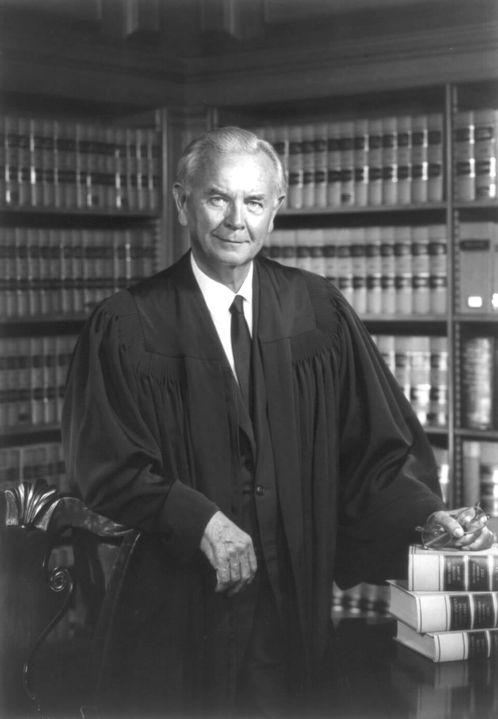
- William J. Brennan Jr.: Justice who wrote the opinion announcing the malice standard
- Hugo L. Black: Justice who concurred, urging absolute protection

Summary
On 29 March 1960 the New York Times printed a full-page advertisement titled Heed Their Rising Voices. Paid for by the Committee to Defend Martin Luther King and the Struggle for Freedom in the South, it described student demonstrations, accused unnamed Southern violators of meeting Dr. King's peaceful protests with intimidation, and asked for money. The names of four Alabama clergymen, Ralph D. Abernathy, Fred L. Shuttlesworth, S. S. Seay Sr. and J. E. Lowery, appeared among its supporters, though they testified that they had not authorized it. Several statements were inaccurate: the students at Alabama State College had sung the national anthem, not My Country, 'Tis of Thee; the dining hall had never been padlocked; and Dr. King had been arrested four times, not seven. L. B. Sullivan, the Montgomery city commissioner who supervised the police, was not named, but he sued the Times and the four ministers for libel, arguing that references to the police would be read as referring to him. An Alabama jury awarded him the full $500,000 he sought, and the Supreme Court of Alabama affirmed. Sullivan's side argued that the Constitution has never protected false and defamatory statements, that libel is a matter of state law in a private civil suit, and that a paid advertisement is commercial speech. The Times, represented by Herbert Wechsler, and the ministers answered that Alabama's rules, under which falsity and damage were presumed and the jury could tie criticism of a department to its head, would make any criticism of officials ruinously expensive. The Court reversed unanimously. Justice William J. Brennan Jr. first held that a state court's libel judgment is state action subject to the Fourteenth Amendment, and that an editorial advertisement on a matter of public concern is not commercial speech. He then placed the case against the background of a profound national commitment to debate on public issues that is uninhibited, robust and wide-open. Drawing on the controversy over the Sedition Act of 1798 and on Madison's view that the censorial power lies in the people over the government, he concluded that a public official may not recover damages for a defamatory falsehood about his official conduct unless he proves actual malice, meaning knowledge of falsity or reckless disregard of whether the statement was true. He found the record's evidence of malice unconvincing and its proof that the statements concerned Sullivan insufficient. Justice Hugo L. Black, joined by Justice William O. Douglas, concurred but would have gone further. He argued that the First and Fourteenth Amendments give an absolute, unconditional right to criticize public officials, since malice is an elusive concept and juries hostile to the press could find it whenever they wished. The library text gives Brennan's opinion in full and a substantial excerpt of Black's concurrence; Goldberg's concurrence and the footnotes are not included. Curtis Publishing Co. v. Butts (1967) extended the actual malice rule to public figures, and Gertz v. Robert Welch, Inc. (1974) set a different standard for private persons.
Virtues in this work
- Justice: Brennan seeks a rule that protects officials from deliberate lies while leaving citizens free to criticize their government.
- Fortitude: The four Alabama ministers faced a half-million-dollar judgment for an advertisement they had not authorized, and carried their appeal to the highest court.
- Honor: Sullivan's suit rested on the ancient conviction that a public servant's good name deserves protection from falsehood.
Plot or Argument
- The advertisement and the Alabama verdict
Brennan describes Heed Their Rising Voices, quotes the two paragraphs on which Sullivan relied, lists the inaccuracies, explains Sullivan's theory that criticism of the police reflected on him, and recounts the trial judge's instructions and the $500,000 verdict.
- Part I: state action and the paid advertisement
The Court rejects two arguments that would avoid constitutional review: that a civil libel suit involves no state action, and that the advertisement was commercial speech under Valentine v. Chrestensen. The advertisement communicated information and opinion on matters of the highest public interest.
- Part II: a profound national commitment
Brennan holds that libel can claim no talismanic immunity, that erroneous statements are inevitable in free debate, and that neither falsity nor injury to official reputation justifies punishing criticism of officials. He traces the Sedition Act controversy and the Virginia Resolutions and concludes that the Act has been condemned in the court of history.
- Part II continued: the actual malice rule
A rule requiring critics to guarantee the truth of every assertion would lead to self-censorship. The Court therefore requires public officials to prove that a statement was made with knowledge of its falsity or reckless disregard for the truth, drawing support from the immunity that protects officials' own statements.
- Part III: the evidence reviewed
Applying the new rule, Brennan finds no convincing proof of actual malice by the ministers or the Times, whose staff relied on the reputations of the signers. He also finds that nothing in the advertisement referred to Sullivan, warning against transmuting criticism of government into personal libel of officials.
- Black's concurrence: an absolute right
Black, joined by Douglas, argues that the actual malice rule is an evanescent protection, that state libel laws threaten a press bold enough to criticize officials, and that the First Amendment leaves the people and press free to discuss public affairs with impunity.
Characters
- L. B. Sullivan, respondent
Elected Montgomery city commissioner in charge of the police, fire and other departments, who sued for libel.
- The New York Times Company, petitioner
Publisher of the newspaper that printed the advertisement for a fee.
- Ralph D. Abernathy, Fred L. Shuttlesworth, S. S. Seay Sr. and J. E. Lowery, individual petitioners
Alabama ministers whose names appeared in the advertisement and who were held liable with the Times.
- Justice William J. Brennan Jr., author of the opinion of the Court
Wrote the opinion establishing the actual malice standard for public officials.
- Justice Hugo L. Black, concurring
Argued that the First Amendment bars libel judgments for criticism of officials altogether.
- Herbert Wechsler, counsel for the Times
Columbia law professor who argued the newspaper's case.
- M. Roland Nachman Jr., counsel for Sullivan
Montgomery lawyer who defended the Alabama judgment.
Lessons
Breathing space for error
Brennan accepted that the advertisement contained mistakes, but argued that erroneous statements are inevitable in free debate and must be protected if speech is to have the breathing space it needs to survive. A rule punishing every error would silence true criticism along with false.
- What errors did the advertisement contain?
- Why does Brennan think that protecting some false statements is necessary to protect true ones?
- Is there a point at which carelessness with the truth should lose protection?
The lesson of 1798
Brennan drew on the Sedition Act of 1798, which punished false and malicious writings against the government, and on the protests of Jefferson and Madison. He concluded that the Act had been condemned in the court of history, and that its central meaning was that criticism of officials lies at the heart of the First Amendment.
- What did the Sedition Act forbid, and who opposed it?
- Why does Brennan think a law never tested in the Court can still teach a constitutional lesson?
- What did Madison mean when he said the censorial power is in the people over the government?
Reputation and the right to criticize
Sullivan's lawyers defended an old principle: a man's good name deserves protection from falsehood. The Court balanced that principle against the citizen's freedom to criticize government and struck the balance in favour of criticism for public officials, unless the speaker knew or recklessly ignored the falsity.
- Why did Sullivan believe the advertisement harmed his reputation even though it did not name him?
- What must a public official now prove to win a libel suit?
- Should public officials have less protection for their reputations than private citizens?
How far does the First Amendment reach?
All nine Justices agreed on the result but not the reasoning. Black and Douglas argued for absolute protection of criticism of officials, warning that malice is easy for a hostile jury to find; the majority kept a narrow path for officials to recover.
- Why does Black call the actual malice rule an evanescent protection?
- What risks might an absolute rule create?
Context
In 1960 the civil rights movement was drawing national attention to sit-ins and demonstrations across the South, and Southern officials brought a number of libel suits against national newspapers and networks that reported on them. Before Sullivan, the Court had treated libel as outside the protection of the First Amendment, and each state set its own rules; under Alabama's, the defendant had to prove the truth of every particular.
Composition
The case was argued on 6 January 1964, with Herbert Wechsler for the Times, William P. Rogers and Samuel R. Pierce Jr. for the ministers, and M. Roland Nachman Jr. for Sullivan. The decision was announced on 9 March 1964. The library text, from the Legal Information Institute at Cornell Law School, contains Brennan's opinion of the Court and an excerpt of Black's concurrence.
Reception
Sullivan transformed American libel law and is widely cited as a foundation of modern press freedom. The actual malice rule was extended to public figures in Curtis Publishing Co. v. Butts and Associated Press v. Walker (1967), while Gertz v. Robert Welch, Inc. (1974) allowed states to set their own standards for private plaintiffs. Some judges and scholars have argued that the rule gives too little protection to reputation, and in recent years several Justices have suggested reconsidering it; others defend it as essential to vigorous public debate.
Comparisons
- virginia-and-kentucky-resolutions
Brennan quotes the Virginia Resolutions of 1798 protesting the Sedition Act as a power levelled against the right of freely examining public characters and measures.
- madison-selected-writings
Madison's Report of 1800 and his remark that the censorial power is in the people over the government are central to Brennan's reasoning.
- the-founding-documents
The First Amendment's guarantee of freedom of speech and of the press is the text both Brennan and Black interpret, applied to Alabama through the Fourteenth Amendment.
- on-liberty
Mill's argument that even false opinions serve truth by provoking its clearer perception parallels Brennan's view that erroneous statements must have breathing space.
- near-v-minnesota
Near (1931) barred prior restraints on newspapers charging officials with misconduct; Sullivan extended protection to damages awarded after publication.
- sermons-and-letter-from-birmingham-jail
The advertisement defended Dr. King and his campaign, and two of the ministers sued, Abernathy and Shuttlesworth, were his close associates in the movement his letter describes.
Quotes
Frequently cited
“Thus we consider this case against the background of a profound national commitment to the principle that debate on public issues should be uninhibited, robust, and wide-open, and that it may well include vehement, caustic, and sometimes unpleasantly sharp attacks on government and public officials.”
Frequently cited
“The constitutional guarantees require, we think, a federal rule that prohibits a public official from recovering damages for a defamatory falsehood relating to his official conduct unless he proves that the statement was made with 'actual malice'—that is, with knowledge that it was false or with reckless disregard of whether it was false or not.”
“Although the Sedition Act was never tested in this Court the attack upon its validity has carried the day in the court of history.”
“The right of free public discussion of the stewardship of public officials was thus, in Madison's view, a fundamental principle of the American form of government.”
“The requirement that malice be proved provides at best an evanescent protection for the right critically to discuss public affairs and certainly does not measure up to the sturdy safeguard embodied in the First Amendment.”
“To punish the exercise of this right to discuss public affairs or to penalize it through libel judgments is to abridge or shut off discussion of the very kind most needed.”
For Students
A reading companion for classical Christian high school students. See the student guide.
Reading Guide
Watch for
- The two paragraphs of the advertisement that Sullivan said referred to him.
- Brennan's reasons for treating the paid advertisement as protected speech.
- The phrase uninhibited, robust, and wide-open and the principle it describes.
- How Brennan uses the Sedition Act of 1798 and Madison's Virginia Report.
- Black's argument that the actual malice rule does not go far enough.
Key terms and names
- Libel
- A published false statement that injures a person's reputation.
- Actual malice
- In the Court's special sense, knowledge that a statement is false or reckless disregard of whether it is false, not ill will.
- Libelous per se
- Under Alabama law, words so damaging that injury to reputation was presumed without proof.
- Seditious libel
- The crime of criticizing the government or its officers, punished under the Sedition Act of 1798.
- Self-censorship
- Speakers holding back even true criticism for fear of costly lawsuits.
- Public official
- A person holding government office, whose official conduct is open to public criticism.
Seminar Questions
- Comprehension What did the advertisement Heed Their Rising Voices say, and which statements were inaccurate?
- Comprehension Why did Sullivan claim the advertisement referred to him, though it never named him?
- Comprehension What two arguments does the Court reject before reaching the First Amendment question?
- Interpretation Why does Brennan think the Sedition Act controversy reveals the central meaning of the First Amendment?
- Interpretation How does the actual malice rule try to balance reputation against free debate?
- Interpretation Why does Black believe juries would find malice whenever they wished?
- Big Question How should a free society protect both a person's good name and the citizen's freedom to criticize those in power?
Faith Connections
- Exodus 20:16 (Scripture)
The ninth commandment forbids bearing false witness against one's neighbour, the moral root of the law of libel that Sullivan invoked.
- Proverbs 22:1 (Scripture)
A good name is rather to be chosen than great riches; Scripture treats reputation as a precious good.
- 2 Samuel 12:1-7 (Scripture)
Nathan rebukes King David to his face, an example of a prophet's freedom to criticize even the highest ruler.
Logic and Rhetoric
Central argument: Because the First Amendment's central meaning, learned from the Sedition Act controversy, is that citizens may criticize their government, and because a rule requiring critics to guarantee the truth of every statement would deter true criticism along with false, a public official may recover for defamation about his official conduct only by proving knowing or reckless falsehood.
Rhetorical device: tricolon. Brennan describes debate that should be uninhibited, robust, and wide-open (quote 0), three adjectives that build toward the openness he wants protected.
Debate: Resolved: that public officials should have to prove actual malice to win a libel suit.
Memory Work
Thus we consider this case against the background of a profound national commitment to the principle that debate on public issues should be uninhibited, robust, and wide-open, and that it may well include vehement, caustic, and sometimes unpleasantly sharp attacks on government and public officials.
The constitutional guarantees require, we think, a federal rule that prohibits a public official from recovering damages for a defamatory falsehood relating to his official conduct unless he proves that the statement was made with 'actual malice'—that is, with knowledge that it was false or with reckless disregard of whether it was false or not.
Writing Prompts
Essay: Explain the actual malice rule, the reasons Brennan gives for it, and the reasons Black gives for thinking it insufficient.
Comparison with On Liberty: Compare Mill's argument in On Liberty that false opinions have value in the search for truth with Brennan's claim that erroneous statements need breathing space in free debate.
Medical Lens
The opinions address libel, the press and the First Amendment; medical matters do not arise.
Creative Prompts
- Classroom
Hold a moot court in which Sullivan's lawyer defends the traditional law of libel and the Times's lawyer argues for protection of criticism of officials, then compare the Court's rule with Black's.
- Essay
Write a newspaper editorial from 1964 responding to the decision, either welcoming it as a protection for the press or warning about its effect on the reputations of public servants.
- Classroom
Examine the two paragraphs of the advertisement Sullivan challenged, list each factual error the Court identifies, and decide which, if any, could fairly be read as referring to him.
- Dialogue
Write a conversation between a newspaper editor and a city official about what the actual malice rule means for both of them.
Further Reading
- Make No Law: The Sullivan Case and the First Amendment, Anthony Lewis
Narrative history of the case by a journalist who covered the Court.
- New York Times v. Sullivan: Civil Rights, Libel Law, and the Free Press, Kermit L. Hall and Melvin I. Urofsky
Concise study of the case in the Landmark Law Cases series.
- Emergence of a Free Press, Leonard W. Levy
Study of the law of seditious libel and press freedom in the founding era, useful background for Brennan's use of 1798.
Verification notes
All six quotations were found by Grep in content/texts/new-york-times-v-sullivan.txt; the text uses single quotation marks and an unspaced em dash, which have been copied exactly. The judgment was unanimous (9 to 0) with two concurrences. The date of the advertisement, the names of the ministers and counsel, and later history follow standard references and the opinion's own statement of facts.
- Confirm the names of counsel for the ministers (William P. Rogers and Samuel R. Pierce Jr.).
- Confirm the description of recent Justices' suggestions to reconsider the actual malice rule.