Work record
National Federation of Independent Business v. Sebelius
2012 · Postwar Contemporary · Court Decision · English
Abstract
Question Presented. Could Congress, through its commerce or taxing authority, require most Americans to carry health coverage, and could it make every state's existing Medicaid grants depend on accepting a large expansion of eligibility?
Arguments. Opponents said the national government may govern trade but not force anyone to buy a product, that the payment was a punishment, and that risking a state's entire Medicaid allotment left no genuine choice. Defenders replied that nearly everyone eventually needs care, that people without coverage shift costs to others, and that Congress may tax and attach terms to its grants.
Holding. Five justices, Roberts among them, refused to rest the coverage requirement on the commerce power, yet a different five sustained it as a levy on going uninsured. Seven agreed the Medicaid threat was coercive, and the remedy let states decline the expansion while keeping prior funds. Ginsburg would have upheld everything; four dissenters would have voided the statute.
Significance. The decision kept the 2010 law in force while setting new limits on federal commerce and spending power, and it turned Medicaid expansion into a choice each state legislature continues to weigh.
Text. Only parts of each opinion are reproduced, without notes, and the Chief Justice's Medicaid section is absent from this edition.
Key figures
- Kathleen Sebelius: Secretary of Health and Human Services
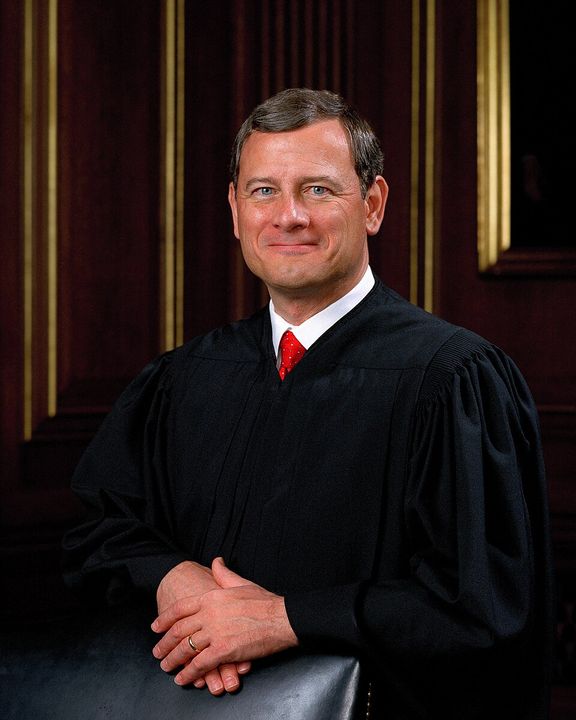
- John G. Roberts Jr.: Chief Justice whose opinion controlled the outcome
- Ruth Bader Ginsburg: Would have sustained the whole Act
- Antonin Scalia, Anthony M. Kennedy, Clarence Thomas and Samuel A. Alito Jr.: Joint dissenters who would have voided the Act
- Paul D. Clement: Counsel for the state challengers

Summary
In March 2010 Congress passed and President Obama signed the Patient Protection and Affordable Care Act. Two provisions drew constitutional challenge. The individual mandate required most Americans to maintain a minimum level of health insurance or make a shared responsibility payment to the Internal Revenue Service. The Medicaid expansion required states to cover adults with incomes up to 133 percent of the federal poverty level, on pain of losing not only the new funds but all of their existing federal Medicaid money. On the day the law was signed, Florida and twelve other states sued; more states joined, as did the National Federation of Independent Business and individual plaintiffs. The Eleventh Circuit held the mandate beyond Congress's commerce power but upheld the Medicaid expansion. The challengers argued that Congress may regulate commerce but may not compel people to enter it by buying a product; that the payment was a penalty, not a tax; and that threatening states with the loss of all Medicaid funds was coercion rather than an offer. The government answered that nearly everyone eventually uses health care, that the uninsured shift billions of dollars in costs onto others, that the mandate was a necessary part of insurance reforms, that the payment could in any case be sustained as a tax, and that Congress may attach conditions to federal funds. On 28 June 2012 the Court issued a divided ruling. Chief Justice Roberts, writing for himself, concluded that the Commerce Clause does not authorize Congress to compel individuals to buy insurance, because regulating people for doing nothing would open a vast new domain of federal power; the four joint dissenters agreed on this point. But for the Court, joined by Justices Ginsburg, Breyer, Sotomayor and Kagan, he held by five to four that the payment could fairly be read as a tax on those without insurance, and so sustained the mandate under the taxing power. On Medicaid, seven justices agreed that threatening states with the loss of existing funds was unconstitutionally coercive; Roberts, joined by Breyer and Kagan, remedied the defect by barring the withdrawal of existing funds, leaving the expansion itself optional. Justice Ginsburg, joined by Justice Sotomayor and in part by Justices Breyer and Kagan, would have upheld the mandate under the Commerce Clause as well and the Medicaid expansion as enacted, calling the Chief Justice's reading of the commerce power a return to an earlier era. The joint dissent of Justices Scalia, Kennedy, Thomas and Alito would have held that the mandate exceeded both the commerce and taxing powers, that the Medicaid expansion was coercive, and that the whole Act should fall. The library text contains excerpts of the three opinions, without footnotes; Roberts's portion ends during his discussion of the taxing power, so his Medicaid analysis is not reproduced. In 2017 Congress reduced the payment to zero, and in California v. Texas (2021) the Court dismissed a renewed challenge for lack of standing. Many states later chose to expand Medicaid.
Virtues in this work
- Prudence: The Chief Justice seeks a reading of the statute that respects both the limits on federal power and the choices of the elected branches.
- Justice: Ginsburg emphasizes fairness to insured Americans who bear the costs of care for those without coverage.
- Fortitude: The joint dissenters insist on structural limits to federal power even in a case of great public consequence.
Plot or Argument
- Enumerated powers and judicial restraint
Roberts opens with the principle that the national government has only the powers listed in the Constitution, balanced against the Court's duty to respect the elected branches; it is not the Court's role to protect the people from their political choices, but deference cannot become abdication.
- The mandate, the expansion and the Anti-Injunction Act
Parts I and II describe the two provisions and the litigation, and hold for the Court that the Anti-Injunction Act does not bar the suits because Congress labeled the payment a penalty for that purpose.
- Commerce and compulsion
In Part III-A, writing only for himself, Roberts concludes that the commerce power reaches existing activity, not inactivity, and that the Necessary and Proper Clause cannot supply a power to create the very commerce being regulated.
- Saving construction under the taxing power
In Parts III-B and III-C, the latter for the Court, Roberts asks whether the mandate can fairly be read as a tax, applies the functional test of the Child Labor Tax Case, notes that the payment is modest, collected by the IRS and carries no criminal consequence, and concludes that it is not a direct tax requiring apportionment.
- Ginsburg's opinion (excerpt)
Ginsburg describes the unique features of the health-care market, the problem of the uninsured who receive uncompensated care, and Massachusetts's experience, and argues that the Commerce Clause plainly supports the mandate.
- The joint dissent (excerpt)
Scalia, Kennedy, Thomas and Alito acknowledge Congress's aim to make care affordable but argue that Wickard was the outer limit of the commerce power, that failure to buy insurance is not commerce, and that the definition of market participants offered by the government has no principled limit.
Characters
- National Federation of Independent Business, petitioner
Small-business association that joined the states in challenging the Act.
- Kathleen Sebelius, respondent
Secretary of Health and Human Services, responsible for administering the Act.
- Chief Justice John G. Roberts Jr., author of the controlling opinion
Rejected the commerce rationale but upheld the mandate as a tax and limited the Medicaid penalty.
- Justice Ruth Bader Ginsburg, concurring in part and dissenting in part
Would have upheld the entire Act under the commerce and spending powers.
- Justices Scalia, Kennedy, Thomas and Alito, joint dissenters
Would have struck down the mandate, the Medicaid expansion and the Act as a whole.
- Paul D. Clement, counsel for the challenging states
Former Solicitor General who argued against the mandate and the Medicaid expansion.
- Donald B. Verrilli Jr., Solicitor General of the United States
Defended the Act for the government.
Lessons
Activity and inactivity
Roberts and the joint dissenters held that the commerce power regulates existing activity and cannot compel people to begin buying a product. Ginsburg answered that almost everyone takes part in the health-care market sooner or later, so the uninsured are already participants whose choices affect prices for all.
- Why does Roberts think regulating people for doing nothing would open a vast new domain of federal power?
- How does Ginsburg describe the uninsured as active in the health-care market?
- Is choosing not to buy something an economic decision that government may regulate?
Labels and substance
Congress called the payment a penalty, yet the Court upheld it as a tax by looking to how it actually worked. The joint dissent objected that the Court was rewriting a statute Congress had framed differently, while Roberts said the Court must adopt any fairly possible reading that saves a law.
- What practical features led Roberts to treat the payment as a tax?
- Why does it matter for the Anti-Injunction Act that Congress called it a penalty?
- Should a court judge a law by its name or by its effect?
Federal money and state independence
Seven justices concluded that threatening a state with the loss of all existing Medicaid funds left no real choice. The decision marked the first time the Court held a spending condition coercive, and it turned the expansion into a decision each state could make for itself.
- Why did the size of existing Medicaid funding matter to the coercion question?
- What does Ginsburg argue about Congress's power to change programs it funds?
- When does an offer of money become pressure that a state cannot refuse?
Deference and duty
Roberts began by insisting that judges possess neither the expertise nor the prerogative to make policy, yet he also held that deference cannot become abdication. Each opinion in the case claimed to respect the Constitution's limits while drawing them in different places.
- What does Roberts mean by saying it is not the Court's job to protect the people from their political choices?
- How do the joint dissenters view the Court's saving construction in light of judicial restraint?
Context
Proposals for broader health coverage recurred in American politics through the twentieth century, from the Truman years to the creation of Medicare and Medicaid in 1965 and the failed reform effort of 1993-1994. Massachusetts enacted a coverage requirement in 2006. The Affordable Care Act of 2010 combined insurance-market reforms, subsidies, a coverage requirement and a Medicaid expansion, and it passed Congress without support from the minority party.
Composition
Florida and other states filed suit on 23 March 2010, the day the Act was signed, and other suits followed in several circuits. After the Eleventh Circuit ruled against the mandate in 2011, the Court granted review and heard about six hours of argument over three days in March 2012, on standing to sue, the mandate, severability and Medicaid. The decision was announced on 28 June 2012.
Reception
Public reaction divided largely along political lines, and the Chief Justice's vote to uphold the mandate under the taxing power drew both praise and criticism. Scholars noted that the decision recognized limits on the commerce and spending powers even as it sustained the Act. Congress reduced the payment to zero in 2017, the Court turned away further challenges in King v. Burwell (2015) and California v. Texas (2021), and states continued to decide individually whether to expand Medicaid.
Comparisons
- wickard-v-filburn
The joint dissent calls Wickard the outer limit of the commerce power, and Roberts distinguishes regulating a farmer's wheat from compelling the purchase of insurance.
- gonzales-v-raich
Raich allowed Congress to reach home-grown marijuana as part of an existing market; in 2012 the government relied on it, and the Chief Justice distinguished it as a case of regulating activity already under way.
- mcculloch-v-maryland
Roberts opens with Marshall's 1819 observation about the perpetual question of federal power and tests the mandate against the meaning of necessary and proper.
- helvering-v-davis
The 1937 Social Security decision upheld old-age benefits under the taxing and spending powers, the same powers on which the 2012 Court sustained the mandate.
- pollock-v-farmers-loan-and-trust
Roberts reviews the history of the direct-tax clause, including Pollock's 1895 holding, in concluding that the shared responsibility payment needs no apportionment.
- the-federalist-papers
Roberts quotes Hamilton's argument in Federalist No. 84 that the enumeration of powers is itself a bill of rights.
Quotes
Frequently cited
“It is not our job to protect the people from the consequences of their political choices.”
Frequently cited
“The Framers gave Congress the power to regulate commerce, not to compel it, and for over 200 years both our decisions and Congress's actions have reflected this understanding.”
“THE CHIEF JUSTICE's crabbed reading of the Commerce Clause harks back to the era in which the Court routinely thwarted Congress' efforts to regulate the national economy in the interest of those who labor to sustain it.”
“As economists would describe what happens, the uninsured "free ride" on those who pay for health insurance.”
“The Act before us here exceeds federal power both in mandating the purchase of health insurance and in denying non-consenting States all Medicaid funding.”
“Such a definition of market participants is unprecedented, and were it to be a premise for the exercise of national power, it would have no principled limits.”
For Students
A reading companion for classical Christian high school students. See the student guide.
Reading Guide
Watch for
- Roberts's opening discussion of enumerated powers and judicial restraint.
- The distinction between activity and inactivity under the Commerce Clause.
- The practical factors that lead Roberts to treat the payment as a tax.
- Ginsburg's description of the health-care market and the problem of the uninsured.
- The joint dissent's treatment of Wickard as the outer limit of the commerce power.
Key terms and names
- Individual mandate
- The Affordable Care Act's requirement that most individuals maintain minimum health coverage or make a payment.
- Taxing power
- Congress's authority under Article I, section 8, clause 1, to lay and collect taxes.
- Spending Clause
- The constitutional basis for Congress to spend for the general welfare and to attach conditions to federal funds.
- Coercion doctrine
- The principle that Congress may not use funding conditions so severe that states have no real choice but to comply.
- Anti-Injunction Act
- A federal statute barring suits to restrain the assessment or collection of a tax before it is paid.
- Saving construction
- The practice of adopting a fairly possible interpretation of a statute that avoids holding it unconstitutional.
Seminar Questions
- Comprehension What were the two provisions of the Affordable Care Act challenged in this case?
- Comprehension On which constitutional power did the Court uphold the mandate, and on which did it refuse to rely?
- Interpretation Why does the Chief Justice say the payment is a penalty for one statute's purposes but may be treated as a tax for the Constitution's?
- Interpretation How do Ginsburg and the joint dissent read Wickard v. Filburn differently?
- Interpretation Why did seven justices find the Medicaid expansion coercive, and how did the remedy change it?
- Big Question What responsibilities do individuals, communities and governments each bear for the care of the sick?
Faith Connections
- Galatians 6:2, 5 (Scripture)
Paul tells believers to bear one another's burdens and also that every man shall bear his own burden, a pairing that frames questions of shared and personal responsibility.
- Matthew 22:21 (Scripture)
Christ's words to render unto Caesar the things that are Caesar's bear on a case that turned on what counts as a tax.
Logic and Rhetoric
Central argument: Roberts reasons that the federal government has only enumerated powers, that the commerce power regulates activity and cannot compel it, that the mandate can nonetheless fairly be read as a tax within Congress's taxing power, and that Congress may not coerce states by threatening existing funds; Ginsburg would uphold the Act under the commerce and spending powers, and the joint dissent would strike it down entirely.
Rhetorical device: antithesis. Roberts's sentence that the Framers gave Congress power to regulate commerce, not to compel it (quote 1), turns on the contrast between two verbs.
Debate: Resolved: that the Commerce Clause permits Congress to require individuals to purchase health insurance.
Memory Work
It is not our job to protect the people from the consequences of their political choices.
The Framers gave Congress the power to regulate commerce, not to compel it, and for over 200 years both our decisions and Congress's actions have reflected this understanding.
Writing Prompts
Essay: Evaluate the Chief Justice's decision to uphold the mandate as a tax after rejecting the commerce rationale, weighing Ginsburg's and the joint dissent's objections.
Comparison with Wickard v. Filburn: Compare the reasoning of Wickard (1942) with the commerce analysis in NFIB (2012), and explain why the justices disagreed about whether Wickard supported the mandate.
Medical Lens
The case decided the constitutional fate of the largest change in American health-care financing since Medicare and Medicaid, and the opinions preserve a judicial account of the economics of care: uncompensated treatment of the uninsured, adverse selection in insurance markets, the Massachusetts reform, and the dependence of state budgets on Medicaid, which the Chief Justice notes exceeded 10 percent of most states' revenue.
- Opinion of Chief Justice Roberts, Part I, paragraph beginning The second provision of the Affordable Care Act directly challenged here is the Medicaid expansion
Describes Medicaid's origins in 1965, its universal adoption by the states by 1982, and the expansion's extension of coverage to adults up to 133 percent of the poverty level.
- Opinion of Justice Ginsburg, Part I-A and I-B, paragraphs beginning In 2009, approximately 50 million people were uninsured
Sets out national health-expenditure figures, the scale of uncompensated care, and how the costs of treating the uninsured are passed on to insured patients and providers.
Creative Prompts
- Classroom
Divide the class into the four positions in the case (Roberts, Ginsburg, the joint dissent and the government) and hold a moot court on whether the mandate is a regulation of commerce, a tax, or neither.
- Essay
Write a short brief explaining the difference between a tax and a penalty, using the factors from the Child Labor Tax Case that the Chief Justice applies.
- Dialogue
Write a conversation between a governor and a state budget director in 2012 deciding whether to accept the Medicaid expansion after the decision made it optional.
Further Reading
- Unprecedented: The Constitutional Challenge to Obamacare, Josh Blackman
Detailed account of the litigation from its origins to the decision.
- The Health Care Case: The Supreme Court's Decision and Its Implications, Nathaniel Persily, Gillian E. Metzger and Trevor W. Morrison, eds.
Essays by legal scholars of differing views on the opinions and their consequences.
Verification notes
Each of the six quotations (two from Roberts, two from Ginsburg, two from the joint dissent) was found by Grep as an exact substring of the stored text; a few words in the source carry line-break hyphens, which the chosen quotations avoid. The division of Roberts's opinion (for the Court in Parts I, II and III-C; with Breyer and Kagan in Part IV; for himself in Parts III-A, III-B and III-D) comes from the opinion's opening line. The stored excerpt of Roberts's opinion ends during Part III-C, so the Medicaid holding is described from the full report rather than the library text. The vote counts are those given in the batch instructions. Later events (the 2017 reduction of the payment and California v. Texas) come from standard accounts.
- Confirm that Paul D. Clement argued for the state challengers and Donald B. Verrilli Jr. for the government.
- Confirm the total number of states (twenty-six) that ultimately joined the Florida suit.