Work record
Norman v. Baltimore & Ohio Railroad Co. (Gold Clause Cases)
1935 · Early 20th Century · Court Decision · English
Abstract
Question Presented. After the United States left the gold standard, could Congress lawfully declare that bonds promising payment in gold coin may be satisfied with an equal number of devalued paper dollars?
Arguments. Norman's lawyers said the clause fixed a yardstick of value that lawmakers could not erase, that cancelling it seized property without due process, and that the measure governed bargains rather than currency. The debtor railroads and federal officials maintained that the obligations called for money and that authority over money entitles the nation to stop private deals from undermining one currency.
Holding. A five-justice majority sustained the measure. Hughes concluded that the bonds promised money, not metal, that the coinage and borrowing powers support a unified monetary system, and that requiring debtors to pay roughly two-thirds more than their income would unsettle commerce. McReynolds, for the minority, called the policy a confiscation the framers never authorized.
Significance. With its companions, decided that morning, the ruling allowed devaluation to stand, though Perry warned that Washington could not void its own gold pledges. It remains a leading precedent on monetary sovereignty and the limits of contract.
Text. Hughes's opinion is complete; McReynolds's is cut short partway through his chronicle of the 1933 gold orders, and the notes are absent.
Key figures
- Norman C. Norman: Bondholder demanding the pre-devaluation worth of his coupon
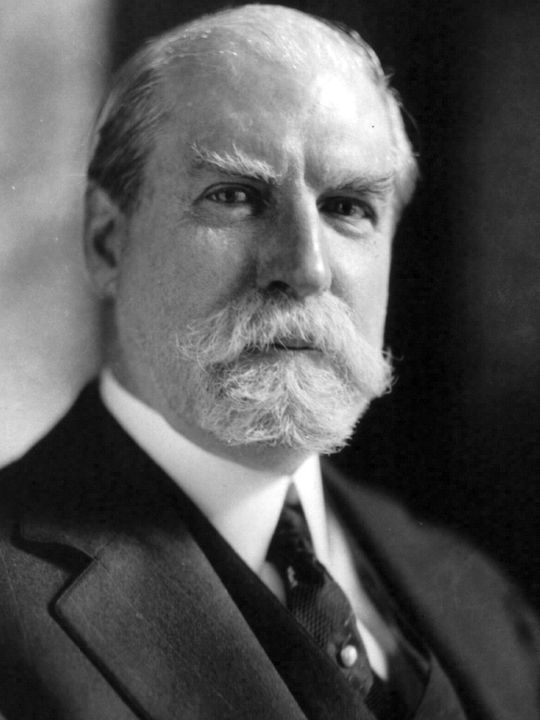
- Charles Evans Hughes: Chief Justice who upheld national control over money
- James C. McReynolds: Spokesman for four dissenters who saw confiscation
- Baltimore & Ohio Railroad: Debtor that offered the coupon's face amount in paper money

Summary
For decades American bonds and mortgages had commonly promised payment in gold coin of the present standard of weight and fineness, a clause designed to protect lenders if the paper dollar lost value. In the banking crisis of 1933 the Roosevelt administration took the country off the gold standard: it required the surrender of gold coin, forbade its export, and, by a joint resolution of Congress on 5 June 1933, declared gold clauses against public policy and made every such obligation dischargeable dollar for dollar in any legal tender. In January 1934 the Gold Reserve Act and a presidential proclamation reduced the gold content of the dollar to about 59 percent of its former weight. Norman C. Norman held a coupon from a Baltimore & Ohio Railroad bond issued in 1930 and payable in gold. When the $22.50 coupon fell due in February 1934 he demanded $38.10, its value in devalued currency at the old gold standard. The New York courts gave him only the face amount, and the Court of Appeals of New York held the joint resolution valid. A companion case arose from bonds of a Missouri railroad in bankruptcy reorganization. Norman's side argued that a gold clause fixed a measure of value that Congress could not erase, that the resolution took private property without due process, and that Congress was regulating contracts rather than currency. The railroads and the government answered that the clauses were promises to pay money, and that Congress's power to coin money and regulate its value includes power to prevent private agreements from defeating a uniform currency. By a vote of five to four the Court upheld the joint resolution as applied to private contracts. Chief Justice Hughes held that the clauses were contracts for the payment of money, not for gold as a commodity, and that Congress has broad authority to establish a monetary system, as recognized in the Legal Tender Cases. Contracts, he wrote, cannot remove a subject from congressional power, and Congress could reasonably conclude that enforcing gold clauses would require debtors to pay $1.69 for each dollar of income, dislocating the economy. In the companion case of Perry v. United States, decided the same day, the Court held that Congress could not cancel the gold clause in its own bonds, but that the bondholder had shown no actual damages. Justice McReynolds, for himself and Justices Van Devanter, Sutherland and Butler, dissented, calling the measures confiscation of property and repudiation of obligations and denying that the framers gave Congress power to annul its own promises. The library text contains Hughes's opinion and the first part of McReynolds's dissent, which breaks off in a history of the 1933 gold legislation; notes are not reproduced. A remark McReynolds made from the bench that the Constitution was gone does not appear in the written dissent. Congress restored the enforceability of gold clauses in new contracts in 1977.
Virtues in this work
- Prudence: Hughes weighs whether enforcing gold clauses would have thrown debtors and the economy into disorder during a depression.
- Honor: McReynolds insists that a government's solemn promises bind it and that public honesty is part of justice.
- Justice: Both opinions ask what creditors and debtors are fairly owed when the value of money itself has been changed by law.
Plot or Argument
- The joint resolution and the cases
Hughes quotes the resolution of 5 June 1933 and describes the coupon in Norman's suit and the bonds of the St. Louis, Iron Mountain & Southern Railway in the companion cases, noting the amounts claimed at the old gold value.
- What a gold clause promises
Reviewing the Court's own nineteenth-century decisions, Hughes concludes that the clauses were intended as a standard of value but were nonetheless contracts for the payment of money rather than for gold as a commodity.
- Congress and the monetary system
The power to coin money and regulate its value, together with the borrowing and other fiscal powers, gives Congress authority to establish a national currency and make it legal tender, as McCulloch, the Legal Tender Cases and Juilliard v. Greenman show.
- Contracts and the reach of federal power
Because contracts on subjects within congressional control carry a congenital infirmity, private parties cannot place their dealings beyond that control. The question is whether the gold clauses actually obstruct the monetary policy Congress adopted.
- The dislocation of the economy
Hughes holds that Congress could reasonably find that paying $1.69 on each dollar of gold obligations while receiving revenue in ordinary dollars would disrupt the economy, and that it did not act arbitrarily.
- McReynolds's dissent (excerpt)
For four justices McReynolds condemns the measures as spoliation, defends the long and honorable use of the gold clause at home and abroad, cites international and English decisions, and begins a narrative of the 1933 orders that the excerpt does not finish.
Characters
- Norman C. Norman, petitioner
Holder of a Baltimore & Ohio bond coupon who claimed its value at the former gold standard.
- Baltimore & Ohio Railroad Company, respondent
Issuer of the 1930 bond, which tendered the face amount in ordinary currency.
- Chief Justice Charles Evans Hughes, author of the majority opinion
Held that Congress's monetary power overrides private gold clauses.
- Justice James C. McReynolds, dissenter
Wrote for four justices that the measures confiscated property and repudiated obligations.
- Attorney General Homer S. Cummings, counsel for the United States
Argued the government's position as intervenor in support of the joint resolution.
Lessons
Money as a contract term and as a public institution
A gold clause looks like a private bargain, but money itself is created and regulated by government. Hughes treated the clauses as promises to pay money and therefore subject to the rules Congress sets for money; McReynolds treated them as fixing a definite measure of value that belonged to the parties.
- Why does it matter whether a gold clause is a promise to pay money or to deliver a commodity?
- What did lenders hope to gain by writing gold clauses into bonds?
- Is a nation's currency more like a public road or more like private property?
Private agreements and public power
Hughes held that parties cannot contract their way out of the reach of a constitutional power. McReynolds answered that the federal government has only delegated powers and that no grant authorizes annulling lawful promises. The case tests how far the government may change the terms of existing bargains for the sake of national policy.
- What does Hughes mean when he says such contracts have a congenital infirmity?
- Why does McReynolds call the measures spoliation?
- Should existing contracts be protected from later changes in the law, even in a national emergency?
Consequences in constitutional reasoning
Hughes said that consequences cannot excuse a violation of constitutional right, yet he weighed the economic disruption that enforcing the clauses would cause in deciding whether Congress acted reasonably. Students can examine how a court may consider practical effects without letting them decide the question of power.
- How does Hughes use the figure of $1.69 in his reasoning?
- Is there a difference between asking whether a law is necessary and asking whether it is constitutional?
Honoring a nation's promises
In the companion Perry case the Court told the government that it could not repudiate its own gold bonds, while denying the bondholder any recovery. The dissent quoted the framers' hope of establishing justice and argued that a government able to annul its obligations endangers the rights it was created to protect.
- Why might the Court treat the government's own bonds differently from private bonds?
- What does McReynolds believe the framers intended about a government's obligations?
- Why does public trust in a government's word matter for its ability to borrow?
Context
Between 1930 and 1933 thousands of banks failed and the money supply contracted sharply. Roosevelt's administration closed the banks in March 1933, required citizens to turn in gold coin and certificates, and sought to raise prices by reducing the dollar's gold value. Gold clauses appeared in an estimated hundred billion dollars of public and private debt, so enforcing them after devaluation would have increased the burden on debtors by about sixty-nine percent.
Composition
The Court heard Norman, the Bankers Trust railroad bond cases, Nortz v. United States on gold certificates and Perry v. United States on Liberty Bonds together in January 1935 and announced the decisions on 18 February. The administration had prepared for a loss: Roosevelt drafted a radio address announcing that he would not comply with an adverse ruling, which proved unnecessary.
Reception
Financial markets rose on the news, and supporters of the administration welcomed the ruling. Critics regarded it as approving the breach of solemn promises, and the dissent's language was widely reported. Economists and legal scholars continue to discuss the cases as a study in monetary sovereignty and the obligations of contract; in 1977 Congress permitted gold clauses again for obligations issued after that year.
Comparisons
- legal-tender-cases
Hughes relied on the 1871 decision upholding paper legal tender for prior debts as the foundation of Congress's broad monetary power.
- hepburn-v-griswold
Chase's 1870 opinion that paper money could not discharge earlier contracts is the closest precedent for the position the four dissenters took.
- mcculloch-v-maryland
Marshall's reasoning that the national government may choose appropriate means for its granted powers underlies Hughes's account of the currency power.
- the-wealth-of-nations
Smith describes the raising of the denomination of coin as a disguised way for a state to lighten its debts, a criticism that bears directly on devaluation.
- the-federalist-papers
Federalist No. 44 defends the ban on state paper money and laws impairing contracts, raising the question whether similar principles should bind Congress.
Quotes
Frequently cited
“Contracts, however express, cannot fetter the constitutional authority of the Congress. Contracts may create rights of property, but, when contracts deal with a subject-matter which lies within the control of the Congress, they have a congenital infirmity.”
Frequently cited
“Just men regard repudiation and spoliation of citizens by their sovereign with abhorrence; but we are asked to affirm that the Constitution has granted power to accomplish both.”
“We are of the opinion that the gold clauses now before us were not contracts for payment in gold coin as a commodity, or in bullion, but were contracts for the payment of money.”
“It requires no acute analysis or profound economic inquiry to disclose the dislocation of the domestic economy which would be caused by such a disparity of conditions in which, it is insisted, those debtors under gold clauses should be required to pay $1.69 in currency while respectively receiving their taxes, rates, charges, and prices on the basis of $1 of that currency.”
“We are not concerned with consequences, in the sense that consequences, however serious, may excuse an invasion of constitutional right.”
“The clause is not new or obscure or discolored by any sinister purpose.”
For Students
A reading companion for classical Christian high school students. See the student guide.
Reading Guide
Watch for
- The text of the joint resolution of 5 June 1933 that Hughes quotes at the start.
- The difference between the face amount of Norman's coupon and the amount he claimed.
- Hughes's conclusion that the clauses were contracts for money, not for gold as a commodity.
- The phrase congenital infirmity and the principle it expresses.
- McReynolds's appeal to the framers' purpose of establishing justice.
Key terms and names
- Gold clause
- A term in a bond or contract requiring payment in gold coin of a fixed weight and fineness, or its equivalent.
- Devaluation
- An official reduction in the value of a currency, here by lowering the amount of gold a dollar represents.
- Legal tender
- Money that the law requires creditors to accept in payment of debts.
- Coupon
- A detachable slip on a bond that the holder presents to collect each interest payment.
- Joint resolution
- A measure passed by both houses of Congress and signed by the President, with the force of law.
Seminar Questions
- Comprehension What did the joint resolution of 5 June 1933 declare about gold clauses?
- Comprehension Why did Norman claim $38.10 on a coupon with a face value of $22.50?
- Comprehension Which constitutional powers does Hughes cite as the basis for Congress's control of the currency?
- Interpretation How does Hughes reconcile his statement that consequences cannot excuse a violation of right with his attention to economic dislocation?
- Interpretation Why does McReynolds cite decisions of an international court and the House of Lords?
- Big Question Should a government ever be allowed to change the value of money owed under contracts already made, and what would justify it?
Faith Connections
- Proverbs 20:10 (Scripture)
Divers weights and divers measures are called an abomination to the Lord, a text often cited in debates over altering a standard of value.
- Psalm 15:4 (Scripture)
The righteous man is described as one who sweareth to his own hurt, and changeth not, an image of keeping promises at a cost that the dissent's argument echoes.
- Matthew 22:19-21 (Scripture)
Shown the tribute money bearing Caesar's image, Jesus says to render unto Caesar the things that are Caesar's, a passage often read as recognizing the ruler's authority over coinage.
Logic and Rhetoric
Central argument: Hughes reasons that gold clauses are promises to pay money, that Congress holds plenary power over the monetary system, that private contracts cannot limit a constitutional power, and that Congress reasonably found gold clauses an obstacle to its monetary policy; McReynolds replies that no delegated power permits the confiscation of contract rights or the repudiation of obligations.
Rhetorical device: moral appeal. McReynolds opens with what just men regard with abhorrence (quote 4), framing a technical question of monetary power as a question of public honesty.
Debate: Resolved: that Congress may override gold clauses in private contracts to carry out its monetary policy.
Memory Work
Contracts, however express, cannot fetter the constitutional authority of the Congress. Contracts may create rights of property, but, when contracts deal with a subject-matter which lies within the control of the Congress, they have a congenital infirmity.
Just men regard repudiation and spoliation of citizens by their sovereign with abhorrence; but we are asked to affirm that the Constitution has granted power to accomplish both.
Writing Prompts
Essay: Explain why Hughes concluded that Congress could override gold clauses, and evaluate McReynolds's argument that the framers never intended to give the government power to annul its own obligations.
Comparison with Legal Tender Cases: Compare the reasoning of the 1871 Legal Tender Cases with Hughes's opinion in 1935, and explain how each Court understood Congress's power over money during a national crisis.
Medical Lens
The Gold Clause Cases concern monetary policy and private bonds; nothing in the opinions bears on health or medicine.
Creative Prompts
- Classroom
Give each student a mock 1930 bond with a gold clause and a 1934 coupon. Half argue as Norman's lawyers that the coupon is worth $38.10; half argue as the railroad's that it is worth $22.50. A panel of five and a panel of four then write short opinions.
- Essay
Write a letter from a retired schoolteacher in 1935 who had saved in gold-clause railroad bonds, and a reply from a farmer with a gold-clause mortgage, each reacting to the decision.
- Dialogue
Imagine Chief Justice Hughes and Justice McReynolds walking out of the courtroom on 18 February 1935, each explaining to the other why a nation's promises do or do not bind its later policy.
- Essay
Explain in plain language what it means to devalue a currency, using the figures in Hughes's opinion, and describe who gains and who loses when it happens.
Further Reading
- A Monetary History of the United States, 1867-1960, Milton Friedman and Anna Jacobson Schwartz
Standard economic history whose chapters on 1933-1934 explain the banking crisis, the gold measures and devaluation.
- American Default: The Untold Story of FDR, the Supreme Court, and the Battle over Gold, Sebastian Edwards
Economist's history of the 1933 devaluation and the 1935 decisions.
Verification notes
The six quotations, four from Hughes and two from McReynolds, were each matched by Grep as exact strings in content/texts/norman-v-baltimore-and-ohio-railroad.txt. The line attributed to McReynolds about the Constitution being gone was searched for and not found; it is reported as an oral remark from the bench and is not quoted. The $22.50 coupon, the $38.10 claim and the $1.69 ratio come from the stored text. The estimate of gold-clause debt, Roosevelt's undelivered radio address and the 1977 legislation come from secondary histories.
- Confirm that Homer S. Cummings personally argued for the United States in Norman.
- Confirm the argument dates of 8-10 January 1935.
- Confirm the commonly cited estimate of roughly $100 billion in gold-clause obligations.