Work record
Plessy v. Ferguson
1896 · 19th Century · Court Decision · English
Abstract
Question Presented. May a state, consistent with the Thirteenth and Fourteenth Amendments, require railroads operating within its borders to seat white and colored passengers in separate coaches of equal quality, and punish riders who sit in the wrong car?
Arguments. For Plessy, Tourgée contended that compulsory separation was a relic of bondage, that it withheld equal protection, and that empowering conductors to classify riders by appearance stripped a light-skinned man of a valuable standing. Louisiana replied that identical rules bound both groups, that the cars had to be equivalent, and that keeping order in crowded transport lay within ordinary state regulatory authority.
Holding. Seven justices upheld the conviction; one dissented and Justice Brewer did not sit. Brown's majority treated the measure as a reasonable regulation shaped by local usage, distinguishing civil and political parity from social association. Harlan insisted that public carriers are highways open to all citizens alike and that the nation's charter admits no ranks among them.
Significance. For fifty-eight years the ruling served as the chief precedent sustaining segregated schools, transit and public facilities. Warren's unanimous Court repudiated the doctrine for public education in 1954, and Congress outlawed segregation in public accommodations through the Civil Rights Act of 1964. Harlan's dissent became one of the most quoted in American law.
Text. This edition reproduces Brown's opinion and Harlan's dissent as printed in volume 163 of the official reports; notes added by the reporter are left out.
Key figures
- Homer Adolph Plessy: Passenger arrested for sitting in a coach reserved for whites
- John Howard Ferguson: Orleans Parish criminal judge who presided over the prosecution
- Henry Billings Brown: Michigan justice who upheld the Separate Car Act for the majority
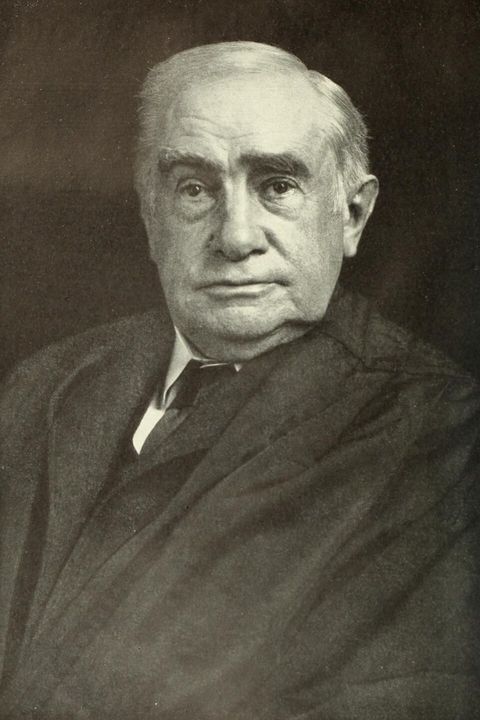
- John Marshall Harlan: Kentucky justice who alone voted to reverse
- Albion W. Tourgée: Lead attorney for Plessy
- Milton J. Cunningham: Attorney General of Louisiana, defending the statute

Summary
In 1890 Louisiana passed the Separate Car Act, requiring railways to provide "equal but separate accommodations for the white and colored races" and making it a crime for a passenger to sit in a coach assigned to the other race. A group of New Orleans citizens of color, the Comité des Citoyens, organized a test case. On 7 June 1892 Homer Adolph Plessy, a shoemaker described in the record as seven-eighths white and one-eighth African in ancestry, bought a first-class ticket on the East Louisiana Railroad, took a seat in the white coach, refused to move, and was arrested. Judge John Howard Ferguson of the Orleans Parish criminal court rejected his constitutional objections, the Louisiana Supreme Court agreed, and Plessy brought the case to Washington. The question was whether a state statute compelling separate railway coaches by race violated the Thirteenth or the Fourteenth Amendment. Plessy's counsel, led by Albion W. Tourgée, argued that the law imposed a badge of servitude, denied equal protection and the privileges or immunities of citizenship, and let a conductor decide a passenger's race on sight, taking from Plessy the reputation of being white, which they called a form of property. Louisiana answered that the law treated both races identically, required equal coaches, and was a reasonable use of the police power to keep public order. On 18 May 1896 the Court affirmed, seven to one. Justice Brown held that the Thirteenth Amendment was not involved, since a legal distinction based on color did not restore slavery. The Fourteenth Amendment, he wrote, secured political and legal equality but could not have been meant to enforce social mingling; he pointed to separate schools, upheld even in Boston, and to marriage laws as settled exercises of state power. The test was reasonableness, judged by the customs and traditions of the people. Brown called it a fallacy to suppose that enforced separation stamped one race as inferior, and said legislation could not overcome social prejudice. Justice Harlan answered that railways were public highways, that the Reconstruction Amendments had removed every legal mark of servitude, and that everyone understood the statute's real purpose. He warned that the same reasoning would permit separation in streets, courtrooms and legislative galleries, declared that the Constitution is color-blind, and predicted that the judgment would prove as damaging as Dred Scott. The library text gives Brown's opinion and Harlan's dissent from the United States Reports, without the reporter's notes. Plessy pleaded guilty in January 1897 and paid a twenty-five-dollar fine. The decision supported state segregation laws across the South for more than half a century. In Brown v. Board of Education (1954) a unanimous Court held that separate educational facilities are inherently unequal, and later rulings applied that principle to buses, parks and other public places.
Virtues in this work
- Fortitude: Homer Plessy and the Comité des Citoyens deliberately accepted arrest and years of litigation to bring the Separate Car Act before the courts.
- Justice: Harlan grounds his dissent in the principle that every citizen stands equal before the law in the exercise of civil rights.
- Magnanimity: Harlan wrote alone against seven colleagues, stating his view at length though no other justice would join him.
Plot or Argument
- The statute and the arrest
Brown opens by quoting the 1890 Louisiana law, which requires equal but separate coaches and penalizes both passengers and officers who disregard the assignment. The record's statement that Plessy's African ancestry was not visible frames his claim to be treated as white.
- The Thirteenth Amendment set aside
Relying on the Slaughter-House Cases and the Civil Rights Cases, Brown reasons that slavery means compulsory service, and that a law noting a difference of color between two races does not create involuntary servitude or destroy legal equality.
- Political equality and social distinctions
Brown reads the Fourteenth Amendment as guaranteeing equality before the law while leaving room for separation where the races come into contact. He cites Roberts v. City of Boston (1849) on separate schools and state marriage laws, and distinguishes cases on jury service as touching political rights.
- Reputation as property and the question of race
If Plessy is white, Brown says, he has a remedy in damages against the company; if he is not, he has lost no reputation. How a person's race is determined is left to state law.
- Reasonableness and the alleged badge
The statute is upheld as a reasonable regulation measured by established usages and the preservation of order. Brown rejects the argument that separation implies inferiority, holding that such a meaning arises only from the construction the colored race puts upon it, and that law cannot create social equality.
- Harlan's dissent: a public highway and a color-blind Constitution
Harlan insists that a railroad is a public highway and that government may not regulate civil rights by race. He argues the statute's aim was to keep Black passengers out of white coaches, lists the further separations its logic would allow, declares that there is no caste here, and compares the ruling to Dred Scott, closing with the phrase thin disguise.
Characters
- Homer Adolph Plessy, plaintiff in error
New Orleans shoemaker who volunteered to sit in a white coach in June 1892 to test the Separate Car Act.
- John Howard Ferguson, defendant in error
Judge of the Criminal District Court for the Parish of Orleans, named because Plessy sought a writ to stop his prosecution.
- Justice Henry Billings Brown, author of the majority opinion
Michigan justice who wrote for the seven-member majority upholding the law.
- Justice John Marshall Harlan, sole dissenter
Kentucky justice whose dissent argued that the Constitution recognizes no classes among citizens.
- Albion W. Tourgée, lead counsel for Plessy
Novelist, former North Carolina judge and Union veteran who shaped the legal strategy and wrote the principal brief.
- Comité des Citoyens, organizers of the test case
Citizens' Committee of New Orleans men of color, including Louis A. Martinet, who raised funds and arranged Plessy's arrest with the railroad's cooperation.
Lessons
What counts as equality before the law
Brown and Harlan both affirm that the Fourteenth Amendment guarantees legal equality, yet they reach opposite results. Brown separates political rights from social arrangements and asks whether the coaches are equal; Harlan holds that the law may not sort citizens by race at all in exercising civil rights.
- How does Brown draw the line between political equality and social equality?
- Why does Harlan think the line cannot be drawn where Brown draws it?
- Does equal treatment require identical treatment, or can separate treatment be equal?
Reasonableness and custom
The majority judges the law by whether it is reasonable, and lets the legislature consult the established usages and traditions of the people. The standard gives broad room to elected bodies, and it also ties the meaning of constitutional rights to prevailing local practice.
- What sources does Brown say a legislature may consult in deciding what is reasonable?
- What might be gained, and what might be lost, when courts defer to local custom?
- Can a right written in the Constitution change meaning as customs change?
Reading purpose behind neutral words
The statute applies the same rule to both races, and Louisiana relied on that symmetry. Harlan argued that judges should look at the evident object of a law, which he said everyone knew, rather than its formal evenhandedness.
- What evidence does Harlan offer about the purpose of the Louisiana law?
- Should judges examine a legislature's motive, or only the text of what it enacted?
The lone dissent and later law
Harlan wrote only for himself in 1896. His phrase that the Constitution is color-blind was quoted by lawyers in the decades that followed, and the Court's reasoning in Brown v. Board of Education (1954) rejected the separate but equal rule in public schools.
- What is the purpose of writing a dissent that no other justice joins?
- How does Harlan's prediction about Dred Scott frame the stakes of the case?
- Why might a dissent matter more decades later than on the day it was written?
Context
After Reconstruction ended in 1877, Southern legislatures began passing laws separating the races on railways and in other public places. Congress had enacted the Civil Rights Act of 1875 guaranteeing equal access to public accommodations, but the Court struck down its key provisions in the Civil Rights Cases (1883), holding that the Fourteenth Amendment reached state action rather than private conduct. Louisiana's 1890 Separate Car Act was one of several such railway statutes adopted in that decade.
Composition
New Orleans had a large community of free people of color with roots in the city's French and Spanish past, and its leaders formed the Comité des Citoyens in 1891 to challenge the law. An earlier test case involving an interstate passenger, Daniel Desdunes, ended when Louisiana's courts held the law could not apply to interstate travel, so the committee arranged Plessy's arrest on an intrastate trip. The case reached the Court in 1896; Tourgée and Samuel F. Phillips, a former Solicitor General, filed briefs for Plessy, and Louisiana's attorney general, Milton J. Cunningham, defended the statute.
Reception
The decision drew modest notice in the national press at the time. It became the leading authority for the separate but equal doctrine, which state and federal courts applied to schools, transportation and public facilities. From the 1930s the NAACP challenged unequal graduate and professional schools in cases such as Missouri ex rel. Gaines v. Canada (1938) and Sweatt v. Painter (1950), and in Brown v. Board of Education (1954) the Court held that segregated public schools violate equal protection. The Civil Rights Act of 1964 later prohibited segregation in public accommodations. Plessy was never formally overruled by name, but its doctrine was abandoned in these decisions. In 2022 the Louisiana Board of Pardons recommended, and the governor granted, a posthumous pardon to Homer Plessy.
Comparisons
- brown-v-board-of-education
Fifty-eight years later Chief Justice Warren's unanimous opinion addressed Plessy directly, holding that in public education the doctrine of separate but equal has no place.
- dred-scott-v-sandford
Harlan's dissent names Dred Scott as the precedent Plessy will come to resemble, linking the 1857 denial of Black citizenship to the 1896 ruling on segregated travel.
- slaughter-house-cases
Brown relies on the 1873 Slaughter-House Cases for a narrow reading of the Thirteenth Amendment and of the privileges or immunities of national citizenship.
- atlanta-exposition-address
Booker T. Washington's 1895 address, delivered the year before the decision, proposed that the races could be separate as the fingers in social matters yet one as the hand in mutual progress, a framing debated alongside Plessy ever since.
- the-founding-documents
Harlan reads the Reconstruction Amendments, added to the Constitution in 1865-1870, as removing the race distinctions of the original document and securing equal civil rights.
- sermons-and-letter-from-birmingham-jail
King's 1963 letter addresses the laws of segregation that rested on Plessy, arguing from Augustine and Aquinas that an unjust law is no law at all.
Quotes
Frequently cited
“We consider the underlying fallacy of the plaintiff's argument to consist in the assumption that the enforced separation of the two races stamps the colored race with a badge of inferiority.”
Frequently cited
“There is no caste here. Our Constitution is color-blind, and neither knows nor tolerates classes among citizens. In respect of civil rights, all citizens are equal before the law. The humblest is the peer of the most powerful.”
“Legislation is powerless to eradicate racial instincts or to abolish distinctions based upon physical differences, and the attempt to do so can only result in accentuating the difficulties of the present situation.”
“If the two races are to meet upon terms of social equality, it must be the result of natural affinities, a mutual appreciation of each other's merits, and a voluntary consent of individuals.”
“In my opinion, the judgment this day rendered will, in time, prove to be quite as pernicious as the decision made by this tribunal in the Dred Scott Case.”
“The thin disguise of "equal" accommodations for passengers in railroad coaches will not mislead anyone, nor atone for the wrong this day done.”
For Students
A reading companion for classical Christian high school students. See the student guide.
Reading Guide
Watch for
- The opening description of the 1890 statute and its penalties for passengers and railway officers.
- Brown's separate treatment of the Thirteenth and Fourteenth Amendments.
- The word reasonable and the role of custom and tradition in Brown's test.
- Harlan's list of further separations the majority's logic would permit.
- Harlan's references to caste, Dred Scott and the thin disguise of equal coaches.
Key terms and names
- Separate but equal
- The doctrine, drawn from this case, that laws requiring racial separation satisfy equal protection if the facilities provided are equal.
- Police power
- A state's general authority to regulate for public health, safety, order and morals.
- Equal protection
- The Fourteenth Amendment's guarantee that no state shall deny any person the equal protection of the laws.
- Badge of servitude
- A legal mark associated with slavery; Plessy argued the law imposed one in violation of the Thirteenth Amendment.
- Plaintiff in error
- The party who brings a case to a higher court on a writ of error; here, Plessy.
- Test case
- A deliberately arranged dispute brought to obtain a court ruling on the validity of a law.
- Dissent
- An opinion by a judge who disagrees with the Court's judgment and explains why.
Seminar Questions
- Comprehension What did the Louisiana statute require of railway companies, and what penalties did it set for passengers?
- Comprehension Why does Brown conclude that the Thirteenth Amendment does not apply to the case?
- Comprehension Which other laws does Brown cite as examples of permissible separation?
- Interpretation Brown says any badge of inferiority comes from the construction the colored race puts upon the law. How does Harlan answer this claim?
- Interpretation Why does Harlan list streets, courtrooms and legislative galleries, and what does the list show about his method of argument?
- Interpretation What does Harlan mean by calling the Constitution color-blind, and how does that idea differ from Brown's view of equality?
- Big Question When a law treats two groups by the same formal rule, how should a court decide whether it truly treats them as equals?
Faith Connections
- Acts 17:26 (Scripture)
Paul tells the Athenians that God hath made of one blood all nations of men, a verse Christians in the nineteenth century cited in debates over race and law.
- James 2:1-4 (Scripture)
James warns against giving the better seat to one person and telling another to stand aside, a picture of partiality in seating that bears on a case about railway coaches.
- Declaration of Independence (1776) (Great Conversation)
The claim that all men are created equal stands behind Harlan's statement that the humblest citizen is the peer of the most powerful.
Logic and Rhetoric
Central argument: Brown argues that the Fourteenth Amendment secures legal and political equality but not social mingling, that a reasonable regulation grounded in custom falls within the police power, and that separation implies no inferiority unless one chooses to read it so; Harlan replies that civil rights on a public highway cannot depend on race, because the Constitution recognizes no classes among citizens.
Rhetorical device: reductio ad absurdum. Harlan asks why, on the majority's reasoning, a state could not separate the races on streets, in courtrooms and in legislative galleries, pressing the principle to conclusions he expects readers to reject; his positive principle then follows in quote 3.
Debate: Resolved: that a law requiring equal but separate facilities is consistent with the equal protection of the laws.
Memory Work
There is no caste here. Our Constitution is color-blind, and neither knows nor tolerates classes among citizens. In respect of civil rights, all citizens are equal before the law. The humblest is the peer of the most powerful.
The thin disguise of "equal" accommodations for passengers in railroad coaches will not mislead anyone, nor atone for the wrong this day done.
Writing Prompts
Essay: Compare how Brown and Harlan use the idea of reasonableness, and explain which features of the Louisiana statute each justice treats as decisive.
Comparison with Brown v. Board of Education of Topeka: Contrast Brown's 1896 claim that separation implies no inferiority with Warren's 1954 finding about the effect of segregation on schoolchildren, and explain what kind of evidence each Court relied on.
Medical Lens
Brown's and Harlan's opinions concern railway regulation, the police power and the Reconstruction Amendments; the references to ancestry are legal classifications, not medical discussion.
Creative Prompts
- Classroom
Stage a moot court in April 1896: one team argues for Plessy from the Thirteenth and Fourteenth Amendments, another for Louisiana from the police power, and a bench of student justices writes short opinions.
- Essay
Explain how Brown and Harlan each define the word equal, using at least one sentence from each opinion.
- Dialogue
Write a conversation in 1891 among members of the Comité des Citoyens planning a test case: which passenger, which train, and which arguments to raise.
- Essay
Draft the outline of a brief for Plessy that a lawyer might have filed, organizing the arguments the record shows his counsel actually made.
- Classroom
Make a two-column chart tracing the separate but equal doctrine from 1896 through Gaines (1938), Sweatt (1950) and Brown (1954).
Further Reading
- The Plessy Case: A Legal-Historical Interpretation, Charles A. Lofgren
Detailed study of the litigation, the briefs and the legal ideas of the 1890s behind the opinions.
- We As Freemen: Plessy v. Ferguson, Keith Weldon Medley
Account of the New Orleans community and the Citizens' Committee that brought the case.
- Separate: The Story of Plessy v. Ferguson, and America's Journey from Slavery to Segregation, Steve Luxenberg
Narrative history following Brown, Harlan, Tourgée and Plessy through the decades before the decision.
- The Great Dissenter: The Story of John Marshall Harlan, America's Judicial Hero, Peter S. Canellos
Life of Justice Harlan, including the background of his Plessy dissent.
- Simple Justice, Richard Kluger
History of the legal campaign that led from the separate but equal era to Brown v. Board of Education.
Verification notes
Each of the six quotations was located by Grep as an exact substring of content/texts/plessy-v-ferguson.txt, three from Brown's opinion and three from Harlan's dissent. The 7-1 vote with Justice Brewer not participating is recorded at the end of the stored text. Plessy's January 1897 guilty plea and fine, the Desdunes test case and the 2022 pardon come from general historical sources rather than the opinions. COURT_TASK.md lists schoolBand 9-10, but the schema allows only 9-12, so 9-12 is used.
- Confirm the date of Plessy's guilty plea (January 1897) and the amount of the fine.
- Confirm that Samuel F. Phillips joined Tourgée on the brief and that Milton J. Cunningham argued for Louisiana.